malvernmugadzikwa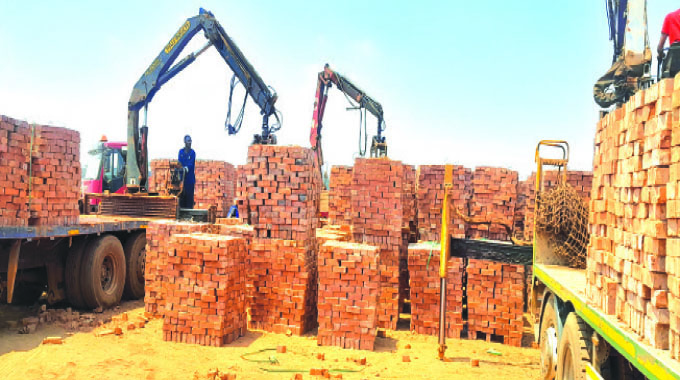
Business Reporter
ZIMBABWE’S traditional brickmaking companies are facing mounting pressure as new entrants are flooding the market, capitalising on the rising demand for bricks.
The surge in competition threatens the survival of established businesses, many of which have operated for decades.
The construction sector’s continued growth has fuelled a nationwide brick shortage, creating a lucrative opportunity for new players.
While new entrants use modern production methods, many traditional brickmakers still rely on labour-intensive techniques.
The reliance on outdated practices, some industry experts say, is a significant factor in their decline.
Traditional companies often struggle to meet the rising demand due to limitations in production capacity and efficiency, leading to lengthy delays in fulfilling orders after payment is received.
Further compounding their challenges, traditional brickmaking methods are often susceptible to weather conditions.
During the rainy season, many traditional companies are forced to halt operations entirely, further disrupting their ability to meet their customers’ needs.
“The brickmaking industry is undergoing a significant transformation,” said a quantity surveyor at one of the oldest construction firms.
“While traditional companies have a rich history, they need to adapt and invest in modernisation to compete effectively. So, you will notice that the huge price difference is to do with overheads.”
The new entrants, on the other hand, are frequently outfitted with advanced machinery and employ innovative production techniques.
This allows them to produce bricks at a faster rate and at a potentially lower cost, making them more attractive to individuals and contractors seeking to meet tight deadlines and budgets.
“When working on tight schedules, I recommend the newer brick companies first,” said Mr Sylvester Bocha, the owner of Meeways Builders, which specialises in the construction of houses.
“Their streamlined production processes often mean clients can get the bricks delivered quicker, which keeps projects moving. Plus, the competitive pricing can be a real advantage, especially when dealing with large quantities.”
However, the influx of new players has sparked concerns beyond just competition.
Some industry players claim some of the bricks produced by these new companies are of inferior quality when compared to those made by traditional firms.
Mr Takemore Ruziwa, a Harare-based engineering consultant, explained: “Traditional companies often use methods with longer curing times and have a stronger focus on clay quality. This approach, it is argued, results in a more durable final product.”
“However, strength may not be the biggest concern. Our observations suggest that most companies meet the minimum compressive strength requirements after testing.
“The more significant issue relates to inconsistent sizing due to variations in moulds.
“This can lead to problems during construction, as bricks may be slightly larger or smaller than expected.”
The standard brick size in Zimbabwe is 225mm long, 108mm wide and 73mm high.
There are different strength requirements prescribed by the Standards Association of Zimbabwe, depending on the brick type.
A common brick, used for general building, has minimum compressive strength of 5 megapascal (MPa).
A load bearing brick, used for foundations and some above-ground structures, requires minimum compressive strength of 12MPa.
A face brick, used for exposed surfaces, and a perforated brick require the same strength requirements as a load bearing brick.
The debate on quality raises concerns about the long-term structural integrity of buildings constructed with the newer bricks. While the lower cost may be appealing in the short term, potential issues down the line could lead to higher repair costs.
Despite concerns over quality from some industry experts, the new companies have undeniably helped bridge the gap in brick availability, a problem that previously plagued construction projects.
Established players like Beta Bricks, for instance, have struggled to fulfil orders due to operational challenges and inconsistent operations.
However, Beta Bricks is looking to regain its footing by investing in a new, modern plant in Melfort, a move that could potentially reshape the landscape of the brick industry.



 Online Reporter