admin
admin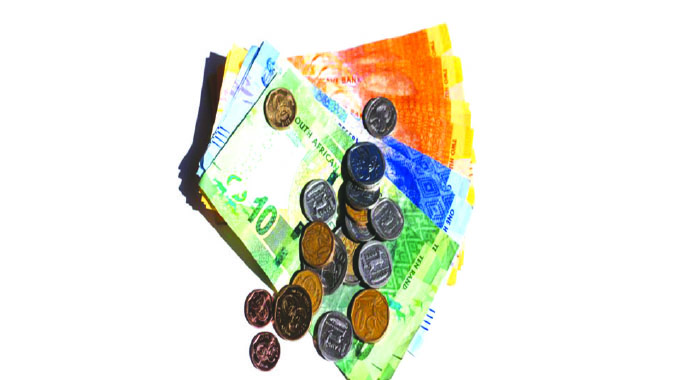
The New Development Bank, a financial institution created by the Brics bloc of emerging markets, raised R1,5 billion (US$94 million) at its first-ever South African bond auction.
Shanghai-based NDB, established by Brazil, Russia, India, China, and South Africa, received more than R2,5 billion of bids for the three- and five-year bonds, enabling it to increase the size of the deal. It allocated 71 percent to institutional investors and the rest to local banks in Tuesday’s sale, it said in a statement Wednesday.
“NDB is seeking to increase its presence in the local capital markets of its member countries, to fund its robust portfolio of local currency loans,” said Leslie Maasdorp, NDB’s chief financial officer. “The proceeds will be used to fund infrastructure and sustainable development projects in South Africa.”
The sale was arranged by Standard Bank and Absa, Mamokete Lijane, global markets strategist at Standard Bank, told a Bloomberg event in Johannesburg Wednesday that there’s a substantial pool of available capital that ends up gravitating toward credit.
The development bank founded by the so-called Brics countries closed the auction for its first South African rand bonds on Tuesday, as it comes under pressure to boost its local currency fundraising and lending.
The New Development Bank’s (NDB) two bonds, a R1 billion (US$52,3 million) five-year note and an R500 million three-year note, attracted R2,67 billion of bids in total, according to auction results shared by two investors with Reuters.
South Africa’s finance minister said that the NDB, which was founded to give the Brics members – Brazil, Russia, India, China and South Africa – more control of development financing, was not doing enough local currency lending, in an interview with Reuters ahead of the Brics summit in Johannesburg next week.
The NDB did not respond to a request for comment on the bond auction.
Chief Financial Officer Leslie Maasdorp told Reuters in a recent interview that the bank aims to increase local currency lending, most of which has so far been in Chinese Yuan, from about 22 percent to 30 percent by 2026, but that there were limits to de-dollarisation.
NDB’s three-year rand bond was priced at a floating rate of 95 basis points (bps) above the three-month Johannesburg Interbank Average Rate (Jibar), while the five-year was priced at Jibar +105 bps.
The most recent comparable South African government bonds were a 4,5-year bond priced at Jibar +90 bps and a seven-yearJibar +120 bps, said Raphi Rootshtain, a portfolio manager at Sasfin Wealth.
“It is interesting to note that most of the underlying lending activities in South Africa are to State Owned Companies (SOEs),” Rootshtain said. “So effectively the NDB will become the new proxy funding vehicle for SOEs which should come with additional risk.”
The bond sale was arranged by Standard Bank, which declined to comment, and Absa Bank, which did not reply to a request for comment. – Bloomberg


 Online Reporter