

 admin
admin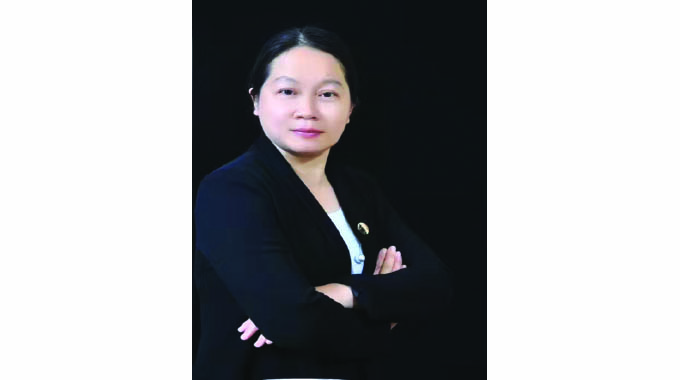
The expanded BRICS bloc, also referred to as BRICS Plus, an emerging body of Global South countries which was founded by Brazil, Russia, India, China and South Africa but has since grown with new members — and up to 40 countries applying to join — is being touted as the future of global multilateralism.
At the core, the grouping aims to elevate developing countries and give them a voice and agency in international affairs characterised by imbalances in political, military and economic power that favours the West, led by the United States of America.
With different mechanisms in place, BRICS can transform the international system, and countries such as Zimbabwe — which is not yet a member, but is keen to join the bloc in future, could enjoy the potentially era-altering global changes. Tichaona Zindoga (TZ) recently spoke to Dr Liu Qinghai (LQ), the Director of the Centre of African Economics at Zhejiang Normal University of China about the economic dynamics and prospects of the emerging “new world order” following the BRICS Summit that was held in Kazan, Russia, recently.
***
TZ: What is your assessment of the 2024 BRICS summit and what do you think were its most significant discussions and undertakings?
LQ: The scale of the 2024 BRICS summit has expanded unprecedentedly. I think the most important achievement is the release of the Kazan Declaration, which contains as many as 134 contents, while the declaration adopted at the BRICS Summit in Johannesburg, South Africa in August 2023 was only 94, and the declaration adopted in Beijing in July 2022 included only 75 points.
The Kazan Declaration outlines the BRICS’s common view of the current situation of the international system, the basic global problems and regional crises or common or similar approaches, and the members’ understanding of the expected and achievable world order. Although there is no specific timetable or road map in the Kazan Declaration, it does cover some key goals that the BRICS Group should or can achieve in the next few years.
TZ: What are the implications of the growth in strength and scale of BRICS for the world’s economy and geo-economic power relations?
LQ: The growth in strength and scale of BRICS shows that the intensity of interaction of the group is gradually increasing, the scope of multilateral cooperation is also expanding, and the influence of the global south as a new force in the international landscape is increasing. Among them, the most important point is that its representativeness has been substantially improved: from a simple dialogue mechanism for emerging economies to a platform for the Global South.
BRICS adheres to the spirit of openness, inclusiveness and win-win cooperation, and works together to promote cooperation in various fields. Its focus includes not only promoting trade, but also (1) strengthening multilateralism, (2) promoting global and regional stability and security, (3) strengthening economic and financial cooperation, (4) promoting people-to-people exchanges, etc. These will certainly expand the partnership between BRICS countries and emerging markets and developing countries, further consolidate unity, promote real international cooperation, promote world economic growth, improve global governance, promote the democratisation of international relations, and then benefit everyone.
TZ: The BRICS has made the “Global South” as the front and centre of its policy. What does this mean for countries in the Global South? Can this translate to more economic prosperity and greater coordination and collaboration?
LQ: It shows that the BRICS has transformed from an emerging economic power group to a group composed of different countries in the Global South countries. Its structure has changed, the geographical distribution is more extensive, and the culture is more diverse. It has become an important platform for emerging market countries and developing countries to unite and cooperate.
It is committed to promoting the establishment of a more agile, effective. Therefore, it can translate to more economic prosperity and greater coordination and collaboration.
TZ: Particularly for countries in Africa like Zimbabwe, what is in it for them; and how can they benefit if they are not (yet) members?
LQ: The Kazan Declaration reaffirms its support for the comprehensive reform of the United Nations, including its Security Council, to make it more democratic, representative, effective and efficient, to increase the representation of developing countries among international organisations to meet the widespread global challenges, and calls for ensuring emerging markets and developing countries and least developed countries , in particular countries in Africa, Latin America and the Caribbean.
In addition, the Kazan Declaration also encourages developing countries to carry out international cooperation in the field of artificial intelligence, education and other aspects. Because these may bring new opportunities for the socio-economic development, I think Zimbabwe and other countries that have not yet joined the BRICS mechanism can actively participate in these activities especially in artificial intelligence capacity building, educational resource sharing, experience exchange, policy coordination and other aspects.
TZ: Is the view that BRICS is anti-West correct, and can countries sustainably maintain Western trade and political links while taking an interest in BRICS bloc as an emerging alternative?
LQ: From the Kazan Declaration, we can find it is far from other radical statements on the international order but more inclined to the existing international system than ever before. In fact, it is trying to acquire the characteristics of a reasonable alternative, seeks to complement and extend them but does not aim to replace existing institutions.
It hopes to establish a fairer and more just international order, promote global development not by smashing the old world, but through their own development and through active participation and strengthening leadership.
TZ: What is your view of the proposed BRICS currency and new trade mechanisms such as member countries using each other’s currencies. Is this feasible?
LQ: It is crucial to have an alternative payment system and approaches to global politics and multipolarity. It can break through the economic blockade of some countries and get rid of its dependence on the world reserve currency, the US dollar. Thus, it can create prerequisites for the sovereign economic development of each country and independently develop the economy.
Of course, it is not easy to advance. For example, not all BRICS members equally embrace this alternative role.
TZ: Zimbabwe is under Western sanctions, like some BRICS countries such as Russia. To what extent can the bloc attenuate such exposure and structures of the current economic sanctions?
LQ: The Kazan Declaration expressed concern about illegal unilateral coercive measures such as sanctions, which undermine the Charter of the United Nations and the multilateral trading system, and are not conducive to the achievement of global economic and sustainable development goals.
It reaffirms its support for an open, transparent, fair, predictable, inclusive, equal and non-discriminatory multilateral trading system, providing special and differential treatment for developing countries, and rejecting unilateral trade restrictions that do not comply with the rules of the World Trade Organisation. This is an important consensus because it shows an important political position in today’s international politics. Zimbabwe can make a stronger voice with the help of this mechanism.
TZ: What practical steps can countries in the Global South take to increase the strength of BRICS and lessen dependency on the West?
LQ: In the process of promoting development and cooperation in the Global South, there are many internal and external problems and challenges. In response to these challenges, the countries of the Global South can study how their countries can provide and contribute to the development and cooperation of the Global South, including the supply of various public goods, multilateral mechanisms, trade and investment cooperation and rule-building among others.
At the same time, it is necessary to strengthen internal reforms, promote economic pluralism and sustainable development, strengthen democracy and human rights construction, pay attention to youth education and training especially for female youth, and carry out international cooperation to jointly address security threats and developing challenges.
Tichaona Zindoga is the director of Ruzivo Media & Resource Centre, a Zimbabwean think tank that analyses local and global issues.



 Online Reporter