admin
admin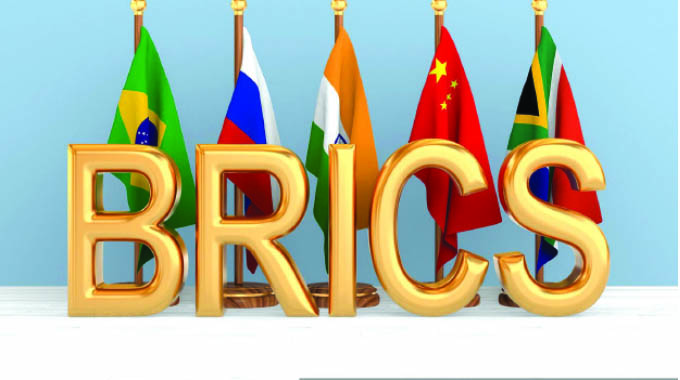
Ian Riggs
As the BRICS (Brazil, Russia, India, China, South Africa) membership grows, so will its impact on the global economy in 2024 and the coming years.
One of the most evident effects of BRICS’ impact expansion is the gradual weakening of the US dollar and its replacement in global trade settlements. Other effects expected in the near future are the increasing food security in the BRICS territories, replacement of Visa and Mastercard payment providers, and gradual refusal from SWIFT and CHIPS in international payments.
Therefore, BRICS has a considerable effect on global economic affairs and conducts an active transformation of the global economic landscape by undermining the set Western order.
Africa and the BRICS: A win-win partnership?
In a world dominated by the economic power of the USA, the BRIC bloc initially started as an informal group of leading emerging economies.
The term was coined by Jim O’Neil — an economist who envisioned the future of these regional giants in cooperation and economic alliance. In 2005, the group included only Russia, China, and India, and in 2006, Brazil joined the bloc. South Africa joined in 2010, making the initial structure of the BRICS entity complete.
Almost two decades after the BRICS group’s origination, it has become an organisation capable of challenging Western economic dominance and building a new economic paradigm based on multipolarity and fragmentation.
Vital BRICS stats
Here are a couple of economic stats to illustrate the present-day impact of the BRICS bloc on the global economy:
32% of the world’s GDP (equaling $27+ trillion).
18% of global trade.
25% of foreign direct investment (FDI).
Approximately 40% of the world’s population (around 3 billion people).
BRICS growth is projected at 5.2% in 2023 and 4.5% in 2024.
These figures are true for the original composition of the BRICS bloc, which has more than doubled in January 2024 after the BRICS+ format came into force. At present, this entity includes 11 countries, and its economic weight is expected to continue increasing.
Implications of the BRICS+ format
Since most of the BRICS founders have faced stagnating economic growth and a variety of socio-economic and political pressures, the bloc’s expansion with six new members is a promising step forward for the entity.
For instance, Venezuela and the UAE have immense deposits of natural resources. New BRICS members also have a well-established presence in many regional alliances, such as ASEAN, OPEC, Mercosur, GCC, etc., thus giving BRICS greater influence and penetration in regional affairs at all levels.
However, the most serious implication of BRICS growth for the world economy is the bloc’s refusal to use USD as a global currency for international payments. While Russia has refused the US dollar after the escalating sanctions, other countries like China followed the lead and endorsed trade transaction settlements in national currencies. This way, with BRICS fostering a non-USD economy, the far-reaching economic trend can significantly weaken the USA as the only issuer of USD, which it used to dominate and regulate the world’s economic affairs.
Does BRICS create a new economic paradigm?
The initial goal of the BRICS setup was the promotion of peace, security, and cooperation among emerging economies, aimed at a more equitable global economy in the long run. For many countries, BRICS brought hope for better economic prospects for Latin America, Africa, and Asia.
This way, BRICS has offered a viable alternative to countries unwilling to play by the mature Western economies’ rules. Ultimately, the rapid BRICS growth and recognised influence in the global economy has enabled the bloc to reshape international trade, finance, and investment domains that used to be monopolised by the USA and Western Europe.
The fifth meeting of the BRICS countries held in Durban, South Africa, from March 26 to 27, 2013, was seen as an opportunity for Africa to strengthen its ties with these major emerging economies.
The theme of the summit was “BRICS and Africa — partnerships for integration and industrialisation” with the goal to unlock potential for cooperation between the BRICS and Africa. In fact, Africa has demonstrated huge potential in terms of economic development prospects, abundant natural resources, growing consumer power and favourable demographics.
The emergence of the BRICS as major global players has raised hope that a win-win partnership could foster the development of the continent.
In recent years, the BRICS have expanded their involvement in Africa. Their share in foreign direct investment (FDI) inflows and trade volume has surged rapidly.
For instance, trade volume between China and Africa increased from US$10 billion in 2000 to US$190 billion in 2012.
The partnership between India and Africa, for instance, has significantly promoted the development of small- and medium-scale enterprises on the continent. Meanwhile, Brazil and Russia have been heavily involved in the mining and energy industry in Africa through public-private partnerships.
BRICS engagement with Africa
The BRICS are now Africa’s largest trading partners with trade expected to reach more than US$500 billion by 2015, with 60 per cent from China.
The BRICS are also becoming significant investors in Africa, especially in the manufacturing and service sectors. With respect to foreign direct investment, BRICS countries have strengthened their presence on the continent compared with traditional partners, such as the US and Europe.
In 2010, for example, the BRICS’ share in FDI inward stock and FDI inflows to Africa reached 14 per cent and 25 per cent, respectively. The share of BRICS countries in the total value of African greenfield projects reached 25 per cent in 2012 compared with 19 per cent in 2003. Trade between the BRICS and Africa rose to as much as US $340 billion in 2012 —10 times higher than the value recorded in 2002 . Currently, the BRICS trade more with Africa than they do among themselves.
Main motivations of the BRICS countries’ engagement in Africa
The reasons behind BRICS countries’ involvement in Africa include their appetite for the continent’s natural resources, Africa’s large and untapped agricultural sector as well as the opportunity for investments and transfer of technology and knowledge targeting the growing middle class which is estimated to include more than 300 million people.
Appetite for natural resources: For many experts, the engagement of the BRICS in Africa is essentially driven by the continent’s abundant natural resources. BRICS are major players in the exploitation of natural resources in many African countries including Angola, Democratic Republic of Congo, Nigeria and Sudan. Brazil and China are the most active in exploring and exploiting gas, oil and minerals resources in Africa. The presence of these major global players in the natural resources sector has brought large investments in various infrastructure projects in recent years to the continent.
However, natural resources do not represent the main BRICS investment in Africa. According to the United Nations Conference on Trade and Development (UNCTAD), 75 per cent of the value of BRICS FDI projects in Africa between 2003 and 2012 are in manufacturing and services.
Only 10 per cent and 26 per cent of the number and the value of projects, respectively, are in the natural resources and agricultural sectors.
Africa’s agricultural sector: The agricultural sector is vital for African economies and it is hoped that it will continue to be an engine of economic growth for the continent.
The engagement of BRICS countries in the African agricultural sector is motivated by the fact that these countries would need to promote their experiences in terms of agricultural development as a way to unlock the continent’s potential. Brazil, which is a leading global player in trading agricultural commodities, can be a model for African countries regarding agricultural development and can assist Africa in enhancing agricultural productivity and reducing the impact of food insecurity.
The success of the Brazilian agricultural model is mainly due to the vertical integration of the sector, the strong support of the state and high levels of mechanisation. Fostering agriculture in Africa will be a major development tool to eradicate poverty and hunger over the long term. In that context, sharing the experience of the BRICS would boost Africa’s agricultural productivity.
Seeking diversification and new markets: Besides the huge potential offered by the African primary sector, the BRICS are attracted by the benefits of diversification of African economies as well as the possibility to enter into a large untapped market of one billion African consumers. Over the years, the BRICS countries have accumulated large amounts of reserves which have been invested mainly in the developed world.
The persistence of the global financial crisis, which has hit developed countries particularly hard, is motivating the BRICS to shift a portion of their investments toward other emerging destinations in order to maximize returns while reducing risks. Hence, Africa may offer BRICS the opportunity to diversify towards new frontier markets.
Moreover, investing in Africa implies access to a one billion consumer market with its growing middle class. In recent years, sectors such as telecommunications, financial services and retail have recorded high rates of growth in most African countries due to high demand by Africa’s middle class.
Implications for Africa
The strategic interest of the BRICS in Africa will strengthen the position of South Africa as a leading regional power and a gateway for other BRICS countries to the African market. As the BRICS are consolidating their positions in Africa through massive investments, this seems to create a new source of development funding for the continent.


 Online Reporter