Online Reporter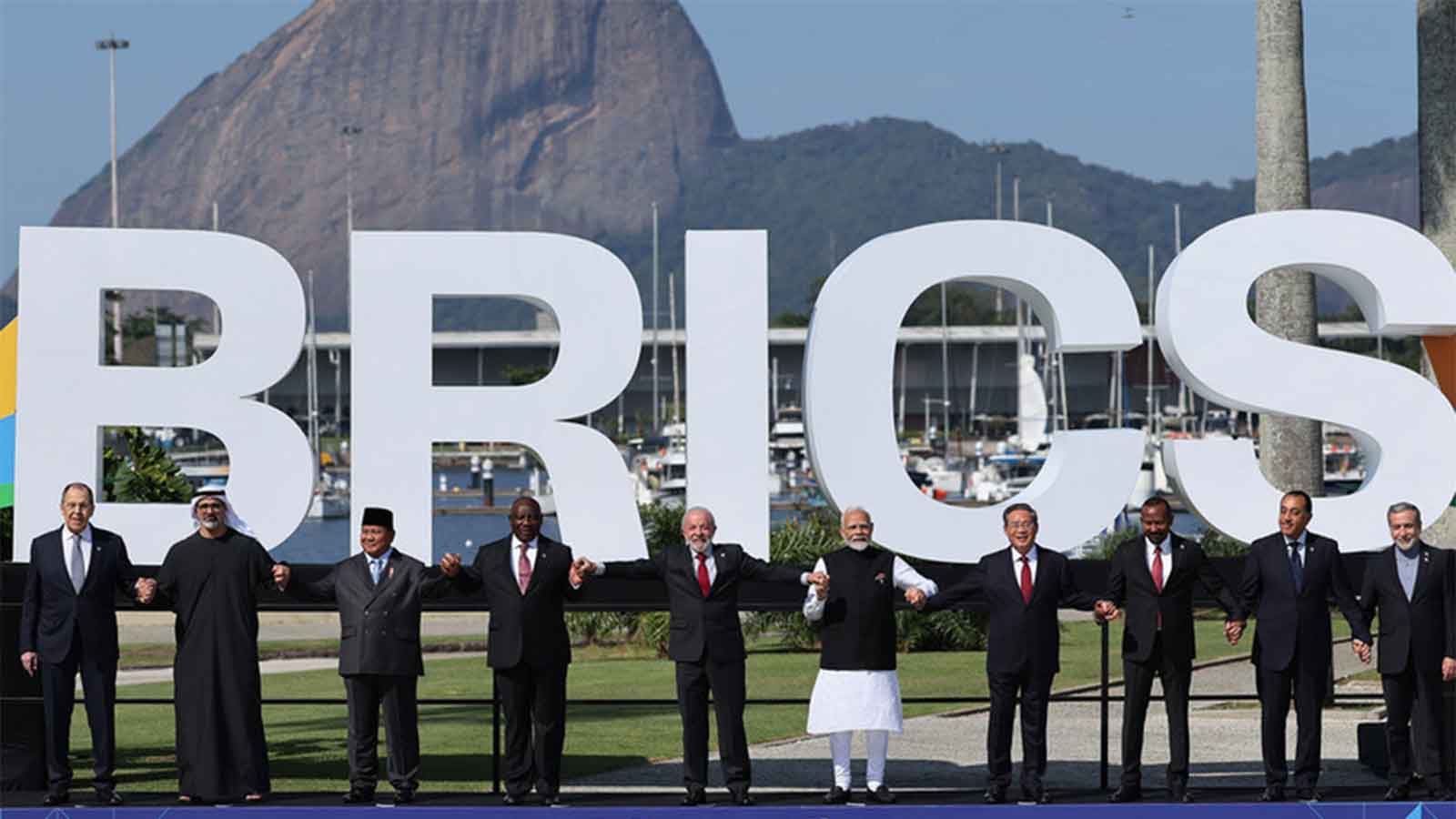
Ayanda Holo
There is a particular loneliness in being the country expected to carry a continent into rooms it did not design.
When BRICS leaders gather at Bharat Mandapam in New Delhi on 12 and 13 September, South Africa will arrive not only with its flag, its officials and its national interests.
It will carry a harder mandate: to make certain that Africa is not merely mentioned in the communique, but present in the bargain.
That distinction matters.
Africa has too often been invited into global conversations as a geography of need – a place to be financed, fed, stabilised or saved – rather than as a market of more than a billion people.
Africa with a new approved world map or not is still a centre of mineral wealth, a source of ideas and a political constituency entitled to shape the international rules.
South Africa’s assignment in New Delhi is to resist that old grammar of power.
The delegation’s message is direct: connect BRICS economies to Africa, lead with an African voice and build partnerships that produce tangible outcomes.
It is an ambitious promise, and it arrives at a moment when BRICS is larger, more geographically diverse and more politically consequential than the compact of five emerging powers it once was.
Expansion has increased the bloc’s reach. It has also sharpened the question of purpose.
For African audiences, the measure of BRICS cannot be the length of the family photograph or the elegance of another declaration.
It is whether a farmer in Limpopo can reach a supermarket shelf in Mumbai; whether a manufacturer in Gauteng can enter a supply chain in Shanghai; whether a young engineer in Addis Ababa can build with technology transferred on fair terms; and whether African states can finance ports, railways, energy systems and digital infrastructure without surrendering their developmental sovereignty.
This is where South Africa’s role as a bridge must become more than a diplomatic metaphor.
The African Continental Free Trade Area offers access to a continental market of extraordinary scale, but a market on paper is not yet a market in motion.
Goods still wait at borders. Producers still confront expensive logistics. Electricity remains expensive in too many industrial corridors.
Capital is costly, while much of Africa’s raw wealth leaves the continent before African hands have had the chance to add value to it.
South Africa, therefore, cannot credibly call for African agency abroad while tolerating industrial weakness at home.
The argument for a stronger African voice must travel with a programme of beneficiation, manufacturing, skills development and regional value chains.
Otherwise, the continent will remain rich beneath the soil and poor above it – supplying the ingredients of other nations’ prosperity while importing the finished evidence of its own lost opportunity.
Agriculture offers one of the clearest tests.
In a recent BRICS Africa Channel interview, agricultural economist Wandile Sihlobo described a bloc with immense buying power but too little trade among its own members.
South Africa exports roughly 55% of what it produces agriculturally, he said, yet its sales remain concentrated in traditional Western markets and on the African continent.
Diversification is sensible; abandoning established markets is not. The missed opportunity lies in failing to open additional doors.
Sihlobo’s warning was unusually plain: “We are just too slow as a grouping to actually unleash that sleeping giant of economic possibilities in agriculture.”
The barriers are clear. Tariffs remain high, standards are uneven and phytosanitary rules can shut competitive goods out of major markets.
The contradiction is hard to miss: BRICS countries speak of solidarity, yet their producers still face barriers at one another’s borders. Friendship that never reaches the loading dock does not pay farmers, create jobs or build factories.
China’s move toward tariff-free access for African goods, discussed by Sihlobo in the interview, offers a glimpse of what political intent can unlock.
But a unilateral opening, however welcome, is not a substitute for an institutional arrangement across BRICS.
India, too, is a market of vast promise for South African citrus, fruit, wine and other agricultural products.
The summit should ask why trade with partners of such scale remains so modest – and what leaders are prepared to change now, rather than at the next summit.
The practical agenda can be stated in one sentence. As Sihlobo told BRICS Africa Channel: “South Africa’s agenda is about lowering tariffs, removing phytosanitary barriers, and deepening trade amongst ourselves as BRICS for shared prosperity.”
That phrase – shared prosperity – must be rescued from ceremonial language.
It should mean that African food producers gain predictable access to buyers; that infrastructure finance moves projects from presentation decks to construction sites; that technology partnerships build local capability; and that African companies participate in ownership, processing and distribution.
It should also mean reciprocity.
South Africa is not asking to dump products into foreign markets. It is a significant food importer itself and belongs to regional trade arrangements whose interests must be navigated with care.
This complexity does not weaken the case for action.
It explains why leadership is required. South Africa’s membership of the Southern African Customs Union means that trade diplomacy must accommodate Botswana, Zimbabwe, Lesotho and Namibia.
The answer is not to discard regional partners, but to create enough flexibility for ambition without breaking solidarity. Economic diplomacy is the art of moving with one’s neighbours, not pretending they do not exist.
India’s chairship theme: Building for Resilience, Innovation, Cooperation and Sustainability – gives the summit an attractive vocabulary.
Africa now requires its meaning.
Resilience is food security, dependable energy and supply chains that withstand shocks.
Innovation is not merely access to imported technology, but the capacity to adapt, govern and manufacture it locally.
Cooperation is the creation of value on both sides. Sustainability must be counted not only in carbon, but in jobs, dignity and the endurance of communities.
South Africa’s own summit brief can be reduced to six verbs: connect, invest, innovate, sustain, partner and lead.
New Delhi must attach nouns, numbers and deadlines to them. Which investments will be committed? Which barriers to African exports will be removed? Which transport and energy projects will be financed? Which skills programmes will be funded? And will other BRICS members match the momentum toward fairer tariff treatment for African goods?
These are not hostile questions.
They are the questions of a continent that has heard enough promises to know that rhetoric can be another form of delay. BRICS will remain politically compelling only if its economic architecture becomes visible in the lives of its people.
Business and politics cannot travel on separate tracks indefinitely: one announcing a new world, the other waiting at the border with the paperwork.
My hopes are high, that the Federation of Indian Chambers of Commerce and industry, in partnership with the South African DTIC, will usher a way forward at the India Business Conclave taking place on the margins of the Summit.
BRICS Africa Channel will cover the Leaders’ Summit live from New Delhi, following the speeches, negotiations and declarations from an African vantage point.
Our task is to ask what every decision means for workers, entrepreneurs, students, farmers and industries – and to follow the promise beyond the podium.
This summit is more than a distant meeting of presidents.
It is a contest over the rules, capital, markets and technologies that will shape Africa’s future.
South Africa must ensure the continent is heard at the centre, not discussed at the margins and help turn that voice into trade, factories, infrastructure and jobs.
Ayanda Holo is the president of TV BRICS AFRICA (www.bricsafricachannel.com)