Online Reporter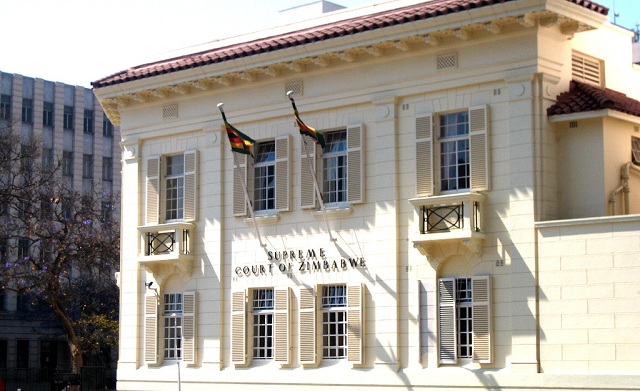
Fidelis Munyoro
Chief Court Reporter
A Zimbabwe Revenue Authority (ZIMRA) officer lost his job over undercharging warehouse rent by ZWL$157,836.96 and his final attempt to get it back has now failed at the Supreme Court.
Innocent Sithole’s long-running fight with his former employer began with what appeared to be a routine warehouse assessment in November 2020.
But a calculation involving goods weighing 61.12 tonnes would eventually trigger disciplinary proceedings, dismissal, an appeal to ZIMRA, a Labour Court battle and, finally, a Supreme Court showdown.
The country’s highest court has now brought the matter to an end, upholding Sithole’s dismissal and ordering him to pay the costs of the appeal.
The dispute dates back to November 24, 2020, when Sithole assessed warehouse charges on goods held for 44 days.
He charged ZWL$5,280 for the warehouse rental.
According to the findings against him, however, the assessment had undercharged the applicable amount by ZWL$157,836.96.
The assessment also failed to include duty, penalties and interest.
For ZIMRA, the error was serious enough to warrant disciplinary action.
Sithole was investigated and subsequently charged with misconduct under Group D25 of ZIMRA’s Employment Code of Conduct.
The Disciplinary and Grievance Committee found him guilty.
His punishment was dismissal.
Sithole did not accept the decision quietly.
He appealed to ZIMRA’s Appeals Committee, but the committee upheld his dismissal.
He then approached the Labour Court, seeking to overturn the decision.
That attempt also failed, with the Labour Court upholding the dismissal in 2025.
Still unwilling to give up his job, Sithole took the fight to the Supreme Court.
His central argument was that the authorities had failed to properly consider mitigating circumstances before deciding that dismissal was the appropriate punishment.
He relied on Section 12B(4) of the Labour Act, which requires the seriousness of misconduct and possible mitigating factors to be considered when determining whether a dismissal is fair.
The Supreme Court accepted that mitigation can be relevant when determining whether dismissal is fair-but found that Sithole had failed to properly put the issue before the relevant internal tribunal.
In other words, he had not raised mitigation before ZIMRA’s Appeals Committee.
Writing the judgment, Justice Samuel Kudya, said there was no merit in the first two grounds of appeal and that the evidence clearly established that Sithole had committed the misconduct.
On the mitigation argument, the court found that ZIMRA’s Appeals Committee had never been given the opportunity to consider it.
That became crucial.
The Supreme Court effectively found that Sithole could not rely on an issue on appeal when the body below had not been given the opportunity to determine it in the first place.
The court rejected Sithole’s challenge, finding merit in ZIMRA’s argument that mitigation had not been placed before its Appeals Committee.
Justice Kudya noted that the issue had not been properly raised at that stage.
With that, the Supreme Court dismissed the appeal with costs of suit.