Online Reporter
Sukulwenkosi Dube-Matutu, [email protected]
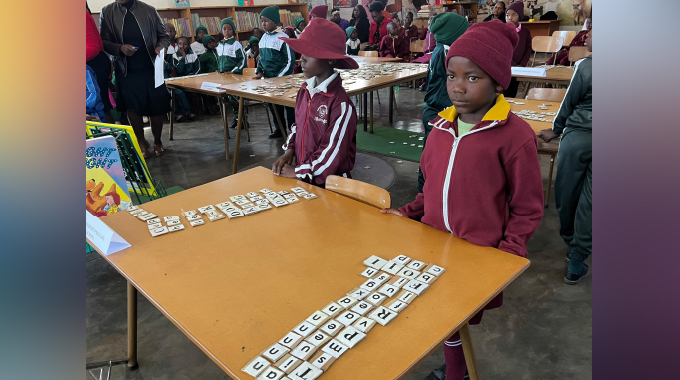
In a classroom at Sengezane Primary School, a Grade 6 pupil stands before a packed hall, spelling “entrepreneurship” without a pause, then uses it in a sentence about her dream to run a tuckshop in her village. A few minutes later, ECD learners giggle as they match pictures to words, building “dog” and “house” from flashcards.
It is not a scene that rural schools in Matabeleland South were known for a decade ago. But this year, six primary schools from across Gwanda District gathered for the Book Box District Reading Competition finals, and the confidence in the room told its own story.
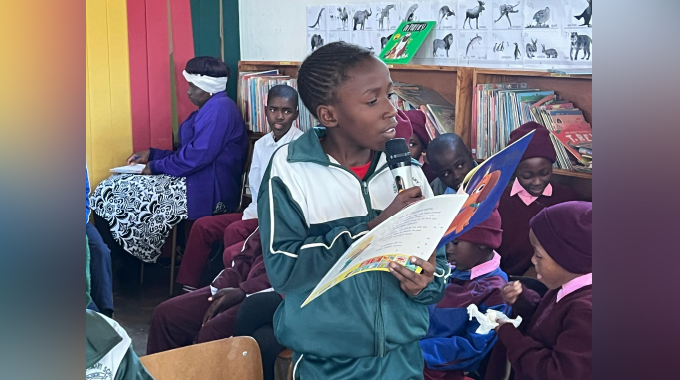
Garanyemba, Dombo, Lumene, Dambashoko, Wililisa and Sengezane primary schools competed in the finals held in July. After rounds of spelling bees, vocabulary contests, picture reading and storytelling in both English and Ndebele, Sengezane emerged victorious.
The competition was the culmination of a process that began at cluster level, where 37 primary schools across Gwanda’s six clusters battled for a place in the finals.
The driving force behind the transformation is the Book Box Programme, being implemented in Gwanda district by the Edward Ndlovu Memorial Trust (ENMT), with funding from Book Aid International.
For years, rural schools in Gwanda struggled with a chronic shortage of teaching materials, non-functional libraries, and limited access to storybooks. Many learners completed primary school without ever holding a library book. The Book Box programme was designed to change that.
Under the programme, schools have received boxes of graded reading material in English and local languages. More than that, libraries have been established or revived, and teachers have been trained on how to manage them. Learners can now read at school during scheduled library lessons, or borrow books to take home.
Mr Michael Moyo, Director of ENMT, said the competitions were introduced in 2022 as a follow-up to the book distribution.
“As ENMT, we have come in to assist in developing the education sector through various programmes and one of them is the Book Box programme. Under this programme we have distributed books to various schools to promote literacy among learners and to promote a reading culture,” he said.
“As a follow-up to this intervention, we then introduced a reading competition programme for the learners. The competitions are held at various levels, which are infant for ECD A up to Grade 2, junior for Grade 3 and 4, and senior for Grade 5 to 7. Learners at each level have their reading activities where children can have fun, but at the same time they can learn.”
The structure is deliberate. At the infant level, learners compete in picture reading and word building. In junior classes, it is a vocabulary bee and quiz. Seniors take on spelling bee, spelling relay, and jumbled words.
Beyond the contests, learners select English words, explain meanings, use them in sentences, and read stories in English and Ndebele. Judges assess word attack skills, pronunciation, fluency, and voice projection. There is also a general knowledge component.
It is a far cry from classrooms where reading aloud was rare because there was nothing to read.
Matabeleland South, and Gwanda in particular, has long posted some of the lowest literacy baselines in the country. Distance, poverty, and lack of resources meant many rural learners started behind their urban peers and never caught up. National data in past years even reported “zero percent” literacy levels in some rural schools.
“Our main target as an organisation is the children, as we want them to develop. The impact has been significant as participating schools now report improved reading habits among learners, greater engagement in lessons and increased teacher confidence in managing library resources,” said Mr Moyo.
“By encouraging literacy and a love of reading from an early age, the programme is not only bridging the education divide but also nurturing a generation of curious, confident learners.”
That confidence was visible at the finals. Learners who once whispered answers now projected their voices. Teachers who once locked books away now run timetabled library periods.
The programme also aligns with Government’s broader education goals. Mr Moyo said the intervention reinforces the national commitment to inclusive and equitable quality education, in line with Sustainable Development Goal 4.
Schools have been urged to replicate the model at class, school and cluster level to ensure more learners participate, not just the few who reach district finals.
“Schools have been urged to also hold the competitions at class level and then move to school level, cluster and district level to ensure that more learners participate,” he said.
The scale of need means no single organisation can do it alone. World Vision, which works in three area programmes in Gwanda, has partnered with ENMT to expand reach.
Mrs Tendai Charlie, World Vision Cluster Programme Officer, said the collaboration is about results in the classroom and in national exams.
“As World Vision, we stay committed to our partnership with the Edward Ndlovu Memorial Trust in promoting a strong reading culture in our communities. Through this collaboration, book boxes have been distributed to all 17 primary schools, providing a lasting resource that is already improving classroom reading and learner confidence,” she said.
She said the partnership has strengthened reading competitions, making them more motivating for learners.
“With 90 functional reading camps serving 1 914 learners, 975 girls and 939 boys, and the support of teachers, parents, and School Development Committees, we are ensuring that every child, including learners with disabilities, has the opportunity to develop strong literacy skills,” said Mrs Charlie.
For World Vision, literacy is not just about passing Grade 7. “In a world that is rapidly evolving, the need for children to have access to education and knowledge cannot be overstated. It is through literacy that people are empowered, access opportunities, and build a foundation for long-term economic development, health, food security, and child protection,” she emphasised.
Social scientist Reverend Muiti Sibanda, who attended the finals as a guest, said promoting reading at primary level has effects that go beyond exam results.
“Promoting reading in primary learners is vital because it boosts cognitive development, strengthens language and communication skills, enhances critical thinking and creativity, improves concentration and memory, and cultivates empathy and a lifelong love of learning,” he said.
“Reading exposes children to diverse words and sentence structures, significantly expanding their vocabulary and improving their ability to communicate effectively, both in writing and speech. It stimulates the brain, improving memory, fostering critical thinking and analytical skills, and supporting overall brain activity and connections.”
Rev Sibanda added that reading also builds concentration, a skill that transfers to mathematics, science and daily life. Books further equip learners with imagination.
He said books also encourage learners to think creatively and develop their own ideas.
In addition, he said, reading is fundamental for all subjects, providing a solid basis for a child’s overall academic achievement.
The Book Box model is simple but intentional. First, flood the school with books. Second, train teachers to use them. Third, create systems so children actually read — scheduled library lessons and lending systems. Fourth, measure progress through competitions that make reading public, fun and competitive.
At Dambashoko Primary, a teacher said borrowing has changed homework. “Before, children would go home, and there was nothing to read. Now they fight over who takes which storybook home. Parents are also asking about the books,” said the teacher.
At Lumene, an ECD teacher said picture reading has helped learners who struggle with English to start with Ndebele stories, then transition. At Wililisa, the head said library lessons have reduced absenteeism on Fridays because learners know it is library day.
Back at Sengezane, the winning school, learners posed with their trophy and a box of new books. For them, the competition was not just about beating other schools. It was proof that where they come from does not determine how far they can read.
That is the point ENMT and its partners keep making. The digital gap between rural and urban learners will not close overnight. But the literacy gap can start closing now, one book, one library lesson, one spelling bee at a time.
In Gwanda, 37 schools started the journey this year. Six made it to the finals. Thousands of learners borrowed books and in classrooms that once had empty shelves, children are now arguing over story plots and practising words for next year’s competition.