


 Andrew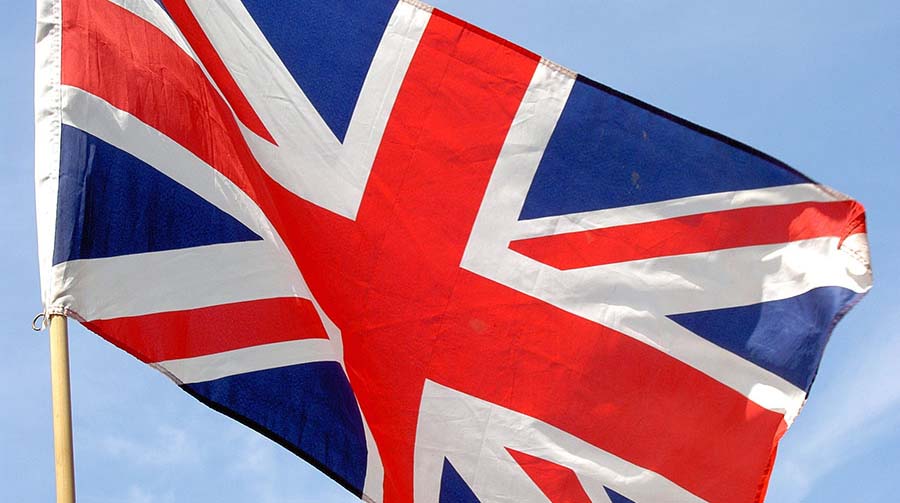
Retired Major Action Mandingo
It is now clear that Number 10 Downing Street, London, United Kingdom, has effectively become a revolving door.
British prime ministers are going in and coming out of this official residence and office like people getting in and coming out of a public toilet.
What a shame!
Number 10 Downing Street now stinks to high heaven, yet British politicians want to lecture the world about democracy.
Speaking at State House in July last year, while bidding farewell to Zimbabwe’s ambassador to the United Nations, Albert Chimbindi, and ambassador-designate to Mozambique, Victor Matemadanda, President Mnangagwa was spot on when he said: “We suffered human rights violations of oppression for decades and we had to go to war to bring democracy, so we cherish it. No one can lecture us about democracy.”
Now that Number 10 Downing Street has been reduced to a revolving door, surely, British politicians should just shut up and sort out their stinking political mess. For those not in the know, UK Prime Minister Liz Truss resigned last Thursday following a failed tax-cutting budget that rocked financial markets, leading to a revolt within her own Conservative Party.
Truss was in office for just 45 days, making her the shortest-serving prime minister in British history.
On September 23, Truss’ finance minister, Kwasi Kwarteng, announced a so-called “mini-budget” that triggered a turbulence in the UK bond markets, which balked at the debt-funded tax cuts he put forward.
Most of the policies were reversed three weeks later by his successor, Jeremy Hunt.
By the time Hunt tried to put out the raging flames, the horses had already bolted. It was a matter of time before Truss resigned.
British politics is in a big mess.
In fact, sewage has always been flowing from Number 10 Downing Street.
Of the 56 prime ministers, nine served more than 10 years, while seven served less than a year.
Robert Walpole is the only one to have served as prime minister for more than two decades.
After spending only 45 days in office, Truss beat the record that had been set by George Canning, who served as leader for less than four months before his death.
Canning was in office for 119 days in 1827.
But the real political chaos in recent times started when former prime minister, David Cameron, called a referendum on leaving the European Union.
Cameron hoped the vote, in 2016, would end a civil war inside his own Conservative Party on Britain’s relationship with Europe and keep the party in power. That failed spectacularly.
Cameron resigned after losing the referendum and Theresa May took over the reins.
In another major miscalculation, May called a snap election in 2017, only to lose her party’s control of the House of Commons.
The out-of-sorts May repeatedly tried to drive a Brexit deal through parliament, only to be foiled, in part, by the anti-European wing of her own party, which wanted a clean divorce from Europe. Brexit, eventually, brought May down as it had her predecessor.
The party then turned to Boris Johnson, a deeply flawed showman.
His campaign was premised on getting “Brexit done”.
Johnson led the party to a landslide victory in 2019.
The following year, he completed the UK’s departure from the European Union and seemed poised to rule for years.
Then came the coronavirus pandemic, which Johnson underplayed, until he ended up in an intensive care unit with the virus.
When he started playing politics with the pandemic, his epitaph was already written.
Johnson’s government banned social gatherings to limit the spread of Covid-19, but inside Number 10 Downing Street, they partied like reckless drunkards.
Arrogant as always, Johnson tried to put up a show, but his penchant for partying backfired.
He was left with no option but to resign.
Truss replaced Johnson in September 2022, promising to kick-start the economy with tax cuts for corporations and the rich without reducing public spending.
From the onset, Truss looked like a disaster waiting to happen.
Under Truss, the UK has been reduced to a laughing stock.
But what has gone wrong with British politics?
What has gone wrong with British democracy?
Some political scientists are convinced that the UK is embarrassing itself on the world stage because of polarisation, populism, a flawed political system and poor leadership that has at times put party and personal ambition above the good of the country.
The cartoon-character politics going on in the UK shows beyond doubt that democracy is not and cannot be uniform across the world.
There is no one-size-fits-all democracy.
As the British grapple to save their tattered political system, British politicians and their friends in Europe and America should learn big lessons.
As President Mnangagwa rightly said, they should not lecture us and anyone, for that matter, about democracy.
Democracy in Zimbabwe is different from democracy in UK.
Democracy in China is different from democracy in the US.
In its white paper titled “China Democracy that works”, released on December 4, 2021, China’s State Council Information Office makes very profound arguments on democracy.
China says it has developed a “whole-process people’s democracy”, which it says “integrates process-oriented democracy with results-oriented democracy, procedural democracy with substantive democracy, direct democracy with indirect democracy, and people’s democracy with the will of the state.”
“It is a model of socialist democracy that covers all aspects of the democratic process and all sectors of society. It is a true democracy that works.”
According to China, democracy is a concrete phenomenon that is constantly evolving.
“Rooted in history, culture and tradition, it takes diverse forms and develops along the paths chosen by different peoples based on their exploration and innovation.
“The best way to evaluate whether a country’s political system is democratic and efficient is to observe whether the succession of its leaders is orderly and in line with the law, whether all the people can manage state and social affairs and economic and cultural undertakings in conformity with legal provisions, whether the public can express their requirements without hindrance, whether all sectors can efficiently participate in the country’s political affairs, whether national decision-making can be conducted in a rational and democratic way, whether people of high calibre in all fields can be part of the national leadership and administrative systems through fair competition, whether the governing party is in charge of state affairs in accordance with the constitution and the law, and whether the exercise of power can be kept under effective restraint and supervision.
“Democracy is not a decorative ornament, but an instrument for addressing the issues that concern the people. Whether a country is democratic depends on whether its people are truly the masters of the country; whether the people have the right to vote, and more importantly, the right to participate extensively; whether they have been given verbal promises in elections, and more importantly, how many of these promises are fulfilled after elections; whether there are set political procedures and rules in state systems and laws, and more importantly, whether these systems and laws are truly enforced; whether the rules and procedures for the exercise of power are democratic, and more importantly, whether the exercise of power is genuinely subject to public scrutiny and checks.
“Democracy is the right of the people in every country, rather than the prerogative of a few nations. Whether a country is democratic should be judged by its people, not dictated by a handful of outsiders….
“There is no fixed model of democracy; it manifests itself in many forms,” reads the white paper.
China has really nailed it.
Let us hope the unrepentant imperialists get the message.
The political chaos at Number 10 Downing Street should be a big lesson to the former colonialists and their puppets in our midst.


 Bongani Ndlovu
 Online Reporter