Online Reporter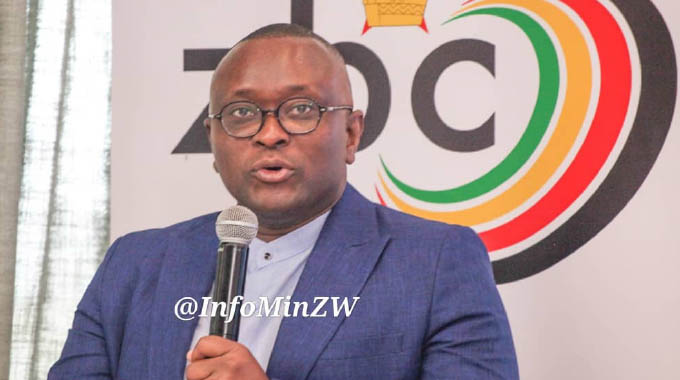
Rutendo Nyeve, Victoria Falls Reporter
INFORMATION, Publicity and Broadcasting Services Minister Dr Jenfan Muswere has challenged broadcasters across Southern Africa to become architects of regional unity, trade and development, positioning the media as a central force in Africa’s economic and social transformation.
Speaking during the official opening of the Broadcasters Convention–Southern Africa in Victoria Falls yesterday, Dr Muswere called on the media fraternity to redefine its purpose in the 21st century — from being passive conveyors of information to active drivers of integration and progress.
The three-day convention, organised under the auspices of the Southern African Broadcasting Association (Saba), has drawn delegates from across the region to deliberate on the future of broadcasting in the digital era. Saba, founded in 1993, serves as a platform for collaboration among public broadcasters in the Southern African Development Community (SADC), promoting shared content, policy co-ordination and regional identity.
Dr Muswere posed a series of probing questions to the delegates, urging them to reflect on the sector’s alignment with continental development goals.
“How do we define the role of Saba in terms of the Sustainable Development Goals? How do we define Saba in terms of the Southern African Industrialisation Plan and the African union Agenda 2063?” he asked.
Dr Muswere underscored the urgency for broadcasters to generate and control their own narratives, warning that Africa risks losing its voice if it does not take ownership of content creation and digital platforms.
“How best can we maintain relevance by ensuring we broadcast content generated from Southern Africa and from Africa?” he asked.
Dr Muswere highlighted both the promise and the peril of the digital revolution, noting that while advances such as artificial intelligence and digital migration create opportunities, they also raise critical questions about sovereignty and data control.
“Who owns and controls these algorithms? Where is this information stored? Who runs these narratives?” he queried.
The minister said the region must use technology strategically to tell authentic African stories, preserve languages and foster social cohesion.
“Broadcasters have an obligation to unite people, promote our heritage and help fight social ills such as xenophobia and misinformation,” he said.
Dr Muswere said Africa’s low levels of intra-regional trade, at present below 20 percent, represent a missed opportunity that broadcasters can help correct by promoting regional products, tourism and investment.
He said markets are shifting, and for Africa to grow its economies, it must first command the attention of its own people.
Dr Muswere called for a decisive shift from over-reliance on imported content that often projects distorted images of Africa, urging broadcasters instead to collaborate regionally to improve production quality and human capital.
“We should move away from being an importer of content from other regions, but seek to collaborate with other regions to improve our quality so we need to develop human capital to be able to broadcast the true story about Africa,” he said.
“This is a continent that has gone through so many phases, from slavery and colonisation, but this is the Africa that is imagined as a giant.”
“How do we unite our people? How do we tackle communicable and non-communicable diseases, pandemics, epidemics, to consolidate and grow our economies into first-world countries?”
Turning to domestic achievements, Dr Muswere highlighted Zimbabwe’s broadcasting and media reforms under the Second Republic, including the licensing of new radio and television stations, expansion of community radio and the ongoing digitalisation programme.
He said these initiatives are part of Vision 2030, which envisions a modern, connected and economically empowered society.
The minister said Zimbabwe has witnessed progress in agriculture, infrastructure and health, adding that as the country moves towards an upper-middle-income economy, the media must play its part in consolidating these gains.
He invited broadcasters from across the region to return to Zimbabwe next year for an exchange programme aimed at strengthening co-operation and sharing innovation in the sector.
“By the end of next year, we are inviting every media house to Zimbabwe so that we can share experiences on how best we can work together,” said Dr Muswere.



 Bongani Ndlovu