Online Reporter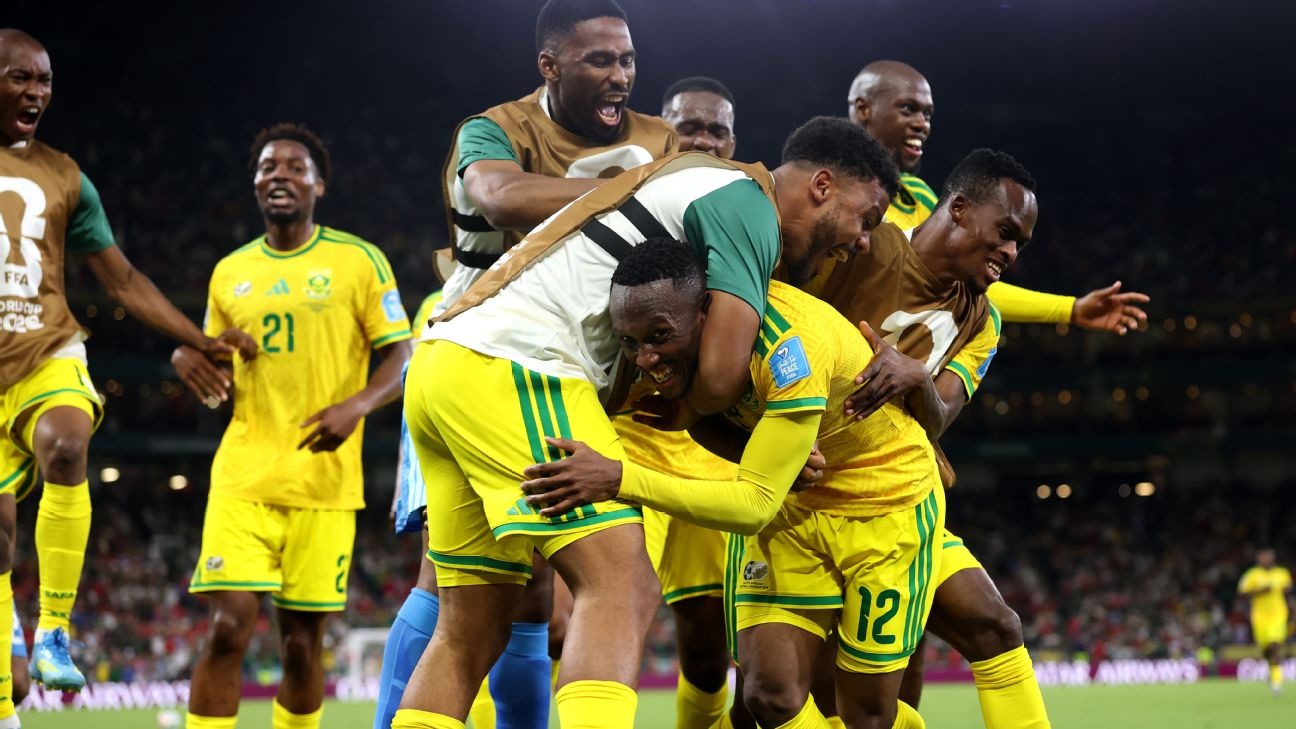
Brian Sciaretta
FOR the first time in their history, South Africa have reached the knockout stages of the World Cup after securing a hard-fought 1-0 victory over South Korea in one of the tournament’s biggest surprises.
Few would have backed Bafana Bafana to advance after their opening defeat, but Hugo Broos’ side showed remarkable growth and resilience as the group stage unfolded.
With each match, the South Africans became more assured, more organised and more dangerous.
Their second-place finish in Group A has earned them a place in the Round of 32, where a tough test against Canada now awaits.
South Korea, meanwhile, experienced the opposite trajectory. After an impressive opening victory over Czechia, the Taegeuk Warriors looked like genuine dark-horse contenders.
However, their performances steadily declined as the tournament progressed and, on this occasion, they looked a shadow of the side that had sparked early optimism.
Head coach Hong Myung-bo stunned supporters and pundits alike by leaving captain and talisman Son Heung-min on the bench, a decision that ultimately set the tone for a deeply disappointing evening.
South Korea’s hopes of advancing are not completely over. With three points from their three group matches, they remain mathematically in contention, though qualification now depends heavily on other results falling in their favour. Whether they survive will become clear in the coming days.
Here are my thoughts on the game.
- Hong benches Son
In one of the most surprising selection calls of the World Cup so far, South Korea coach Hong Myung-bo chose to leave his captain, all-time leading goal scorer and national icon Son Heung-min on the bench for a decisive group-stage clash against South Africa.
Entering the match with only three points, South Korea’s passage to the knockout rounds was far from guaranteed, and defeat would place the team in serious danger.
Despite the magnitude of the occasion, Hong opted to start without his biggest star.
It was a gamble carrying significant risks. Beyond depriving the team of one of its most talented players, the decision had the potential to affect morale and leadership on the pitch.
Without their captain from the opening whistle, South Korea’s players were left to navigate a high-pressure encounter while also processing a selection choice that inevitably raised questions.
To be fair, Son has endured a relatively quiet 2026. He arrived at the tournament without a league goal in 13 regular-season appearances for Los Angeles FC and had also failed to find the net in South Korea’s opening two World Cup matches.
Nevertheless, he remained one of the team’s most influential figures, frequently involved in dangerous attacking moves and capable of producing moments of brilliance.
His replacement, Hyun-Gyu Oh, struggled to make an impact. The forward managed only nine touches during the first half as South Korea attempted to build attacks through central areas and combinations around the box.
Although there were glimpses of promise early on, those opportunities soon dried up. South Africa’s disciplined defending played a significant role, but South Korea’s lack of sharpness and cohesion was equally damaging.
The opening 45 minutes felt like the performance of a team lacking confidence and direction, and much of the focus inevitably fell on Hong’s bold decision.
Son was introduced after the break, but by then South Korea never truly recovered. He ended the game with 29 touches and one blocked effort, often dropping deep into midfield in search of possession and trying to influence proceedings. Yet the spark never arrived.
Ultimately, Hong’s headline-making decision backfired. It is impossible to say with certainty that it cost South Korea the match, but there was little doubt that the team performed well below its potential. The absence of Son’s leadership and quality from the start may well have proved decisive.
- South Korea’s sloppiness
The most striking feature of South Korea’s first-half display was their carelessness in possession. Throughout the opening period, the Taegeuk Warriors repeatedly surrendered the ball through misplaced passes, poor touches and unnecessary turnovers in both midfield and defence.
The statistics highlighted the problem. By half-time, South Africa held a 10-4 advantage in shots and dominated interceptions by a staggering 10-1 margin.
What made the performance particularly surprising was how different it looked from South Korea’s first two matches. Even in defeat against Mexico, the team had shown far greater composure and technical quality. Here, those strengths were almost entirely absent.
Hong attempted to remedy the situation with several substitutions after the interval, but the changes failed to spark a meaningful improvement. The crisp passing and fluid movement that characterised portions of South Korea’s opening matches never materialised. Instead, their play remained disjointed and predictable.
Should South Korea ultimately fail to reach the knockout rounds, this dramatic decline over the course of the group stage is certain to become a major talking point in the country’s football discourse.
Questions will inevitably be asked about selection decisions, tactical choices and a collapse in form that few could have predicted after such a promising opening victory.
- South Africa grew into the game
While South Korea’s shortcomings played a role, credit must also go to South Africa, who produced arguably their finest performance of the tournament.
In their opening defeat to Mexico, Bafana Bafana were outplayed and undermined by defensive mistakes and red cards. Against Czechia, they benefitted from their opponents retreating into a more cautious approach after taking the lead.
This match was different.
South Africa controlled large stretches of the contest through quality rather than circumstance. Midfielders Sphephelo Sithole and Thalente Mbatha were particularly influential, excelling in regaining possession, driving the team forward and switching play intelligently. They provided energy, balance and composure, allowing South Africa to dominate key areas of the pitch.
The improvement shown by Bafana Bafana throughout the tournament has been remarkable.
Each performance has built upon the previous one, and this victory represented another step forward. By the second half, the momentum firmly belonged to the South Africans.
Much of the credit must go to Belgian coach Hugo Broos. His tactical adjustments and improved defensive organisation transformed the team as the group stage progressed.
Against Mexico, South Africa were outshot 16-3, a statistic partly influenced by an early second-half red card. Against Czechia, they responded by outshooting their opponents 17-14 after the interval.
Against South Korea, they led the shot count 13-5 for most of the evening before their opponents threw numbers forward in desperation.
In the closing stages, Broos watched his players defend with discipline and maturity. South Korea pushed forward relentlessly but rarely threatened, as South Africa maintained their structure and carried out their defensive duties with admirable commitment.
- Maseko is the hero
At just 22 years old, Thapelo Maseko etched his name into South African football history.
The decisive moment arrived when Tshepang Moremi delivered an excellent pass into the penalty area. Maseko controlled the ball, shifted it onto his left foot and unleashed a powerful low finish beyond goalkeeper Seung-Gyu Kim to give South Africa the lead.
It was a goal worthy of the occasion.
Maseko had been one of South Africa’s most dangerous players throughout the contest, constantly probing for opportunities and stretching the South Korean defence.
When his chance finally arrived, he showed the composure and quality required to seize it.
On the balance of play, South Africa deserved their breakthrough. Tournament football is often defined by fine margins, and success frequently hinges on the ability of individuals to deliver in decisive moments.
On this occasion, South Africa had that difference-maker.
His name was Thapelo Maseko. — Fox Sports