Business Reporter
ZIMBABWE’S vast array of underutilised and dormant industrial infrastructure presents low-hanging fruit for investors seeking immediate operational scale rather than starting projects from scratch, Zimbabwe Investment and Development Agency (ZIDA) chief executive officer, Mr Tafadzwa Chinamo, has said.
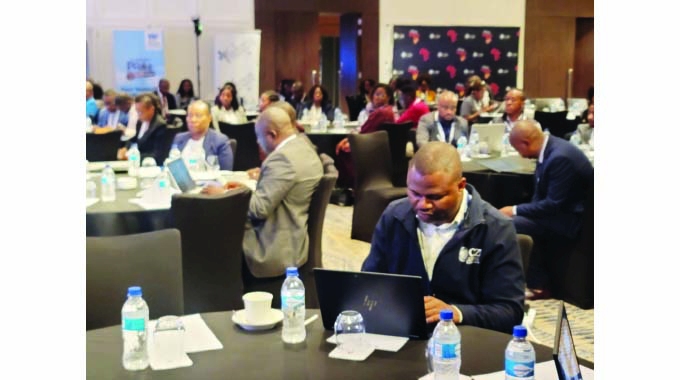
Speaking during a presentation at the Confederation of Zimbabwe Industries (CZI) Strategic Intelligence Forum held at the Hyatt Regency The Meikles Harare yesterday, Mr Chinamo said the country offers unique brownfield investment opportunities, particularly across manufacturing, mining and agriculture-adjacent industries.
His presentation was centred on the “New Corporate Landscape” in Zimbabwe.
The three-day high-level seminar, which commenced yesterday and runs until Friday, was organised in partnership with Zimpapers.
It has drawn chief executives, board members, entrepreneurs, regulators, development partners, and sustainability practitioners to discuss sustainable economic growth and industrial transformation.
Addressing delegates, Mr Chinamo highlighted that while greenfield investments require lengthy setup timelines, brownfield acquisitions allow investors to bypass the gestation period of building new brands and establishing tested operational systems.
“Opportunities are in existence,” Mr Chinamo noted.
“You are not starting from scratch. Infrastructure is there; yes, it’s outdated . . . but someone who is capitalized might consider that brownfield as an opportunity as opposed to going to a country where they have never had meaningful industrial production.”
The ZIDA CEO acknowledged historical challenges that contributed to the decline of traditional industrial hubs, such as Bulawayo, including severe competition from low-cost regional and global producers like China, alongside local power constraints and capital costs.
He highlighted that domestic electricity costs – currently around 16 to 17 US cents per kilowatt-hour – remain a key competitiveness challenge for energy-intensive manufacturers compared to regional peers.
However, Mr Chinamo stressed that brownfield acquisitions, coupled with targeted capital injection, modern solar integration and plant retooling, offer a practical pathway to revitalise distressed assets.
“To acquire or start a new business is always that question,” he said.
“Some businesses want a jumpstart . . . but in this country, a lot of businesses are not properly capitalized or financed. So in a lot of cases, it might just be better to acquire.”
He cited recent moves in the mining and corporate sectors, where capitalised players have stepped in to buy, retool, and re-engineer existing assets – such as old processing plants – to rapidly expand output and market dominance.
Touching on corporate consolidation, Mr Chinamo observed that domestic firms are increasingly pursuing vertical integration to secure supply chains and scale up.
He pointed to major players in the poultry and agribusiness sectors, such as Innscor, as prime examples of companies consolidating value chains – from breeding to processing and retail – to guarantee operational resilience.
He emphasised that Zimbabwe is reclaiming its proven economic playbook, driven by primary extraction in mining and agriculture, which naturally stimulates downstream secondary and tertiary industries.
“A lot of investment is going into mining, and a lot of minerals are coming out of those mines,” Mr Chinamo said.
“That, in my view, spawns a lot of other industries. Miners need supporting businesses – safety wear, electrical repairs, equipment supply, and local services.”
This surge in primary production is driving localised economic activity, increased employment, and higher consumer spending power, particularly in mining communities across the Midlands.
Furthermore, it is creating substantial demand for financial services, including banking, insurance, and working capital solutions.
Mr Chinamo concluded by emphasising that the Government’s push for resource-based value addition and local beneficiation will be the crucial next catalyst for sustainable long-term economic growth.
Addressing delegates at the same event, Scanlen & Holderness senior partner Ms Nellie Tiyago said local businesses must move away from reactive compliance and embed proactive legal risk management into their core business strategies to navigate changes in the country’s regulatory landscape.
Ms Nellie Tiyago, who presented on “Navigating Regulatory Complexity: Managing Legal Risks in Zimbabwe’s Business Environment, warned that regulatory complexity should not be viewed as random, but as a key business parameter that requires continuous legal foresight.
She emphasised that managing statutory updates, tax frameworks and regulatory requirements is no longer a backend administrative function, but a fundamental driver of enterprise survival and long-term competitiveness.
“Regulatory complexity in Zimbabwe is real and it is not random,” Ms Tiyago said. “Businesses that will do best are the ones that treat legal foresight as part of strategy. Sit down with regulators before a policy is enforced, not across the courtroom afterwards.”
A key pillar of her address centred on securing written directives from state authorities to protect investments against administrative policy shifts or statutory re-interpretations.
She advised corporate boards and finance directors to ensure every administrative clearance, tax dispensation, or policy interpretation granted by authorities is backed by formal, written documentation.
“Written guidance protects your position if the position is later changed,” she noted, adding that when regulatory interpretations evolve post-event, documented official guidance remains a firm’s strongest defence against penalties.
Firstlink Insurance chairperson Mr Caleb Tapfuma told the delegates at the forum that enterprise boards and executive leaders must move away from reactive, “knee-jerk” insurance policies and instead adopt customised risk management strategies to safeguard business continuity against unforeseen operational losses.
Mr Tapfuma, whose presentation was titled Insurance Risk in Industry Versus Mining: Imperatives for Better Outcomes, cautioned that many non-mining corporate entities fall into the trap of viewing insurance through a standard, template-driven lens rather than tailoring risk solutions to their exact business profiles.
“Often this discussion comes after there has been a loss,” Mr Tapfuma said, explaining that reactive risk management leaves companies exposed when crises strike.
“It’s kind of a knee-jerk and reactionary approach to insurance. As a result, you find that at that point in time, the business has already suffered losses.”
He noted that while many players in the manufacturing, construction, and energy sectors have begun embracing structured risk approaches, a significant gap remains across wider enterprise management.
He challenged board members and executive directors to proactively ask crucial risk questions long before disruption occurs: Do we have adequate insurance, and if a major loss occurred tomorrow, how would we recover?
Highlighting the structural challenges in the sector, Mr Tapfuma pointed out that businesses frequently rely on off-the-shelf, standardised products provided by insurance brokers rather than assessing enterprise-specific vulnerabilities.
This transactional dynamic -often limited to brief negotiations between a broker and a company finance manager – results in mismatched coverage.
“Having insurance doesn’t necessarily mean that you are fully protected,” he said. “Most organisations rely on a template of products . . . without specifically looking at the risks that pertain to that particular organization. Under template insurance products, they do not quite meet the needs of each organisation specifically.”
Mr Tapfuma further singled out asset valuation and policy wording as major flashpoints during claims.
He urged executives to avoid intentionally downplaying asset valuations to secure lower premium rates, as doing so leads to severe underinsurance and disputes when losses occur.