admin
admin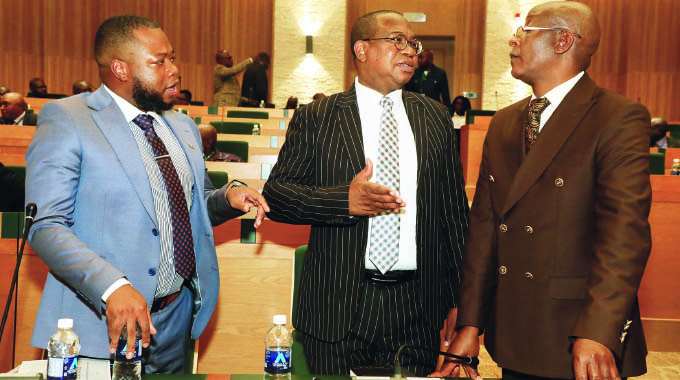
Oliver Kazunga
Senior Business Reporter
SOCIAL protection programmes absorbed ZiG243 million from the Government in the first half of the year to cushion the vulnerable from the adverse impact of the El Nino-induced drought.
Zimbabwe and the rest of Southern Africa were hit hard by drought, which destroyed crops and diminished water sources.
In Zimbabwe, this left about 7,7 million people in need of food aid.
Earlier this year, President Mnangagwa declared the 2023-2024 agricultural season a state of national disaster after the drought caused food deficits in many parts of the country.
He pledged that no one would starve, as the Government would do everything to support all vulnerable groups, a principled approach that places the welfare of all citizens above partisan interests.
Presenting the Mid-Term Budget and Economic Review statement in Harare yesterday, Finance, Economic Development and Investment Promotion Minister Professor Mthuli Ncube said in support of the social protection interventions, Zimbabwe also received US$31,8 million for drought insurance from the Africa Risk Capacity Insurance, US$18,9 million from development partners and a further US$1,1 million from the African Development Bank (AfDB) in support of agriculture productivity and resilience, infrastructure development and institutional strengthening under the Post-Cyclone Idai Emergency and Recovery Resilience Programme.
“To implement the various social protection programmes, ZiG243 million was disbursed to the Ministry of Public Service, Labour and Social Welfare during the first half of the year.
He said as part of the disaster preparedness framework, a three-pronged strategy was developed through programmes that included the food deficit mitigation programme, cash for cereal programme, grain imports, and agriculture input support.
The measures, Prof Ncube said, were complementary to the existing social protection schemes that included school feeding programmes.
As part of availing food aid to the vulnerable, the Government will make cash transfers to urban dwellers for their mealie meal supplies while mechanisms will be implemented to curb profiteering.
In rural areas, people will be given 22,5kg of maize per person for three months, with another instalment expected in the fourth month so that they do not run out of supplies.



 Online Reporter