admin
admin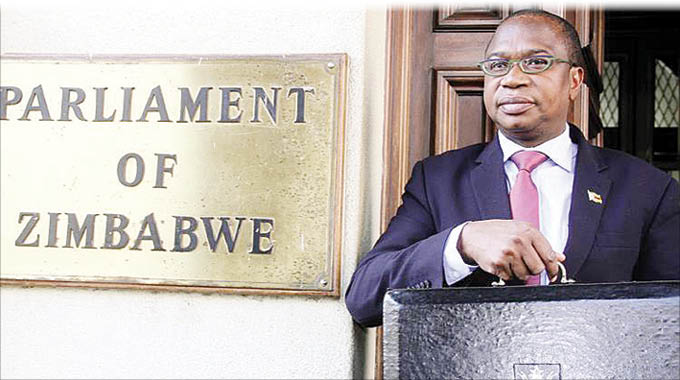
Oliver Kazunga, Senior Business Reporter
ECONOMIC analysts have said Treasury’s 2019 mid-year fiscal policy review statement and the $10,85 billion supplementary budget will go a long way in cushioning the workers and stimulating economic growth and investment in different sectors.
Finance and Economic Development Minister Professor Mthuli Ncube tabled the $10,85 billion supplementary budget and fine tuned some austerity measures by easing tax bands, mainly in favour of workers in addition to extending tax rebates for the productive sector.
Key highlights include, among others, the $1,67 billion allocated to the 2019/20 summer cropping season, $1,1 billion for social safety to vulnerable citizens, upward review of tax free threshold from $350 to $700 and the review of the two percent tax.
These are critical provisions that show Government’s sensitivity to the plight of citizens, economic analysts said.
Mr Kelleb Mloyi, an economic analyst based in South Africa, said Prof Ncube has made bold steps in positioning the economy and cushioning workers, especially.
He said Zimbabwe’s current account balance with $196 million so far as announced by Prof Ncube, was a significant signal.
“This is actually an improvement and this improvement is brought by the adoption of the Zimbabwean dollar, which has meant that it is now very expensive for consumers to buy abroad,” said Mr Mloyi.
He said the widening of tax free thresholds will mean that workers have increased disposable income to provide adequate aggregate demand for local products.
Economic analysts, however, called for tightening of Government expenditure, which stood at $4,2 billion against a target of $3,7 billion and warned against excessive public borrowing, which tends to crowd out the private sector.
This tends to subdue private sector growth as local financial institutions, instead of lending the private sector for companies to expand operations, they will be lending Government.
The economists commended Government for trimming domestic debt stock to $8,8 billion as at June 30, 2019 from $9,5 billion last December saying this was a good move to tame inflation.
Another economist, Dr Davison Gomo, lauded the Government for clarifying that non-exporters do not qualify for tax incentives under the Special Economic Zones (SEZs) initiative.
“I think the minister is spot on because the whole purpose of the SEZs is to make sure that they generate goods and services that are exported so that the country generates sufficient levels of foreign currency to finance further expansion of industry and the economy at large,” he said.
“If non-exporting companies are entitled to tax incentives under the SEZs, it would mean they are being given a lot of incentives to do what’s non-essential in relation to the objective of the SEZs concept.”
Dr Gomo also commended the repeal of the previous indigenisation regulations but said a new framework has to be put in place to safeguard interests of locals.
“That new policy must ensure that the strategic interest of the country and the desire of the citizens to participate in and across all sectors of the economy are secured in the new law. It should never be interpreted as an abandonment of the desire to empower the local people,” he said.
Zimbabwe Farmers’ Union principal economist Mr Prince Kuipa said the $1,67 billion for the 2019/20 summer cropping season was a good move.
“Any allocation towards agriculture is welcome but what Government needs to do is to make sure that the mechanisms of distributing the inputs is tight to ensure that the intended beneficiaries receive the resources.
“It should be known that these inputs are not just donations, we don’t want to build a culture of farmers just getting the inputs and selling them as what was happening in the past,” he said. — @okazunga.


 Online Reporter