admin
admin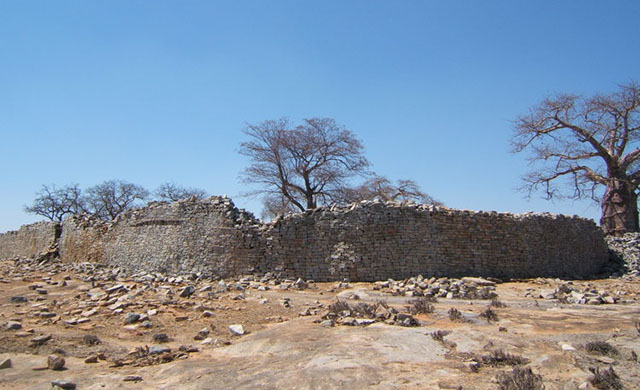
Isdore Guvamombe Post Correspondent
IT is mid-morning and the sun is hot. Under the blistering heat, lizards panic from my presence and dash into gaps that would ordinarily pass for crevices. But they are not crevices!
These are ventilation gaps carefully designed as part of the architectural splendour of Matendera Ancient City, where stone walls were built without mortar and yet, have stood the test and taste of time.
Birds chit-chatted, their melodies drowned by cicadas that seem to be sonorously protesting to God and the ancestors about the blistering heat and dearth of rainfall.
Today, there were no rains despite the whole country raining.
The Mopane trees stand dotted around the foot of the rock promontory whose summit forms the foundation of Matendera Ancient City, dwarfed by the huge baobab trees that have stood guard of the city for centuries.
Matendera Ancient City is the biggest of a cluster of many smaller cities in Buhera District of Manicaland that comprise of Kagumbudzi, Muchuchu, Chironga, Chiwona and Gombe ancient cities.
Structurally, Matendera Ancient City has some remarkable features similar to Great Zimbabwe National Monuments and date back to the 16th and 17th centuries AD.
The Matendera stone structure is a replica of the Great Zimbabwe Monuments with an extensive and impressive horse-shoe shaped enclosure located on a low lying dwala some 45km south of Buhera.
In the past five years, Buhera District has been trying to promote tourism and raise Matendera to its pre-colonial glory through an annual festival.
The district is developing tourism as another way of raising revenue. This is in line with its mission of facilitating and co-ordinating the provision of services in order to improve the living standards of people in the surrounding area.
Matendera Festival is an annual cultural event held at Matendera Ancient City, through the co-ordinating efforts of Buhera Rural District Council and National Museums and Monuments of Zimbabwe.
The festival is a celebration of the tangible and intangible heritage of the people of Buhera (Vahera) through their native dances such as Jaka, drama and poetry.
Buhera also has a wide distribution of beautiful hunter-gatherer rock art sites.
Gombe Ruins are located on a low hill north of Gudo Business Centre along the Murambinda-Birchenough Bridge Road. Several findings of decorated and un-decorated ceramics, glass and metal beads were excavated from the site.
The houses with thick clay walls are uniquely Zimbabwean.
To date, the council has teamed up with the South African town of Makhado Local Municipality to woo tourists from across the Limpopo into the district.
With an estimated population of 250 000, Buhera District is one of the driest regions in Zimbabwe and is also the second poorest. There is very little employment in the area and most locals are subsistence farmers.
“We are developing tourism as another way of raising revenue.
This is in line with our mission of facilitating and coordinating the provision of services in order to improve the living standards of people in the area,” said Mr Lloyd Makonya.


 Online Reporter