Online Reporter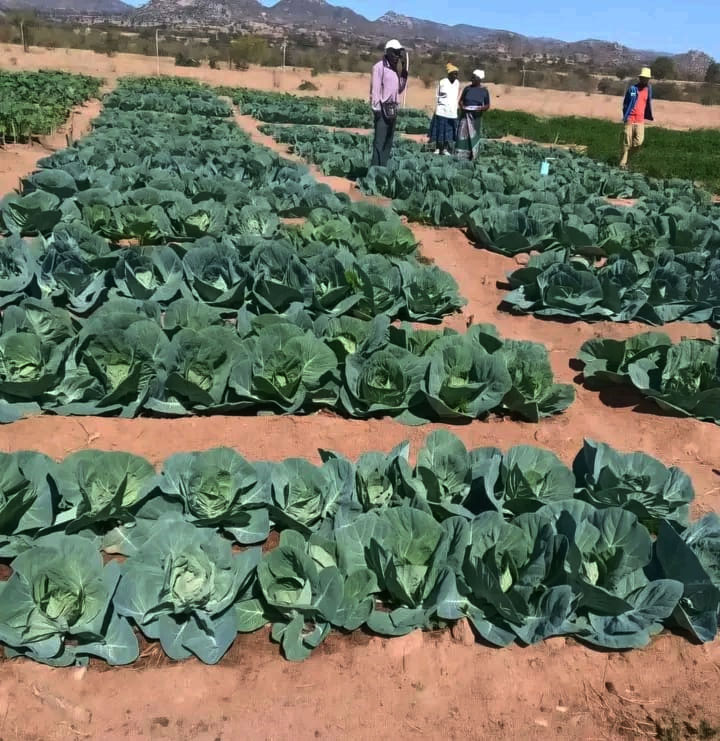
Lovemore Kadzura
Post Reporter
IN the dry and often unpredictable farming landscape of Buhera District, a quiet agricultural transformation is taking root.
Village Business Units, known as VBUs, are turning smallholder farmers into organised producers with a stronger stake in the local economy.
Once largely associated with subsistence farming, communities across the district are now embracing a model that brings farmers together to produce, process and market agricultural commodities as organised business entities.
The change is being felt, not only in the fields, but in the way rural communities think about farming itself.
For many farmers, agriculture is no longer simply about producing enough food for the household. It is becoming a commercial venture capable of generating income, creating employment and improving livelihoods.
In a district where recurrent dry spells and erratic rainfall have traditionally threatened food production – that shift matters.
At the centre of this transformation is the VBU concept introduced by the Government. The idea is simple, but powerful. Villagers work collectively, pool resources and take advantage of economies-of-scale. Instead of scattered individual plots struggling in isolation, farmers converge on a common productive space with shared water, labour and markets.
Buhera District Agriculture Extension Officer, Mr Rekai Mubonani, said the VBUs have opened doors for farmers to move beyond over-reliance on traditional grains long synonymous with the district.
“We have 74 VBUs in the district. 40 were established by the Government, including eight School Business Units. Development partners set up 34 units, one Chief Business Unit and one by an individual. Sixty-four are functional, seven are partially functional while three are non-functional,” he said.
The numbers tell a story of steady uptake.
Government, development partners, traditional leadership and even individual entrepreneurs have all contributed to the rollout. But functionality is the real measure, and with 64 units fully operational, Buhera has a critical mass.
“The VBUs have made a major impact in the district. They have brought many farmers onto one field. This has made it easy to grow and market the produce collectively. Villagers’ lives have been transformed as they are now financially liquid and leading decent lifestyles,” said Mr Mubonani.
That liquidity is visible in what farmers are now choosing to grow. High-value horticultural crops.
“Farmers have mostly adopted high value crops such as green mealies, butternuts, cucumbers, sugar beans, garlic and others. There is abundant market for the produce in the district. In the past such produce was coming from outside the district and consumers had to pay a premium,” he said.
It is a subtle but important economic reversal.
Crops that used to be trucked into Buhera from other districts, often at a premium, are now being grown locally. Money that used to leave the district is now circulating within it.
“Farmers are supplying markets at Murambinda Town Board, boarding schools and individual consumers in communities. Three VBUs were linked to other markets by the Agricultural Marketing Authority,” said Mr Mubonani.
That market linkage is crucial. Production without a market is a dead end. By connecting VBUs to institutional buyers such as boarding schools and town markets, extension services have helped shorten the distance between the field and the buyer.
Starlight VBU in Ward 25 at Unganai Village illustrates what is possible when the model works.
Since its establishment in 2024 by a development partner in conjunction with Government, the unit has led to tremendous transformation of its 50 members, predominantly women.
Its chairperson, Mrs Grace Jongwe, speaks of the change in practical, household terms. Members have acquired livestock, are paying school fees without struggle and providing families with balanced nutrition.
“We started our VBU in 2024, and we have achieved a lot as a group and at individual level. We are mainly into horticultural products which are on high demand in Buhera because of the unreliable rainfall. We sell mostly to our community members and when we have transport we deliver to Murambinda and Birchenough Bridge where there are bulk buyers and the prices are lucrative,” she said.
For Starlight, proximity is an advantage, but transport remains the bridge to better prices. Community sales provide steady daily income, while bulk sales at Murambinda and Birchenough Bridge offer higher margins when transport is available.
“We are now paying school fees on time and children are attending lessons regularly. Individuals have acquired livestock such as goats and sheep while others are buying household property. Our wish is to embrace drip irrigation system as at the moment we are fetching water at the taps using buckets to water the fields. This requires a lot of labour,” said Mrs Jongwe.
The bucket system, while effective, reveals both the resilience and the limits of the current setup. Farmers are producing, but they are doing so through intensive manual labour. Their next ambition, drip irrigation, would save water, reduce labour and expand production.
The Ministry of Agriculture, Mechanisation and Water Resources Development recently described Starlight VBU as a model for drought resilience under Pillar 2 of the Food Systems Transformation Strategy focusing on climate-smart production and irrigation.
The ministry noted that as Manicaland prepares for the predicted 2026/27 Super El-Nino, the province’s 64 functional VBUs are turning collective production into engines of food security and income.
Starlight VBU, operating on one hectare, has invested in a tricycle, crop insurance, nursery hub and site infrastructure, while maintaining US$800 in cash reserves and strong Internal Savings and Lending scheme.
Its impact extends beyond member households to include vegetable donations at community funerals.
Women, who form the backbone of many rural farming communities, are among the main beneficiaries. Through organised production and income generation, they are gaining greater opportunities to contribute to household incomes and strengthen their economic independence.
If properly supported, the model could provide a lasting foundation for rural industrialisation by ensuring more value is created within communities, rather than farmers simply selling raw produce.