Online Reporter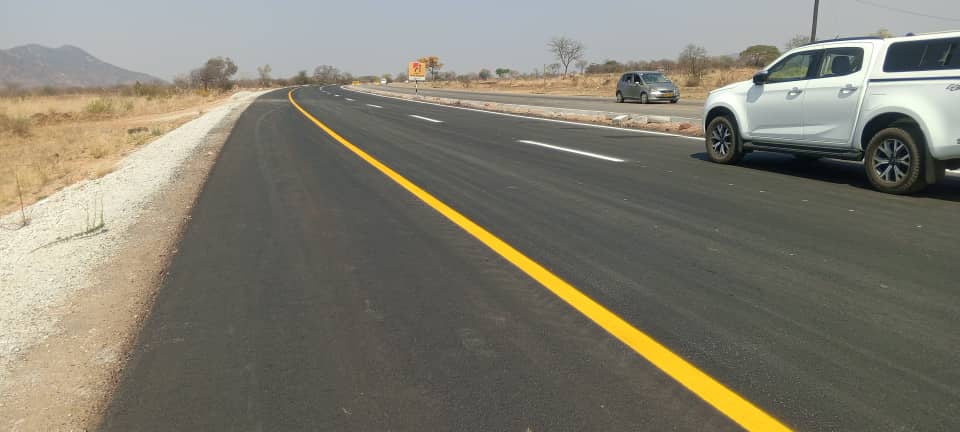
Wesley Zvomuya
“IF you want to get rich, build a road first.” This is a Chinese proverb that is said to have originated in ancient times.
In ancient China, roads played a crucial role in connecting different regions and facilitating trade.
They were essential for the movement of goods, people and ideas, which contributed to the prosperity of various dynasties.
The ancient Silk Road — a network of trade routes that connected China to the rest of the world — has become not just a historical marker of the epoch, but also a metaphor for today’s economic globalisation led by China, as well as the country’s policies of economic reforms and opening up to the world that began in the late 20th century.
As China focused on modernisation, it prioritised building infrastructure, particularly roads and railways, to connect urban and rural areas, and promote trade and investment.
The ancient Silk Road is the inspiration behind the Belt and Road Initiative (BRI), a global infrastructure and connectivity programme launched by China in 2013 incorporating countries in Asia, Europe and Africa.
Zimbabwe became a member of the BRI network in 2018 and has since seen major infrastructure projects.
In Zimbabwe and the rest of the developing world, building roads has become a necessary pathway to achieve modernisation.
In one of the notable achievements in post-independent Zimbabwe, in May, the country celebrated the opening of a major road construction project in the capital, the Trabablas Interchange, an impressive structure linking Harare city centre with nearby suburbs.
Built at a cost of about US$88 million, the interchange solved the immediate challenge of congestion around the area on the periphery of the capital city, which had groaned under the weight of a massive increase in traffic.
The route is also Zimbabwe’s gateway to South Africa, an important regional economic hub.
Zimbabwe, through local resource mobilisation, is about to complete the nearly 600 kilometres of the Harare-Beitbridge highway, which is part of the North-South corridor, which links Southern and Central African countries, including Zambia and the Democratic Republic of Congo.
Opening the interchange, President Mnangagwa noted the importance of developing the country on the basis of a key infrastructure backbone.
“The construction of this interchange is not an isolated project,” said the President, “. . . it is part of my Government’s plan to ease congestion across all cities . . . Transport infrastructure is singled out as one of the critical enablers for economic growth, for development, industrialisation and modernisation.”
In economic planning, the country has identified infrastructure development as a priority area.
The National Development Strategy 1 (NDS1: 2021-2025) identified infrastructure development and modernisation as critical enablers for achieving an “empowered and prosperous upper middle-income society” by 2030.
The strategy emphasises transformative development of transport; energy; information and communication technology (ICT); water; and housing sectors, integrated with technological innovation and institutional reforms.
With particular reference to the transport sector, the plan aimed at rehabilitating road/rail corridors such as the Beitbridge-Chirundu highway (incorporating Trabablas), modernising rail transport and upgrading airports to international standards.
With the help of China, Zimbabwe completed the upgrade of the Robert Gabriel Mugabe International Airport in the capital.
In the context of transport infrastructure, Zimbabwe has a big task to modernise.
According to statistics, Zimbabwe’s transport sector faces critical infrastructural deficiencies, severely constraining economic growth.
The road network — spanning 98 000 km — needs sustained attention, with only 18 percent (17 846 km) paved and only 11 percent classified as in “good condition”, falling markedly below regional Southern Africa Transport and Communications Commission (SATCC) standards.
In addition, 89 percent of rural roads remain unsurfaced, rendering them virtually impassable during rains and recurrent floods. They further erode poorly maintained drainage systems.
The rail sector is not faring any better.
Freight volumes plummeted to 1,7 million tonnes in 2021 (against a 4,5-million tonne target), while passenger services carried only 0,231 million people, less than a third of the national goal, reflecting chronic underinvestment in locomotives and track maintenance.
Lessons from China
China’s infrastructure development, particularly in roads, has been a cornerstone of its rapid modernisation over the past four decades.
This transformation was neither incidental nor purely market-driven — it was the result of deliberate state-led planning, ambitious national policies and sustained political will.
China’s success in building world-class infrastructure has not only boosted its domestic economy but also laid the foundation for its global infrastructure push through the BRI.
After economic reforms in 1978 under the leadership of Deng Xiaoping, China recognised that poor infrastructure was a bottleneck to economic growth and industrialisation.
To address this, the Chinese government prioritised infrastructure as a critical element of its development strategy and laid out a number of blueprints to support infrastructure development. These include Five-Year Plans (first introduced by Mao Zedong in 1953) — the comprehensive blueprints for national development — which identified infrastructure investment as key to achieving economic goals.
They were also integral to regional development and poverty reduction.
China also rolled out the Western Development Strategy (2000) to bridge the gap between coastal and inland regions, which included massive investments in road networks, highways and expressways in China’s underdeveloped western provinces.
This improved connectivity and economic integration.
A special programme called the National Trunk Highway System — initiated in 1990 and completed by 2007 — was a major undertaking to connect all provincial capitals and large cities with a national expressway system.
According to statistics, by 2020, China had built the world’s largest highway network, spanning over 160 000 kilometres.
These plans also came up with robust funding mechanisms, such as public-private partnerships and state-owned enterprises, to execute infrastructure projects efficiently, while fiscal and institutional support was mobilised.
China’s Ministry of Transport, and the National Development and Reform Commission played leading roles in planning and approving projects.
Further, financial mechanisms through a mix of central and local government funding, as well as development banks like the China Development Bank (CDB), supported this infrastructure drive.
The benefits of infrastructure development have been self-evident: it has resulted in enhanced road connectivity, reduced transportation costs, improved logistics efficiency and supported the growth of export-oriented manufacturing hubs, especially in inland areas.
Better infrastructure has enabled rapid urbanisation, allowing workers to migrate to cities and industrial zones more easily, while transport networks have helped integrate regional markets within China, reducing regional inequality and opening up less-developed areas for investment.
Resultantly, China has seen the “multiplier effect” as infrastructure investment acts as a stimulus during economic slowdowns (for example, the post-2008 global financial crisis), creating jobs and boosting domestic demand.
Zimbabwe and the BRI
Launched in 2013 by President Xi Jinping, the BRI is a global infrastructure and economic development strategy that mirrors China’s own domestic transformation experience.
It aims to connect Asia, Africa and Europe through a network of land and maritime routes.
Rather than a geopolitical project, it is a pragmatic framework for economic transformation through infrastructure.
With over US$1 trillion in cumulative financing — including US$419 billion in direct investments — the BRI spans over 150 countries.
In 2023, Africa became the top regional recipient of BRI financing, with Zimbabwe among key beneficiaries.
Thanks to BRI, Zimbabwe has unlocked benefits of cooperation with China, which has undertaken various projects in energy, transport and communications.
The Kariba South Extension (2018) and Hwange Units 7 and 8 (2024) have added 900 megawatts to the national grid, boosting power supply and unlocking industrial growth.
The modernisation of the Victoria Falls International Airport and the Robert Gabriel Mugabe International Airport has enhanced air connectivity, while broadband projects by NetOne have expanded digital inclusion.
Chinese investments rose from US$445,9 million in 2019 to US$3,4 billion in 2023.
Given the significant gaps in its transport infrastructure, Zimbabwe should not only learn from China but also expand its existing cooperation.
This includes rehabilitating rural roads and improving road and air transport to support other economic sectors like mining, manufacturing and tourism.
While Zimbabwe is increasingly mobilising internal resources for infrastructure development, pragmatic cooperation with China, with careful planning, accountability and efficiency, can significantly increase the success rate of these projects.
East African countries like Kenya, Ethiopia and Uganda have already achieved progress and win-win outcomes through similar cooperation over the years. Zimbabwe has the opportunity to follow in their footsteps and accelerate its journey towards modernisation.
Wesley Zvomuya is a Bindura-based analyst and international relations expert.