admin
admin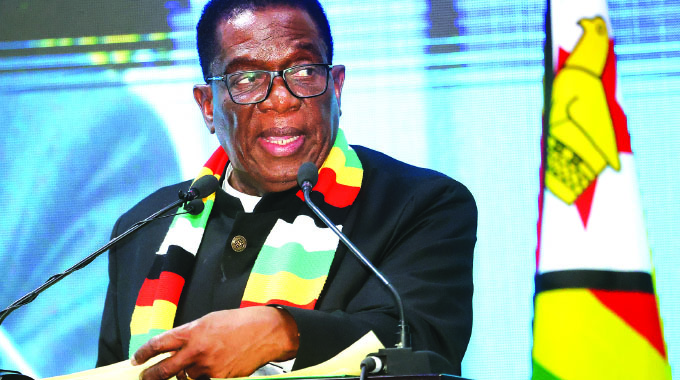
Address by President Mnangagwa at the 1st International Climate and Health Africa Conference in Harare yesterdayIT is my honour to have been invited to address this historic and inaugural International Climate and Health Africa Conference.
This is no ordinary gathering. We convene to share perspectives and strategies towards improving the well-being, and dignity of the citizens of Africa, especially in the face of the devastating impacts of climate change.
The focus of this Climate and Health Africa Conference is commendable. The platform allows us all to better understand the emerging evidence from across our continent, which is shaping the health landscape under climate stress.
Evidence includes essential data on Environmental Exposures and Climate-Health Epidemiology, while also focusing on what it takes to implement Climate Adaptation Interventions and Building Resilient Health Systems.
The exploration of how to reduce the carbon footprint through mitigation strategies, with the added bonus of co-benefits for public health is critical. Through this engagement, we must, therefore, ensure that our work continues to be grounded on the principles of ethics, and equity, particularly prioritising the most vulnerable.
This conference further provides for dialogue between researchers and policymakers, towards developing and exchanging solutions, which work best for our people and the continent.
I applaud our development partners, including the Wellcome Trust, for supporting and undertaking multiple capacity building programmes.
These will not only support researchers but lay the foundation for strong and sustainable institutions as well as institutional arrangements in our quest to address climate and health related issues.
It is, therefore, my expectation that, the insights gained at this gathering will resonate across the continent, while shaping Africa’s contributions to COP29 and beyond on climate change impacts on health.
Ladies and Gentlemen; Our beloved continent, Africa, is enduring the worst effects of global warming. The land that nourished us for a millennium is now being ravaged by increasingly severe heat, droughts, floods, and cyclones.
The impacts are profound, costing African economies between 3 and 5 per cent of our GDPs. Despite being among the least responsible for emissions causing the climatic disturbances, Africa bears both the brunt and cost of climate change.
The harsh realities are distinctive, from failed crops, floods, cyclones, widespread water shortages, as well as disruptions of our cultures, identity, lives and livelihoods.
These have put millions of people at risk. Climate change is not merely an environmental disaster; but a profound public health emergency. As temperatures rise and heatwaves stretch longer, we are witnessing the proliferation of heat-related illnesses and deaths.
Diseases we thought were under control, which include malaria, cholera, and diarrheal infections are now resurging. This coupled with illegal sanctions, particularly for Zimbabwe, is having a far reaching implication on straining our health system.
Whilst we call for global action, international cooperation, financial support as well as the growing realisation of Africa to work towards inclusive and sustainable development, unite us to act now.
The concrete manifestation of the deeply rooted Pan-African drive for unity, self-determination, progress and collective prosperity must see us as the African continent playing our part in confronting and reversing climate change.
We cannot, and must not, wait for others to lead. Through such pivotal platforms, let us commit to concrete action, exchange innovative ideas and technologies as well as share experiences. The ‘right to protect our citizenry’ can never be delegated.
As African nations, we must be at the forefront of protecting our people, our flora and fauna, while advancing our development aspirations and livelihoods.
The decisions we make at this conference should, thus, pave way for a healthier, more sustainable and prosperous Africa, where no one and no place is left behind.
We must build climate-resilient health systems that can adapt to and shield our people, health workforce and systems from hazards.
Ladies and Gentlemen; At the 26th UN Climate Change Conference of the Parties COP26, Africa spoke with one voice, and we achieved notable milestones. The Glasgow Climate Pact set forth a clear path, affirming that a world where the global temperature rise is kept below 1.5°C is safer than one that surpasses that threshold.
Developed nations acknowledged their responsibility to assist in ‘Just Transitions’ that promote sustainable development, the eradication of poverty, and creation of decent jobs. Yet, more must be done.
It remains concerning that the financial resources necessary to enable developing nations to mitigate and adapt to climate change remain insufficient.
Africa’s realities, special needs and circumstances must be globally recognised. The tenets of ‘Common, but differentiated responsibilities’ must be upheld. We unfortunately carry the largest burden of climate change, an occurrence, Africa did not cause.
Our economies, are among the most vulnerable and this exacerbates the impacts of climate change on our people.
The recognition of such a reality will unlock the vital financial flows needed for Africa to undertake ‘Just Transitions’ toward a low-carbon future. Global funding mechanisms are needed to cover the major losses and damages that countries in the Global South are facing.
As we prepare for COP29 and look ahead to COP32, Africa must once again stand united. We must advance our development agenda, framed by our aspirations and driven by the actions of our people. The outcomes of this conference, must play a crucial role in shaping Africa’s future at the intersection of climate and health.
Together, and in line with initiatives by being made by other African countries and the developing world, we will publish the Harare Africa Health and Climate Declaration, a firm commitment to building health resilience in the face of climate change.
As we move forward, we must do so with unity and solidarity. This is Africa’s moment to stand tall with a unified voice and clear, concise key messages that reflect our collective aspirations.
I challenge this conference to commit to climate resilient health systems, where African nations must embed climate adaptation and mitigation strategies into national health plans and national development strategies. This includes developing early warning systems as well as strengthening health infrastructure and the health workforce to ensure resilience in the face of growing climate risks.
We must also scale up research and surveillance to understand how climate change is impacting health, especially the spread of diseases and heat stress.
Our research should continue to focus on the vulnerable populations, including women, children and those living with disabilities, who are most affected by climate change.
The identification of critical climate-health indicators and enhancing surveillance to monitor health system’s capacities to cope with disease outbreaks must be given due priority.
Creating this knowledge is essential for building climate-resilient health systems that leave no one and no place behind.
Additionally, focus must be given on mitigation actions with health co-benefits. As respective jurisdictions, let us adopt green technologies in healthcare to build climate resilient and low carbon sustainable health systems.
This includes efforts to reduce single use plastics, manage urban waste, improve air quality as well as promote climate smart food production and nutrition systems.
Let us leverage public-private partnerships and global collaborations to ensure adequate financing for climate-resilient health systems. Strengthening human resources through technical training, South-South cooperation, and ongoing support for researchers is crucial.
Our institutions of education are challenged to integrate climate resilience into the core of their operations, development plans and monitoring frameworks, among other programmes.
In concluding, I challenge stakeholders in the climate and health space to collaborate and share the outcomes of the Climate and Health Africa Declaration as important central points of discussion at COP29 and beyond. It is also critically important that as Africa plays its role, overcoming the climate challenge requires unity, resolve, determination as well as the commitment to act now.
Africa must, therefore, make her voice heard and count, resonating with unwavering clarity on the global stage, for scaling up multi-sectoral cooperation to addressing the root causes of climate change.
Increasing climate financing, building resilience and adaptation capacity as well as integrating climate justice, remain critical aspects of climate action now and into the future.
With these remarks, it is now my honour and privilege to declare the inaugural International Climate and Health Africa Conference officially open. I wish us fruitful deliberations.
God bless you all.
God bless Africa.
I thank you.


 Online Reporter