Marshall Ndlela, [email protected]
The global economy is once again being reshaped by geopolitical tensions. From the lingering effects of Russia’s operation in Ukraine to the recent escalation involving the United States, Israel and Iran, the world is entering a period of heightened uncertainty. At the centre of this instability lies energy, particularly petroleum, whose supply chains remain vulnerable to conflict, sanctions and strategic rivalry.
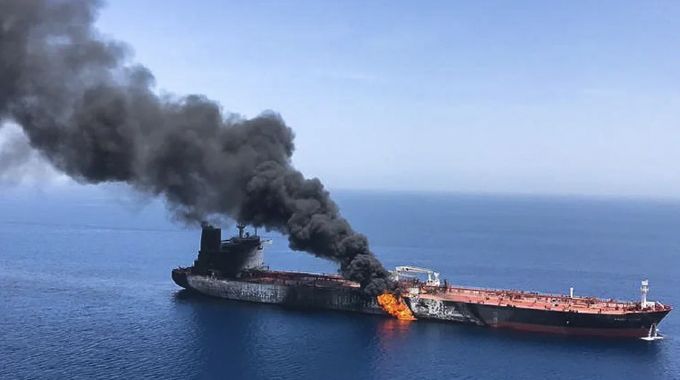
Recent tensions around the Strait of Hormuz, a critical artery for global oil flows, have triggered renewed fears of supply disruptions and price spikes. For Africa, a continent heavily reliant on imported refined petroleum, such developments are not distant geopolitical events; they are immediate economic shocks.
The lesson is becoming increasingly clear: Africa’s continued dependence on global systems leaves it exposed to forces beyond its control.
Petroleum Dependence and the African Cost Structure
Across Africa, petroleum is deeply embedded in the economic system. It powers transport networks, supports agricultural production, drives manufacturing processes and, in many countries, underpins electricity generation.
As a result, fluctuations in global oil prices ripple through the entire economy. When prices rise, transport becomes more expensive, food prices increase, and inflation accelerates. Governments are often forced to choose between subsidising fuel, placing strain on public finances or passing costs to consumers, deepening poverty levels.
This structural dependence on imported fuel has effectively tied Africa’s economic stability to global geopolitical dynamics, making the continent highly sensitive to external shocks.
Zimbabwe offers a compelling case study of how external pressures can shape domestic economic realities. Over the past two decades, the country has faced sanctions, limited access to international capital markets and persistent currency instability.
These conditions have constrained industrial growth and increased reliance on imports, particularly fuel. In such an environment, global oil price, increases often triggered by geopolitical conflicts, have immediate and amplified consequences.
Rising fuel prices in Zimbabwe translate directly into higher transport costs, increased food prices and broader inflationary pressures. For households already navigating economic challenges, this erodes purchasing power and deepens vulnerability.
Moreover, economies that are highly elastic to external shocks are often more susceptible to political and social instability. This underscores the urgent need for resilience through self-reliance.
The Food Security Paradox
The Russia–Ukraine conflict exposed another structural weakness in African economies: dependence on imported food products.
Ukraine and Russia are major global suppliers of sunflower oil and wheat. Disruptions to these supply chains caused sharp increases in food prices across Africa, particularly in cooking oil.
Yet Africa possesses vast agricultural potential. The continent has abundant arable land, favourable climates and a large labour force capable of producing a wide range of crops, including sunflower, soybeans, groundnuts, maize and cocoa.
Despite this, many African countries continue to import processed food products that could be produced locally.
Malawi, for instance, is a major producer of groundnuts, yet the country still experiences shortages and high prices for cooking oil.
This paradox highlights a critical gap not in production, but in value addition and processing capacity.
Building regional value chains
Addressing this imbalance requires a deliberate shift towards building regional value chains. Rather than exporting raw agricultural products and importing finished goods, African countries must invest in processing industries.
This approach could involve establishing oil processing plants in countries with manufacturing capacity, creating cross-border industrial partnerships and leveraging frameworks such as the African Continental Free Trade Area to facilitate intra-office trade.
Countries with stronger industrial bases could process oil seeds produced in neighbouring nations, creating a mutually beneficial economic ecosystem.
Such collaboration would not only reduce import dependence but also create jobs, stabilise prices and strengthen regional economic resilience.
Energy independence: A strategic imperative
Perhaps the most urgent lesson from ongoing global tensions is the need for energy independence.
Africa is richly endowed with renewable energy resources, including vast solar potential across the Sahel and Southern Africa. major river systems suitable for hydropower and wind corridors in coastal and highland regions.
Yet many countries continue to rely heavily on diesel generators and imported fuel for electricity generation.
The current instability in global oil markets, exacerbated by tensions involving Iran and disruptions around the Strait of Hormuz, highlights the risks of this dependency.
Investing in renewable energy infrastructure could significantly reduce Africa’s exposure to global petroleum shocks while supporting sustainable development.
Rethinking oil exports and economic strategy
Africa is not short of oil. Countries such as Nigeria, Angola, Sudan and the Democratic Republic of Congo are major producers. However, much of this oil is exported in raw form, only to be reimported as refined products at higher prices.
This model perpetuates economic dependency and limits value creation within the continent.
A more strategic approach would prioritise domestic refining capacity, regional energy distribution networks and reduced reliance on external markets for refined products.
While global trade will remain important, a shift towards regional self-sufficiency could enhance economic stability and resilience.
Towards a unified and resilient Africa
Achieving self-reliance will require more than isolated national efforts. It demands a coordinated continental approach grounded in economic integration and policy alignment.
Key priorities include strengthening intra-African trade, harmonising industrial and energy policies, investing in regional infrastructure and promoting collaborative development strategies.
The vision of a more integrated Africa is already embodied in initiatives such as the African Continental Free Trade Area. However, translating this vision into tangible economic outcomes will require sustained political commitment and strategic execution.
The recurring pattern of global crises, whether in Eastern Europe or the Middle East, has exposed the vulnerabilities of Africa’s current economic model.
Dependence on imported petroleum and external supply chains has left the continent susceptible to shocks that originate far beyond its borders.
Yet within this challenge lies an opportunity. By investing in local production, regional value chains and renewable energy, Africa can reduce its vulnerability and build a more resilient economic future.
Self-reliance does not mean isolation. It means strategic independence, the ability to withstand global disruptions while harnessing local resources for sustainable growth.
In an increasingly uncertain world, Africa’s path to stability and prosperity lies not in deeper dependence, but in deliberate, coordinated self-sufficiency.