Peter Matika, [email protected]
THE Bulawayo City Council (BCC) has proposed a US$440,6 million budget for 2027, with a 50 percent general tariff increase and new levies targeting roads, public lighting and disaster preparedness as the local authority moves to rehabilitate ageing infrastructure and improve service delivery.
The presentation saw members of the public, who were sitting in the gallery, staging a silent demonstration against the proposed budget.
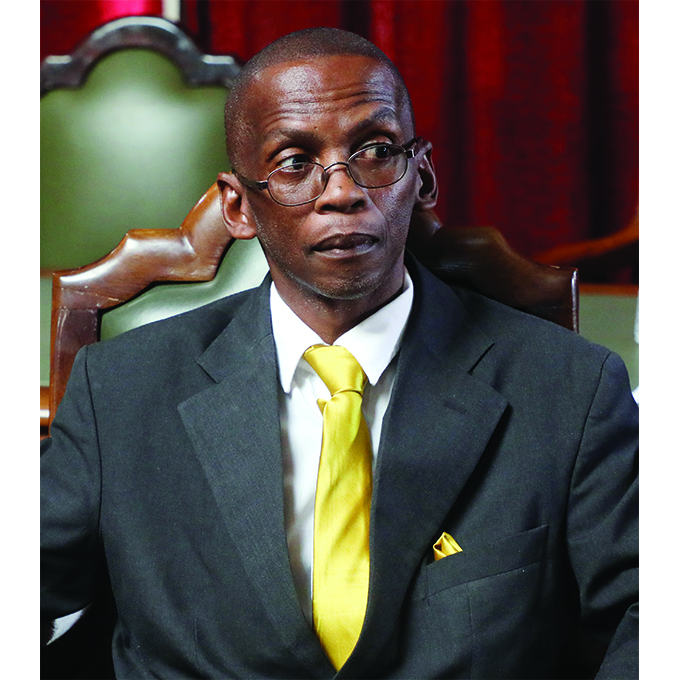
The proposed budget, presented on behalf of the Chairperson of the Finance and Development Committee, Councillor Mpumelelo Moyo by his deputy Dumisani Nkomo, seeks to reverse years of underinvestment in municipal infrastructure, particularly water and sewer networks, roads, public amenities and the council’s ageing fleet.
According to the budget speech, which was presented yesterday at the council chambers, the council has effectively operated a standstill budget since 2022, with municipal charges failing to keep pace with the cost of providing services, resulting in deteriorating infrastructure and limited capacity to undertake maintenance and replace essential equipment.
The budget, themed “Accelerating Economic Transformation and Building Resilience to Climate and Global Shocks”, is therefore intended to restore the city’s capacity to deliver essential services while positioning Bulawayo towards its vision of becoming a leading smart and sustainable city by 2030.
“The proposed budget comprises US$310,5 million in recurrent revenue and US$130,08 million in capital funding, with capital expenditure accounting for approximately 30 percent of the total allocation. However, the tariff increases represent a significant adjustment for residents and businesses, particularly against the background of economic pressures and concerns about household affordability,” he said.
Clr Moyo revealed that the local authority initially proposed a 74 percent tariff increase, a US$100 monthly special roads levy, a US$2 public lighting levy and a US$20 increase on shop licences.
The proposals attracted widespread resistance during public consultations conducted between October 15 and 24, with 38 meetings attended by 2 619 residents and stakeholders.
“According to the budget statement, 35 of the 38 meetings rejected the proposed 74 percent tariff increase, while 36 rejected the proposed special roads levy. A further 33 meetings rejected the shop licence increase and 33 opposed the public lighting levy. Residents raised concerns about affordability, with several meetings proposing lower increases ranging between 10 and 50 percent,” said Cllr Moyo.
Under the revised proposals, domestic ratepayers will pay a US$10 monthly special roads levy, while commercial and industrial properties will pay between US$20 and US$100, depending on stand size.
The public lighting levy remains at US$2 per property monthly, while shop licences will increase by three percent, subject to Government-approved ceilings.
He said the council will also introduce a Disaster Preparedness, Response and Recovery levy equivalent to two percent of the annual budget, expected to generate US$8,69 million.
The roads levy is projected to generate approximately US$20,8 million annually, comprising US$17,8 million from domestic properties and about US$3 million from commercial and industrial ratepayers.
“The money will be ring-fenced for road rehabilitation, resurfacing, pothole patching and the completion of ongoing reconstruction projects. The public lighting levy is expected to generate
US$3,87 million annually to finance the installation and maintenance of street and tower lights,” said Clr Moyo.
He said the disaster preparedness allocation will support early warning systems, emergency water supplies, storm-water drainage and responses to disease outbreaks.
Clr Moyo said as at June 30, 2026, debtors owed council ZWG2,73 billion, with households accounting for ZWG1,95 billion, representing 71,5 percent of the outstanding amount.
Council, in turn, owed creditors ZWG993,6 million, of which ZWG862,5 million was owed to the Zimbabwe Electricity Transmission and Distribution Company.
The local authority collected ZWG1,83 billion against a half-year target of ZWG2,04 billion during the first six months of 2026, representing a collection rate of 89,7 percent.
Collections from water, sewerage, housing and health services fell short of their targets, highlighting the financial challenges confronting essential municipal operations.
“Of particular concern was the council’s inability to adequately maintain its infrastructure, with only ZWG625 434 spent on maintenance against a half-year budget of ZWG188,8 million,” he said.
Cllr Moyo said the 2027 budget would prioritise improving revenue collection, strengthening debt recovery and modernising billing systems to improve financial sustainability.
On water and sanitation, the local authority plans to renew ageing water mains and sewer infrastructure, complete the Lobengula Street sewer line, reduce non-revenue water through bulk metering and improve maintenance of pumping stations and reservoirs.
“The city will also prepare its infrastructure for additional bulk water supplies from the Gwayi-Shangani Dam project, which was reported to be 76 percent complete, while the pipeline to Bulawayo was 15 percent complete and booster pump stations 18 percent complete. The threat of below-normal rainfall during the 2026/27 agricultural season has also placed water security and climate resilience among the city’s major priorities,” he said.
The council intends to update its water demand management plan and strengthen emergency water supply arrangements in anticipation of possible drought conditions.
On roads, the proposed allocation will support rehabilitation and resurfacing, with council seeking to complete the Lobengula Street reconstruction and expand pothole patching programmes.
The acquisition of graders, rollers and loaders during 2026 is expected to improve the city’s capacity to undertake road maintenance using its own workforce.
Social services will also receive attention through the continued construction and equipping of schools, provision of medicines and medical equipment to clinics, expansion of vocational training programmes and strengthening of social safety nets.
He said the authority was also working with private partners to address the shortage of serviced residential stands.
During the first half of 2026, only 411 of the targeted 1 500 residential stands were delivered.
Public safety and security will benefit from the proposed public lighting levy, with council planning to expand solar-powered street lighting and repair tower lights.
The local authority also intends to repair 88 faulty fire hydrants identified across the city while continuing to resource fire and ambulance services.
“Environmental management initiatives will include combating illegal sand extraction and dumping, rehabilitating public parks, planting trees and conducting community awareness campaigns. The proposed budget also seeks to strengthen disaster preparedness through a dedicated allocation of US$8,69 million, which will be reported on separately to improve transparency and accountability,” he said.
Cllr Moyo said that affordability would remain a major concern, saying it would strengthen debt management, introduce payment plans and continue offering rates rebates to elderly residents.
He said the proposed US$440,6 million budget is intended to end four years of stagnant municipal financing and restore the city’s ability to maintain and expand essential infrastructure.
“The successful implementation will, however, depend on improved revenue collection, timely funding disbursements and the willingness of residents and businesses to meet their municipal obligations,” he said.