Online Reporter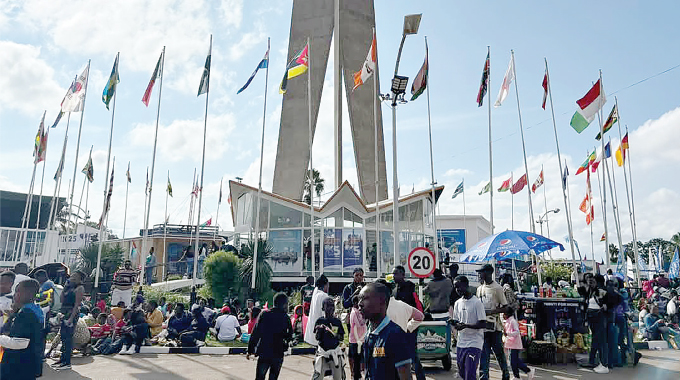
Nqobile Bhebhe, [email protected]
BULAWAYO industries are strategically positioning themselves for the 2026 Zimbabwe International Trade Fair (ZITF), with industry players saying participation at the expo remains a critical gateway for companies seeking to expand markets, attract investment and build partnerships within regional and global value chains.
As preparations for the exhibition gather momentum, stakeholders say firms in the city should approach ZITF not merely as a platform to display products, but as a strategic investment marketplace capable of unlocking capital and partnerships that can drive Bulawayo’s industrial revival.
This year’s exhibition will run from 20 to 25 April 2026 at the Zimbabwe International Conference and Exhibition Smart City (ZICES) in Bulawayo under the theme: “Connected Economies, Competitive Industries”.
Last year, an estimated US$296 million to US$379 million worth of business leads were generated at the expo, according to organisers.

Business leaders say exhibiting at the fair offers companies a rare opportunity to directly engage policymakers, investors and potential clients under one roof while showcasing innovation, new products and services to a diverse audience.
For emerging enterprises and start-ups, the platform provides visibility and credibility, enabling them to benchmark their products against industry leaders while unlocking new distribution channels.
Bulawayo businessman and former Zimbabwe National Chamber of Commerce (ZNCC) Matabeleland Chapter vice president, Mr Lious Herbst, said companies must shift their mindset from exhibition to investment promotion if they are to fully leverage the international platform.
“Local companies can showcase bankable projects in sectors such as agro-processing, leather manufacturing, engineering fabrication, and renewable energy,” he said.
Mr Herbst noted that such sectors already form part of Bulawayo’s traditional industrial base and have the potential to attract both domestic and international investors when packaged as structured investment propositions.
“Another powerful approach is to create industry clusters at the exhibition — for example, a ‘Bulawayo Manufacturing Hub’ pavilion where multiple companies collectively present the city as a regional production centre for Southern Africa. Investors are more attracted to ecosystems than isolated businesses,” he said.

Such collaborative presentations, he said, would reinforce Bulawayo’s historic position as Zimbabwe’s industrial capital while highlighting its readiness to participate in regional value chains.
“Bulawayo has a strategic geographic advantage as a logistics gateway linking Zimbabwe to Botswana, South Africa, Zambia and Namibia. By highlighting this regional connectivity, industries can position the city as an ideal base for companies looking to serve the broader SADC market,” he added.
Economist and co-director at Tagrite & Chikonzi Consultancy, Ms Alice Chikonzi, weighed in saying, this year’s theme reflects the growing importance of regional integration in driving Zimbabwe’s industrial growth.
“Connected economies speak to the need for stronger trade linkages within the region and across the African Continental Free Trade Area (AfCFTA),” she said.
“For Zimbabwean industries, competitiveness will come from improving productivity, innovation and value addition so that local products can effectively penetrate regional and international markets.”
Ms Chikonzi said platforms such as ZITF play a critical role in linking businesses, policymakers and investors.
“In today’s globalised economy, industries cannot operate in isolation. Connectivity through trade agreements, logistics networks and digital platforms allows companies to access new markets and technologies, which ultimately improves competitiveness,” she said.
Beyond traditional manufacturing, Mr Herbst said Bulawayo must also demonstrate its readiness to transition into a modern industrial economy driven by technology and innovation.
“To demonstrate innovation, Bulawayo should position itself as a city transitioning from traditional heavy industry to smart, technology-enabled manufacturing.
“This can be achieved by showcasing collaborations between industry, universities, and technology companies to develop new solutions in manufacturing, logistics, and digital trade,” he said.
Mr Herbst said exhibitors could also spotlight emerging technologies and modern production systems that improve efficiency and competitiveness.
He also said the expo could be used as a platform to promote industrial incubation initiatives and small-to-medium enterprise (SME) manufacturing hubs in the city.
“This approach shows that Bulawayo’s growth strategy is not limited to large factories but includes a broader industrial ecosystem that supports entrepreneurship, skills development, and job creation,” he said.
Mr Herbst said if strategically presented, ZITF 2026 could significantly strengthen Bulawayo’s positioning as a modern manufacturing and logistics hub within the region.
“This all falls perfectly in line with President Mnangagwa’s NDS2 and Vision 2030. We must embrace diversity and inclusion, on occasions such as ZITF, it’s about collaboration as a nation, not competition,” he said.
Under the National Development Strategy 2 (NDS2), the ZITF is expected to move beyond a general exhibition format towards more focused, sector-driven engagements aimed at facilitating tangible business deals, technology transfer and investment commitments.
By strengthening sector-specific matchmaking, the upgraded ZITF will help local firms integrate into regional and global value chains, improve competitiveness and stimulate sustainable export growth.