

 admin
admin
Ricky Zililo, Senior Sports Reporter
CHIBUKU Super Cup winning coach, Thulani Sibanda had no time to celebrate Bulawayo Chiefs’ first major silverware, quickly jetting off to Tanzania for a Caf A Licence coaching course which started on Monday.
Sibanda, who presided over three Chiefs’ Chibuku Super Cup matches, including the 1-0 final win against Herentals at Barbourfields Stadium on Sunday in the absence of head coach Nilton Terroso, left the match venue in a hurry without collecting his medal.
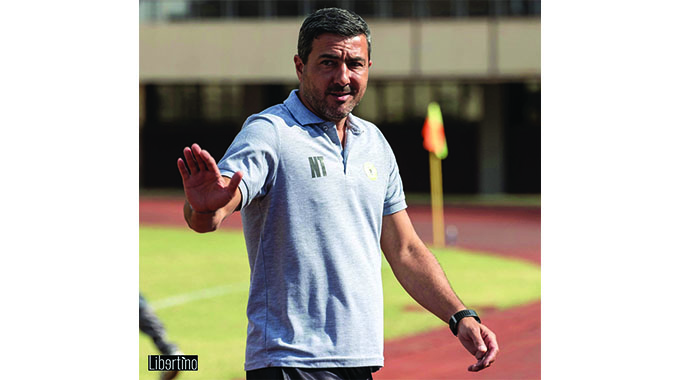
Sibanda was in charge of Chiefs’ quarter-final 1-0 win against Highlanders, penalty shootouts victory against Black Rhinos in the semi-finals after the match had ended 0-0 in regulation time.
He even failed to attend the post-match interviews as he had to drive to Harare to catch a flight to Tanzania on Sunday night.
In an interview with Chronicle Sport, Sibanda expressed gratitude to Chiefs for taking care of his course fees, saying he looks forward to three weeks of capacity development.
“I didn’t snub the final post-match interview but I had to quickly drive to Harare as my check-in time was 10pm. I wanted to be there to celebrate with the boys, management and everyone, to get to the podium, but due to these circumstances I had to quickly leave for the course.
“The Tanzanian football federation has taken the Caf A Licence course to Zanzibar and this is where we will be doing our lessons for the next three weeks. I’m excited for this opportunity and I’m grateful to Bulawayo Chiefs for investing in my capacitation,” said Sibanda.
Besides the Caf B badge, Sibanda is a holder of a Scottish C-Licence and a Sports Science degree from the National University of Science and Technology (Nust).
With three First Division titles under his belt, Sibanda, who guided the club to the Premiership after winning the 2017 Zifa Southern Region Division One Soccer League title had to be reassigned to “fitness trainer” at the club in their maiden topflight appearance in 2018 as he didn’t have the requisite Caf A Licence.
It was only in 2019 that Sibanda, who won his first championship in Division One in 2011 when he guided now defunct Quelaton into the Premiership, managed to get an exemption from Zifa.
The football mother body has been enforcing policies and regulations in the game, with the clean-up exercise targeting at having only qualified personnel and authorised individuals at the Premiership dugouts.
A number of assistant coaches and support staff were “ejected” to the terraces after failing to get accredited as they don’t have requisite qualifications.
Zifa technical development chairperson Kenneth Mhlophe said they are simply making sure that clubs adhere to Fifa/Caf Club Licensing requirements.
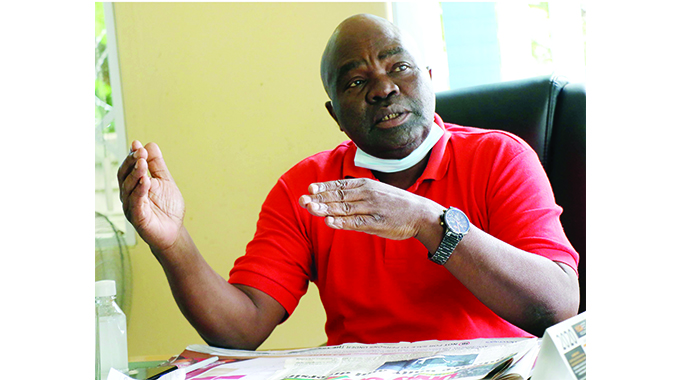
He said they’ll enforce the policies and regulations as part of football clean-up.
“We can’t have a situation where we turn a blind eye and say because we’re not involved in international football let Zimbabwean football be an animal farm where anyone can do as they please.
There was an annoying increase of disregard of the club licensing with unqualified coaches and supporting staff at the benches of the PSL. We don’t make rules on who qualifies to be at the bench, it’s Fifa and Caf. There’s no going back in terms of enforcing standardisation,” said Mhlophe.
Zifa implemented standardisation for local football coaching that requires all top-flight coaches to possess a Caf A licence at the beginning of the 2017 season.
Standardisation of coaches meant that Premiership gaffers and their assistants must be in possession of a Caf A badge. Division One coaches should have a minimum of Caf B while assistant coaches are required to be holders of a Caf C or Zifa Level Four licence.
In the Second Division, a coach should have a Caf C licence while his understudies are required to have a Level Three qualification as a minimum standard.
The coaching standards also cascaded down to Division Three, tertiary institutions and schools. For secondary schools, a Zifa Level Two badge became mandatory and primary school football coaches were expected to have at least Level Two certificate. – @ZililoR


 Online Reporter