Chronicle Editor
Judith Phiri, Business Reporter
THE Bulawayo City Council (BCC) has called for a review of the implementation of the Special Economic Zones (SEZ) model in the city citing the lack of basic infrastructure, from power to water, which was preventing investors from setting up shops.
In September 2019, the Zimbabwe Special Economic Zones Authority which has since been dissolved following the formation of the Zimbabwe Investment and Development Agency (Zida), came up with an action plan for the implementation of the SEZs concept in Bulawayo.
It was hoped that the SEZs initiative would help Bulawayo restore its industrial hub status while improving Zimbabwe’s macro-economic capacity to produce goods and services competitively as well as creating economies of scale.

Bulawayo’s industrial sites Belmont, Donnington, Kelvin and Westondale were designated as SEZs, while a new industrial park on a virgin piece of land in Umvumila will be developed.
Responding to a question during the review of the Bulawayo Provincial Economic Development Plan (PEDP) 2023 on Thursday, BCC economic development officer, Mr Kholisani Moyo said there was need to review the SEZ model implementation in the city.
“We recently did a visit to South Africa to understand how we can implement the SEZs model. We visited about five SEZs projects there and we got an appreciation of the way they are implementing them and one thing we noted is that the Central Government is heavily involved in those projects.
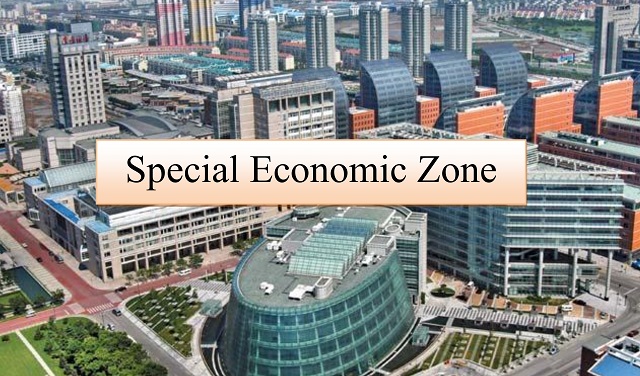
“They have what is an almost similar structure to what we have of the Central Government, provincial office and local authorities. However, when the Central Government in South Africa declares an area to be a SEZ they fund infrastructure development of that zone, which is different with what happens in our country,” he said.
“Here when an area is declared a SEZ like Umvumila we then start looking for investors to come and invest, but in South Africa, they will declare a zone and then the provinces will be in charge of those zones and their development through the SEZ fund.”
He said the incentives that we normally pleaded for here in Zimbabwe for SEZs model were not the same as the ones that attract investment in the zones in South Africa. Mr Moyo said in the neighbouring country (South Africa) the infrastructure, road, fibre cables and water among other key things for SEZ would be financed by the Central Government, making it easier to attract investors for the zones there after.
“Looking at our situation, when you go to Umvumila we have got the diagram and the other infrastructure is not there. It is very difficult if you look at our SEZ model to say who is in charge from the Government or the local authority whether it the Ministry of Industry and Commerce or Ministry of Finance, Economic Development and Investment Promotion,” he added.
“As council, we will develop a report on what we learnt in South Africa and how best we can implement the SEZs projects. But certainly, the Provincial office needs to be incorporated, we have been leaving you behind. To map the way forward we also need to engage the private sector and other key players.”
In a separate interview, he said looking at the SEZ areas in the city there was need to put infrastructure like roads, water, electricity and even information and communication technologies (ICTs) such as fibre cables so as to attract investors.


 Online Reporter