Chronicle Editor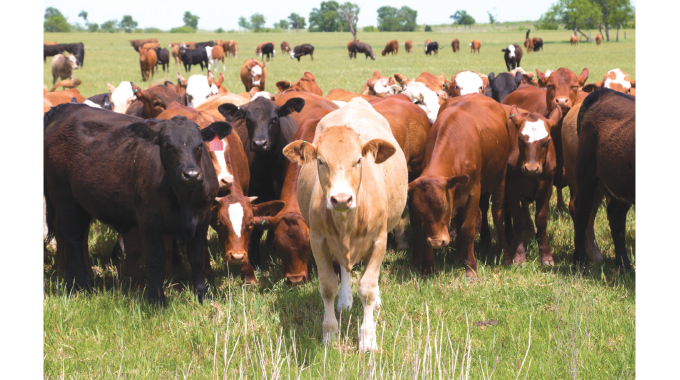
Judith Phiri, Features Reporter
The Government has put in place rigorous programmes to improve livestock production and achieve a six million cattle headcount as the country moves towards import substitution while resuscitating the beef export market.
The initiatives by the Second Republic are set to address genetic improvement, disease resilience and feed availability among other aspects. In a recent report, the Ministry of Lands, Agriculture, Fisheries, Water and Rural Development said the national beef cattle herd had a growth of two percent in 2022, increasing from 5 509 983 in 2021 to 5 642 400 in 2022.
The positive growth was attributed to a fairly good livestock season and a reduction in mortality, especially due to tick-borne diseases. Most farmers that were affected by theileriosis earlier this year continue on a herd-rebuilding drive. The report also indicates that cattle mortality decreased by three percent from nine percent in 2021 to six percent in 2022. Different animal diseases were the major causes of beef cattle mortalities accounting for 83 percent of deaths from sampled beef cattle owners.
The decreased cattle mortalities are attributed to improved animal health management especially control of tick-borne diseases in hot spot areas with improved dipping regimes and introduction of the intensive 5-5-4 dipping cycle. Regular cattle dipping has greatly reduced the number of tick-borne diseases especially theileriosis (January disease), while small ruminant dipping is not a common practice by many farmers. The general condition of livestock is said to be fair to good across the country.
Ministry of Lands, Agriculture, Fisheries, Water, and Rural Development Deputy Minister Davis Marapira said re-establishing the foot and mouth disease (FMD) zone fences was critical in reducing the spread of the disease, while also contributing to the growth of the national herd. At the recent official handover of the Manama Anchor Animal Health Management Centre and the launch of the Animal Disease Surveillance Plan in Gwanda District, Matabeleland South province, Deputy Minister Marapira called on the private sector to come on board with investment for the fencing throughout the country.
The FMD zones are differentiated by colours, with the white zone being FMD-free. The green zone is between the red zone and the white zone and animals in this zone are regularly inspected for FMD. The green zone acts as the buffer between the red and white zones. All zones are separated from each other using fences and identified by hot iron brand marks on the left neck of cattle to show the zone. The red zone is usually found around national parks where there are buffaloes. All animals in this zone are vaccinated religiously for FMD and are not allowed to leave this zone unless when going for direct slaughter to designated abattoirs.

In his speech, Deputy Minister Marapira said: “Agriculture is key to the Zimbabwe economy and the sector accounts for between 12 and 20 percent of the gross domestic product (GDP). We used to export beef to Europe and other countries on the globe. However, diseases such as FMD among others have actually affected our exports. Being our partner today (European Union) what is needed is for us to go back to the drawing board and see what is actually causing the FMD in Zimbabwe coupled with the January Disease which I am always arguing with my learned friends to say it is now a 12 months disease.”
He said the country used to have good zone fences and there was a need to re-establish the demarcations to enhance livestock production.
“Unfortunately, this area (Gwanda) falls under the red zone, but when it comes to FMD we need to control it and it can be done. This will allow us to resume exporting in large volumes as Zimbabwe has the best meat in the world. Our competition is not about the prices but the delivery of the best meat in the world as we still have our percentage of contribution to the markets of this world.”
The Deputy Minister said zeroing into livestock, the country has over 5,4 million beef cattle herd, 53 250 dairy animals and over 4,8 million goats among other livestock species. He said this translated to an over US$2 billion contribution to the country’s economy and the sector was a Vision 2030 accelerator although more needed to be done.
“Other countries in the region talk about 50 million, 60 million to 70 million cattle herd and that becomes an economy. So, what is needed in Zimbabwe is the production and reproduction of our animals for the national herd to increase. There are a very few things which need to be done such as looking at the health aspect. The biggest which we should not forget and the private sector should come in as well is the nutritional value of our animals. If our animals do not have good health especially the females and the bulls, the he goats or the she goats we are not going to have good production. They will naturally abort their pregnancies so we need a reasonable percentage of their body weight for them to produce very well,” he said.
Deputy Minister Marapira said his Ministry was seized with the drive to transform the agricultural sector to increase its contribution to the achievement of Sustainable Development Goals (SDGs) targets. He said strategies such as the National Development Strategy 1 (NDS1) have been crafted to deliver the country’s vision of getting to a prosperous and empowered upper middle-income society by 2030.
The Deputy Minister added: “Instead of talking about 5,4 million beef cattle, we need to increase production and start talking about 20 million cattle in Zimbabwe. I am happy that this region, which is Matabeleland South, is number two in cattle production in the country. Number one should be Masvingo which has more than a million cattle but that is still less in the great province. Let us improve and increase meat production as well as other by-products.”
He said the target was to upscale beef exports to other countries in the region and across the globe. Deputy Minister Marapira said the Manama Anchor Animal Health Management Centre was among the 26 centres around the country that were developed under the Transforming Zimbabwe’s Animal Health and Food Safety Systems for the Future (SAFE) project that will bring livestock products and services closer to the farmers in an affordable way.
The Government and its development partners have upgraded the centres in eight provinces across the country under a US$4 million project aimed at enhancing community livelihoods through increased production and contribution to the national economy. The centres were established under the Transforming Zimbabwe’s Animal Health and Food Safety Systems for the Future (SAFE) project, which is part of a larger European Union (EU)-funded Zimbabwe Agricultural Growth Programme (ZAGP) that was launched in the country in June 2019.

Deputy Minister Marapira said the development was a unique milestone by the Department of Veterinary Services (DVS) as they collaborated with the EU and the Food and Agriculture Organisation (FAO) to implement the SAFE project which contributes to the achievement of NDS1 targets.
The Deputy Minister said he was glad to see that the SAFE project has been contributing to enhancing animal production and productivity through interventions such as support to production of tick-borne disease vaccines, support to formulation of strategies for livestock, capacitation and ISO accreditation of Government laboratories and training of extension staff on standard operating procedure (SOPs) among other things.
In an interview, Matabeleland South provincial veterinary services director Dr Enat Mdlongwa said fencing was a key component in animal production.
“They will prevent animal diseases from spreading from one area to another. They also play a role in zoning our province to say this is a clean area, this is a red zone and a green zone in terms of FMD control. We want to start exporting to the EU and the rest of the world, so to do that we need to control FMD and other animal diseases, that is why there is a need for zone fences,” he said.
Department of Veterinary Field Services director Dr Jairus Machakwa said the Government was working towards ensuring there is zero livestock morbidity and mortality. He said efforts to resuscitate the livestock sector continue to gather traction with the Government implementing several measures aimed at boosting production to satisfy national demand for both human consumption and industrial use.
The efforts are part of the country’s Livestock Recovery and Growth Plan (2021-2026), whose main thrust is to put in place solid interventions to address livestock production and productivity issues required for a good foundation for the livestock sector to assume its prominent role in transforming farmers’ livelihoods and providing the required raw materials for agriculture-led industrial development, among other things.


 Online Reporter