Online Reporter
Nqobile Bhebhe, Zimpapers Senior Writer
BULAWAYO’S water supply remains precarious with its supply dams recording low-capacity levels, all below 50 percent, despite improved dam levels elsewhere in the country, a situation that further threatens the city’s water security, recent statistics show.
The dams all in Matabeleland South Province, Mtshabezi, Umzingwane, Inyankuni, Upper Ncema, Lower Ncema and Insiza remain critically low even with current heavy rainfall.
Most parts of the country have been receiving heavy rains with some dams spilling but the rains have not translated to improved inflows to Bulawayo’s supply dams.
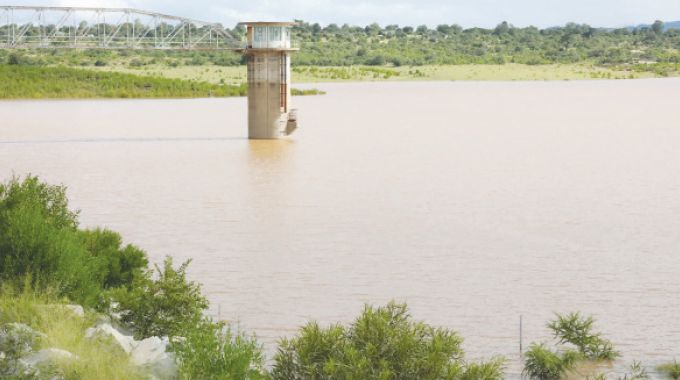
According to the latest update from the Zimbabwe National Water Authority (Zinwa), as of 14 January, Bulawayo’s dams were still below 50 percent capacity.
Insiza Dam is the best-performing among the city’s reservoirs standing at 45,9 percent full.
While this represents a notable improvement compared to previous seasons, the level remains insufficient to guarantee a sustained water supply throughout the dry months.
The Upper Ncema Dam is at 35,2 percent, while Lower Ncema Dam is slightly lower at 31,9 percent.
Both dams play a crucial role in Bulawayo’s water supply system, but their current levels limit their ability to significantly ease the city’s water challenges.
Umzingwane Dam, another key source, is at 28,8 percent reflecting continued vulnerability to low inflows and high evaporation rates common in the region.
The situation is most critical at Inyankuni Dam, which is only 10,6 percent full.
The dam’s low level means its contribution to the city’s water supply is minimal, further tightening the pressure on the remaining reservoirs.
The subdued performance of Bulawayo’s supply dams stands in sharp contrast to the national average dam level of 85,6 percent.
Authorities have consistently warned that the city’s semi-arid climate, coupled with rising demand and aging infrastructure, makes Bulawayo particularly susceptible to water shortages.
City officials periodically urge residents and industries to continue practising water conservation as the municipality manages the limited resources available.
The city has also been growing, with new suburbs being built, meaning the population has been growing, yet there has been no corresponding effort to augment water provision.
However, illegal gold panners continue to destroy river beds in catchment areas for Bulawayo’s supply dams, raising fears that little water may flow into the reservoirs even if there is a good rainy season.
The gold panning activities are rampant in Upper Ncema, Inyankuni and Umzingwane dams that reportedly have alluvial gold deposits.
According to the latest council report, water catchment area joint patrols are conducted by BCC Rangers jointly with police in Esigodini.
“During these patrols eight (8) illegal gold panners were arrested and handed over to Esigodini courts for prosecution. During their operation a total of eighty-six (86) tools including four (4) detector machines were confiscated and handed over to police in Esigodini.
“Fifty-six (56) surveillance patrols had been conducted bringing the total to 1 399 patrols conducted from January to date,” reads part of the report.
The local authority believes that the top three short to medium-term solutions to the crisis lie in the urgent construction of Glass Block Dam in Insiza District, Matabeleland South, repairing the Ncema water treatment plant and the rehabilitation of 22 boreholes at the Nyamandlovu Aquifer.
However, all three solutions need urgent funding that the council does not have. The Glass Block Dam feasibility studies were done in 1988, according to the council.
BCC is convinced that once the city is declared a water crisis area, it will be able to unlock funding avenues.
At last year’s Bulawayo Economic Development Conference (Bedcon2025), local universities showcased over five research presentations focused on resolving the city’s water crisis, with an emphasis on innovation, community engagement and the adoption of smart technologies.
Research teams recommended water recycling, rainwater harvesting, community participation and smart metering as essential strategies.
Several presenters pointed to the urgent need to reduce non-revenue water, improve sewer management and modernise outdated systems.
In a maximum dam levels Trend at the End of Each Rain Season, generally dam levels have been on a downward trend since 2015, with the lowest having been in 2020, where the city’s dams stood at 35,27 percent by the end of the rainy season.
In 2015, by the end of the rainy season the supply dams were 71 percent full, in 2016 they were 65,9 percent full, 2017; 97,2 percent, 2018; 87,3 percent, 2019; 61,7 percent and in 2020 the supply dams were 35,27 percent full by the end of the rainy season.
In 2021, the dams were 70.4 percent full by the end of the rainy season, in 2022 they were 60,68 percent full and in 2023, the dams were 59,16 percent full.
In the past 20 years the lowest dam supplies were recorded in 1995, where the dams were 12 percent full, official records show.