

 Online Reporter
Langalakhe Mabena and Peter Matika, Chronicle Writers
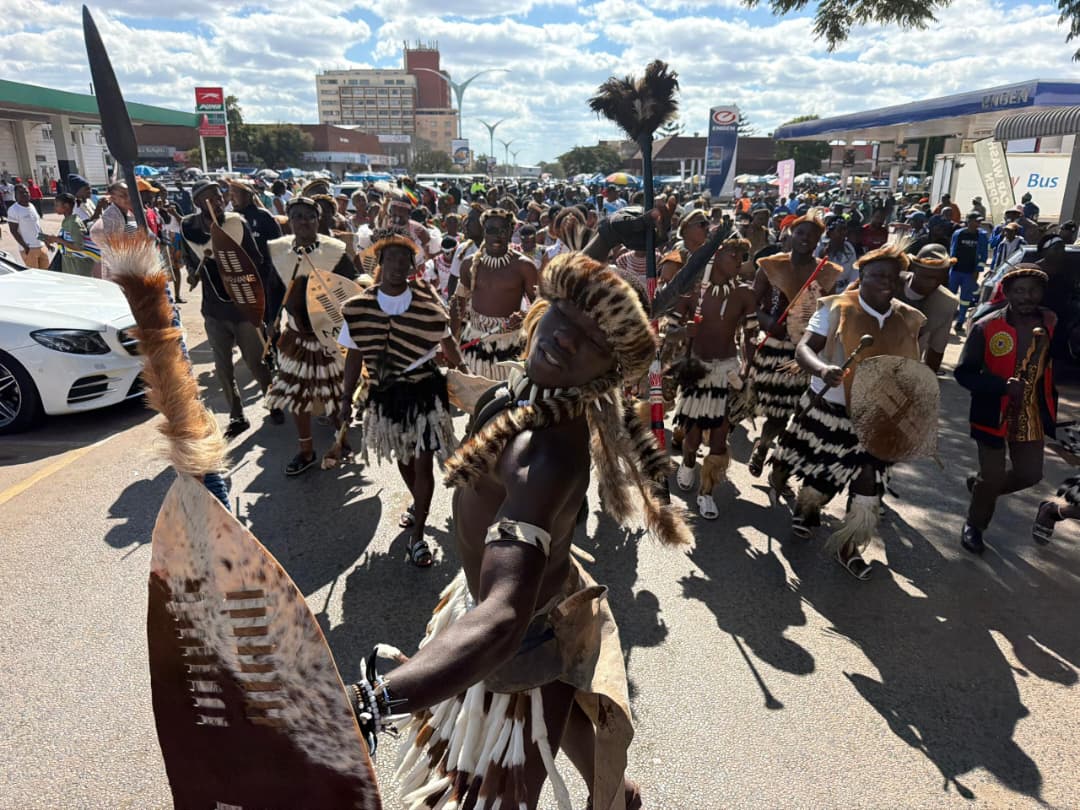
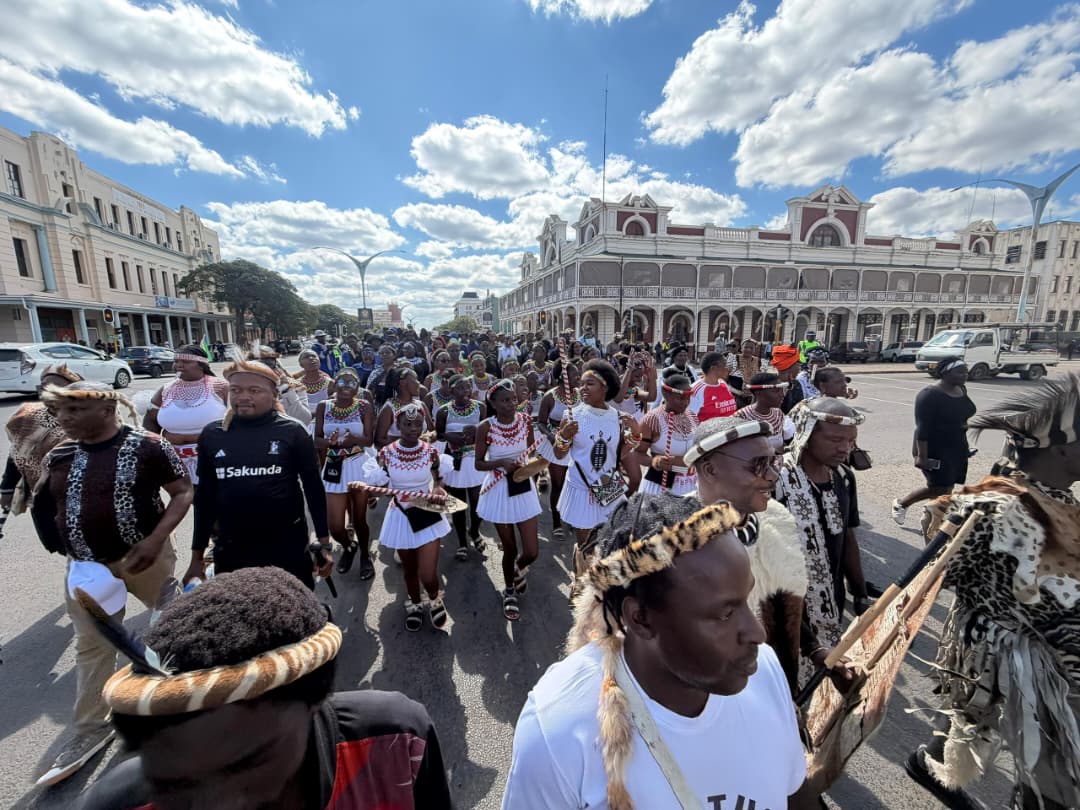
SCORES of people marched through Bulawayo city centre yesterday as they marked Bulawayo Day with a colourful carnival parade organised by the Bulawayo City Council (BCC) showcasing the city’s rich history and culture.
Bulawayo was declared a town on June 1, 1894 hence June 1 is Bulawayo Day which is observed every year.
The town became a municipality in 1897 and was granted city status in 1943.
The commemorations are coming shortly after President Mnangagwa launched the Culture Month at Barbourfields Stadium in the city.
This year’s Bulawayo Day celebrations, held under the theme “Building Bridges, Preserving Connections,” also highlighted development efforts in the city, including road rehabilitation, the revival of local industries and the refurbishment of community halls and youth centres.
The procession, which started at 10AM, was led by Bulawayo town clerk, Mr Christopher Dube, accompanied by
Bulawayo councillors, among them, Clr Mxolisi Mahlangu, Clr Sikhululekile Moyo and Clr Mpumelelo Moyo.
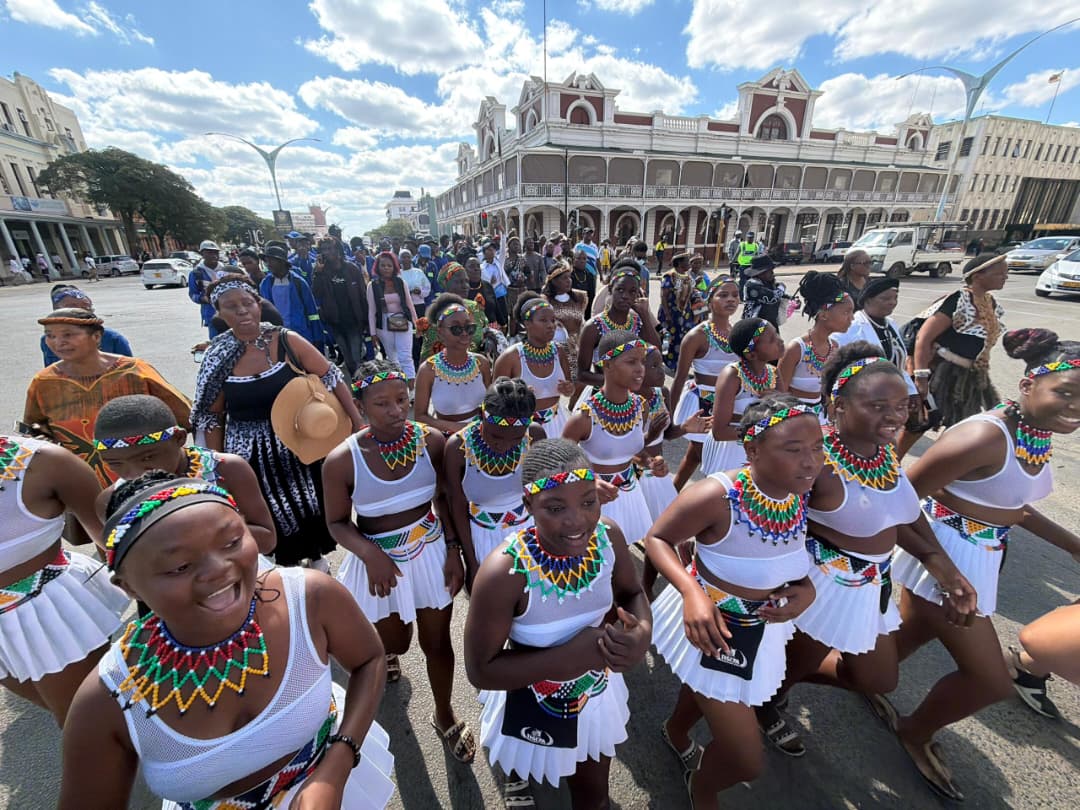
Bulawayo mayor Clr David Coltart later joined the procession as it made its way back to the Large City Hall, where the main programme was held. The guest of honour was Minister of State for Provincial Affairs and Devolution for
Bulawayo Metropolitan Province, Cde Judith Ncube.
Leading the parade were Amatshitshi, accompanied by members of the Fire Brigade and municipal police. Dressed in traditional attire, Amatshitshi brought energy to the streets through song and dance. Amabutho and Inyosi (poets) also took part, adding traditional dances, poetry and war cries linked to King Mzilikazi’s regiments.
The parade stopped at several historic sites across the city. The first stop was the Highlanders Clubhouse, where participants celebrated the country’s oldest football club, which is marking its centenary this year. Supporters joined in singing club songs, adding to the festive mood as the parade moved through the city.
The procession then went to the Inxwala site where King Lobengula presided over the Inxwala ceremony. The site, located between the city centre and Northend, became a key focus of the celebrations. At the site, Amabutho sang
Kudala Kwakunganje, a traditional song reflecting on the passing of King Lobengula.
BCC director of housing and community services, Mr Dictor Khumalo, gave a brief account of the importance of the site, saying plans were in place to preserve it.
“Where we are right now is the Inxwala Grounds, where thousands of people from the Ndebele nation used to gather to celebrate the first harvest. This ceremony was also a platform where important national matters were discussed,” he said.
“As the city council, it is our duty to ensure that our history is preserved. We have resolved to build a cultural centre here so that we safeguard our heritage and history. This is who we are, and we must be proud of it.”
The parade later moved to the statue of the late Vice President Dr Joshua Mqabuko Nkomo, where more people joined in singing and dancing. Traditional songs and dances created a strong sense of unity and pride among those present.
The procession then returned to the Large City Hall for the main programme.
In her address, Minister Ncube said cultural heritage and creative industries are key pillars for economic growth, national unity and sustainable development.
She said the province had showcased its cultural richness and organisational capacity, earning recognition from the President Mnangagwa and the nation.
“When we celebrate Bulawayo, we are not just celebrating a city; we are celebrating the undeniable cultural heartbeat of Zimbabwe. Bulawayo holds a unique space in our national narrative. It is an epicentre of history, a crucible of liberation and the definitive capital of our country’s artistic expression,” said Minister Ncube.
She said the theme of this year’s commemorations resonated with Government’s devolution agenda, which seeks to empower local communities to drive their own development while leveraging their unique resources and strengths.
Minister Ncube said preserving cultural connections was vital in safeguarding national identity and ensuring future generations remained anchored in their history and traditions.
“A nation that does not preserve its history has no compass for the future. By protecting our heritage, diverse languages and historical roots, we remain anchored,” she said.
The minister further noted that culture had become an important economic sector, creating employment opportunities, stimulating innovation and driving tourism.
Minister Ncube said Government had deliberately moved to mainstream the creative industry into national development frameworks after recognising its contribution to economic growth.
She commended the City of Bulawayo for investing in arts and culture, saying the sector had produced some of the country’s most successful and highly paid individuals while also playing a crucial role in nation-building.
Minister Ncube highlighted the role of music, food, visual arts and other cultural products in promoting unity and social cohesion.
She also praised local creatives for demonstrating unity during the recent Culture Month launch, where more than 100 artists collaborated in a large-scale production at Barbourfields Stadium.
The performance, she said, showcased Zimbabwe’s diversity and reinforced the message that cultural differences should be viewed as a source of strength rather than division.
Minister Ncube said Government fully recognised the strategic importance of culture in achieving national development objectives outlined in the National Development Strategy 2 (NDS2) and Vision 2030.
She said national policies now view culture as an economic driver, a tourism asset and a critical contributor to social cohesion, youth empowerment and heritage preservation.
Minister Ncube said Bulawayo continued to demonstrate resilience despite various challenges affecting local authorities across the country.
She applauded the city’s commitment to smart and sustainable governance and its adoption of Ubuntu as one of its core values.
“Development becomes sustainable when we share the same vision and remain connected. We need partnerships to sustainably develop our communities and our nation,” said Minister Ncube.
She also congratulated Bulawayo on reaching the milestone of 132 years since its declaration as a town and expressed hope that the city would continue on a path of growth and transformation.
Cllr Mahlangu said Bulawayo Day is important in reminding people of the city’s rich history.
“I’m pleased to see people dressed in their traditional attire as they join us in celebrating Bulawayo Day. However, we had hoped for an even bigger turnout. I believe this can be achieved next year through improved planning,” he said.
Cllr Mahlangu said such gatherings promote unity among residents.
“We encourage citizens to take part because these celebrations belong to all of us.
“They provide an opportunity to celebrate our heritage, cultural diversity and artistic identity while bringing
together people from different communities,” he said.
After the formal programme, residents were treated to a cultural showcase titled “Together, Sonke, Tose”, featuring local artistes. The production was directed by Saimon Mambazo Phiri, with Mehluli Gomez Dube and Richard Ndlovu as choreographers, while Joseph Ngubo was the stage manager.
The performance featured traditional dances such as Hosana, Ingquzu, Amabhiza, Isitshikitsha and Umdadada, among others. Even Minister Judith Ncube joined in the celebrations, dancing along as the event came to a colourful close.


