Online Reporter
Sikhumbuzo Moyo, [email protected]
BULAWAYO is losing 48 percent of its treated water through non-revenue water as ageing infrastructure continues to drain the city’s water supplies amid reports that an estimated US$1 billion is needed to rehabilitate the water reticulation system across the city.
The scale of the challenge is putting pressure on the city to find innovative and affordable ways of financing infrastructure rehabilitation to ensure residents have consistent access to clean, safe and affordable water.
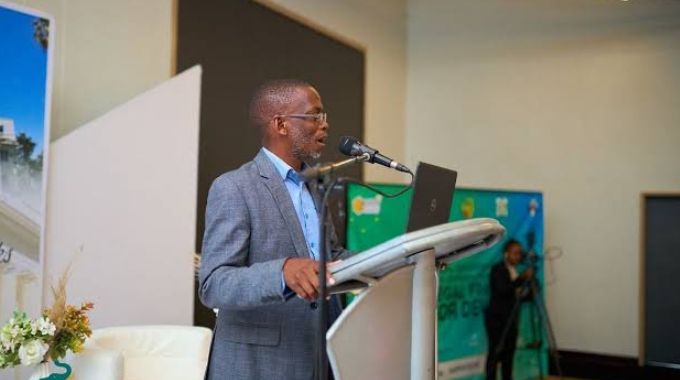
Ward Five councillor Dumisani Nkomo has proposed the establishment of a municipal bank to provide affordable, long-term financing for local authorities struggling to rehabilitate ageing water infrastructure.
Clr Nkomo said the proposed bank, which could be established by at least five local authorities, would form part of a five-pronged financing model aimed at closing the funding gap facing municipalities.
He made the proposal while presenting a paper on Water Financing, Devolution and Local Governance at the recent inaugural Zimbabwe Water Indaba organised by the National University of Science and Technology (Nust) in Bulawayo.
Clr Nkomo said municipalities had a constitutional and statutory responsibility to ensure that residents have consistent access to clean, safe and affordable water, but were being hamstrung by inadequate financial resources and ageing infrastructure.
“The capacity gap in terms of sustainable water infrastructure is huge. The City of Bulawayo needs almost US$1 billion to rehabilitate its ailing water infrastructure,” he said.
Clr Nkomo said the deteriorating state of water infrastructure had resulted in significant losses of treated water through leakages.
He said Bulawayo loses approximately 48 percent of its treated water through non-revenue water.
Clr Nkomo proposed internally generated revenue, blended financing, municipal bonds and a municipal bank, supported by an enabling governance and devolution framework, as part of the financing architecture.
He said internally generated revenue, mainly from property taxes and water bills, remained the main source of municipal income, but was insufficient to meet the huge capital requirements of water infrastructure rehabilitation.
Clr Nkomo said Bulawayo’s water account accounted for about 30 percent of the city’s total revenue, but remained inadequate to meet the city’s water infrastructure needs.
He said blended financing, involving a combination of loans and grants, could also be used, although access to long-term or “patient” capital was constrained by policy uncertainty affecting the banking sector.
Clr Nkomo said declining global Overseas Development Assistance had also reduced the availability of donor funding. Municipal bonds, he said, remained another potential financing instrument for water infrastructure despite previous challenges.
“In South Africa, Johannesburg and Cape Town municipalities issued green bonds in the past to fund water projects,” said Clr Nkomo.
He said in the past Zimbabwe municipal bonds were affected by lack of ring-fenced water accounts and poor credit ratings.
“Municipal bonds are still a viable financing mechanism,” said Clr Nkomo.
On the proposed municipal bank, Clr Nkomo said it could be established through a consortium of at least five local authorities and provide municipalities with low-interest loans for water infrastructure projects. He said sustainable water financing also required changes to the country’s governance architecture, particularly the implementation of devolution as provided for under
Section 264 of the Constitution.
Clr Nkomo called for the promulgation of an omnibus devolution law and the alignment of legislation governing local authorities and water management with the devolution framework. Among the laws he identified for alignment were the Urban Councils Act, Rural District Councils Act, Water Act, Zimbabwe National Water Authority (Zinwa) Act, Public Finance Management Act and the
Public Procurement and Disposal of Public Assets Act.
“Devolution brings power or decision-making closer to the people. Devolution also quickens decision-making and responsiveness of local authorities,” he said.
Clr Nkomo said the intersection of sustainable water financing and devolved governance could also create an environment conducive to investment in public-private partnerships, including Build-
Operate-Transfer (BOT) models. He said municipalities needed sustainable financing mechanisms if they were to consistently provide residents with clean and affordable water.
“After all is said and done, it is crucial for municipalities to have sustainable financing if they are to deliver clean and affordable water consistently,” he said.