Andile Tshuma, Zimpapers writer
PERSONS with disabilities (PWDs) in Bulawayo have challenged the city council’s proposed 2027 budget, warning that the planned average 74 percent increase in residents’ rates could deepen economic hardships among vulnerable groups while only US$8 000 has been allocated for their needs.
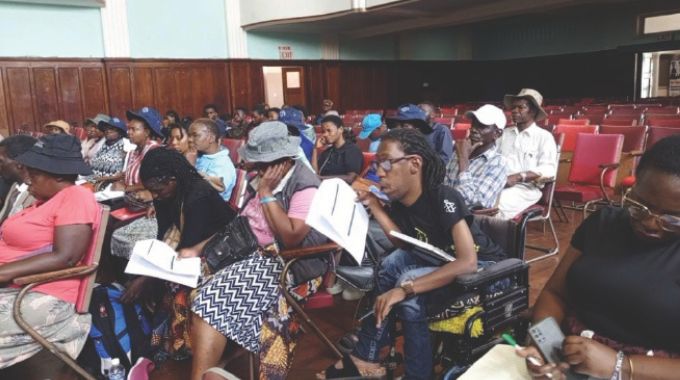
During a municipal budget consultation meeting on Tuesday, disability rights advocates and residents rejected the proposed US$457,88 million budget, arguing that it failed to adequately address the challenges they face in accessing employment, healthcare, education and public infrastructure.
They called on the Bulawayo City Council (BCC) to reconsider its spending priorities and allocate meaningful resources towards disability inclusion and economic empowerment before the budget is submitted for Government approval.
Disability rights advocate Mr Tsepang Nare said the proposed allocation was insufficient to support meaningful inclusion.
“The City of Bulawayo has completely failed to adhere to minimum standards for disability inclusion,” said Mr Nare.
“You cannot talk about a modern, smart city of the future when your infrastructure remains a physical barrier.
US$8 000 is not a budget for inclusion; it is a token gesture designed to tick a box.”
The concerns come as council seeks an average 74 percent increase in residents’ rates to cushion rising operational costs and sustain municipal service delivery in 2027.
Speaking at the meeting, council’s Principal Gender, Safety and Health Officer, Mrs Audrey
Manyemwe, said the proposed revenue would support key services, including road rehabilitation, water reticulation, public lighting, health and social services, and environmental management.
She revealed that the municipal wage bill alone would consume US$117 million of the proposed budget.
However, residents questioned the council’s spending priorities, arguing that its proposed full cost-recovery model could place additional pressure on vulnerable households without adequately addressing their needs.
Ms Zodwa Mabhena said people with disabilities continued to struggle to secure formal employment and urged council to consider them for casual jobs, including positions in the municipal cleansing department, as part of efforts to alleviate poverty.
Participants also raised concerns about access to municipal healthcare, particularly for members of the deaf community who face communication barriers when seeking medical attention.
They said difficulties communicating with healthcare workers could compromise patients’ privacy and access to proper diagnosis.
Responding to the concerns, health services officials said municipal clinics had at least two nurses who had undergone basic sign language training. They added that efforts were underway to make health facilities more inclusive and physically accessible.
On education, Hope for Inclusion representative Ms Boiputso Nondo urged council to provide specialised learning materials, including large-print textbooks for learners with visual impairments.
“While we appreciate wheelchair ramps, they are not enough, and we want to see inclusion coming to the classroom where necessary learning aids are provided for learners with special needs. Only then can education be inclusive,” she said.
Mr Craig Biemba called for simpler processes for registering organisations representing people with disabilities, saying bureaucratic barriers were making it difficult for them to formally organise and pursue self-help initiatives.
The residents urged council to ensure that the final budget prioritises accessible infrastructure, specialised services and employment opportunities, warning that development would remain incomplete if people with disabilities continued to face economic exclusion and barriers to essential services.