Online Reporter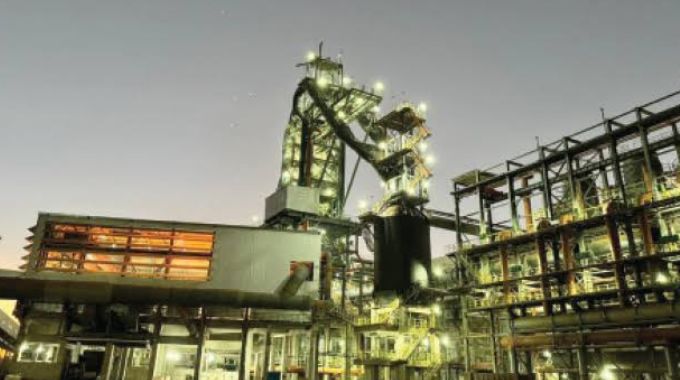
Judith Phiri, [email protected]
BULAWAYO is strategically positioned to become a key downstream manufacturing and export hub for Dinson Iron and Steel Company (DISCO), with the city’s established industrial base, engineering skills and logistics infrastructure offering a launch-pad for value addition and beneficiation of steel products for the SADC market and beyond.
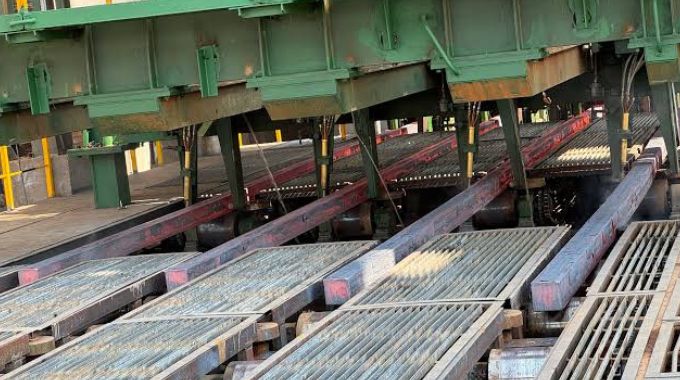
The development is set to place Bulawayo at the centre of a proposed steel corridor linking the city with Manhize near Mvuma, where DISCO is based, and Kwekwe, home to Zisco Steel, creating a platform for mass production, downstream manufacturing and regional exports.
A subsidiary of Tsingshan Holding Group of China, DISCO is one of the world’s largest integrated iron and steel producers and is located at Manhize near Mvuma.
The plant is equipped with a carbon steel plant and an iron ore mine with the capacity to produce tonnes of iron and steel products per year.
Speaking at the recent Bulawayo Investment Indaba, DISCO project manager, Mr Wilfred Motsi,
who was representing the chief executive officer Mr Benson Xu, said Bulawayo was a critical component of the company’s vision for a steel corridor that would drive value addition and transform Zimbabwe’s industrial landscape.
“We cannot do it alone as DISCO, but we also need partners so that at least we can produce so many products. This vision is about three cities to start with. One of the cities is Bulawayo where we are today, the other is Mvuma where we have Manhize and the other one is Kwekwe where we have Zisco Steel,” he said.
Mr Motsi said DISCO’s primary steel products could provide the raw material for downstream industries in Bulawayo, leveraging the city’s existing factories, engineering companies and foundries to manufacture higher-value products.
“For us to have mass production, we need steel billets, with the primary products. That primary product can be further sent to Zisco where they do value addition, but because we don’t have the facilities and factories, Bulawayo has the factory floor.
“So, what it means is that we do value addition and beneficiation in Bulawayo. This is the corridor, which we are saying can transform our economy and feed the entire SADC region,” said Mr Motsi.
The proposed corridor could subsequently be replicated across other cities, spreading downstream manufacturing opportunities and ensuring that more of Zimbabwe’s steel output is converted into finished and semi-finished products locally rather than being exported in primary form.
Mr Motsi said Bulawayo already had the industrial ecosystem required to anchor this transformation, describing the city as the downstream and export engine with potential to reclaim its historic industrial hub status.
“We are saying, Bulawayo is not the missing link, it is the critical link for us. We have already the skill base as most engineering and foundry companies are here in Bulawayo and they do the value addition of the product, which we are purchasing,” he said.
The city’s existing workshops and small to medium enterprises (SMEs), he said, provided an important advantage over Manhize, where such supporting industrial infrastructure was still developing. Logistics further strengthens Bulawayo’s position, with its road and rail links providing access to regional markets.
He said in six hours one could go to South Africa from Bulawayo and the city could connect to other SADC countries easily through road and rail.
“Bulawayo is the market gateway for a population of 300 million SADC consumers who could buy DISCO products. So, let’s join hands and work together to resuscitate our industry. In other words, the city itself is a natural export hub to South Africa and beyond,” said Mr Motsi.
The proposed industrial expansion also dovetails with Bulawayo’s designated Special Economic Zones (SEZ), which offer incentives capable of attracting investors into downstream steel manufacturing.
Mr Motsi said the SEZ framework provided an opportunity to establish a dedicated industrial park focused on steel value addition and beneficiation, targeting products such as galvanising, roofing, trailers, furniture steel, construction components and mining parts.
“SEZ incentives make this viable for SMEs to enter and scale. The incentives include tax holidays, corporate income tax (CIT), duty-free equipment and one-stop services among others,” he added.
He said the ambition should be to build a strong Bulawayo manufacturing brand capable of penetrating regional markets.
“Made in Bulawayo’ must become a new brand in SADC while transporting ‘Made in Bulawayo’ products all the way to Johannesburg, Lusaka and Gaborone among other places.”
For the steel corridor to realise its full potential, Mr Motsi said Zimbabwe needed to strengthen local-content policies, standards, procurement and skills development while creating certainty for investors.
He identified five pillars to unlock downstream manufacturing, including policy certainty on local content, standards, promoting “Buy Zimbabwe Steel” locally and beyond, as well as showing investors that there is certainty on local content and procurement.
Skills development would also be critical, with colleges required to align training programmes with the needs of industry.
He said skills development was key for colleges to align with industry for welders, toolmakers and engineers.
“Our colleges must produce toolmakers, not just graduates. There is a need to facilitate access to finance for SMEs to buy machines and scale. SMEs need capital and guaranteed buyers to grow.
“While on market linkages, through Government procurement, made in Zimbabwe and facilitating trade within the region. Technology and innovation will determine if we compete or if we are left behind,” he added.
The proposed steel corridor therefore presents an opportunity to reconnect Bulawayo’s industrial base with large-scale primary steel production at Manhize, creating a value chain that stretches from iron ore and steel production to manufacturing, distribution and exports.
Mr Motsi said Zimbabwe’s future prosperity would depend on moving beyond extraction towards manufacturing and industrial transformation.
“The future of Zimbabwe will not be dug out of the ground, people will manufacture in the country’s factories,” he said, calling on all stakeholders to choose industrial transformation to unlock downstream opportunities.
The two-day event ran under the theme: “Unlocking Strategic Investment Opportunities for Sustainable Industrial Transformation.”