Vusumuzi Dube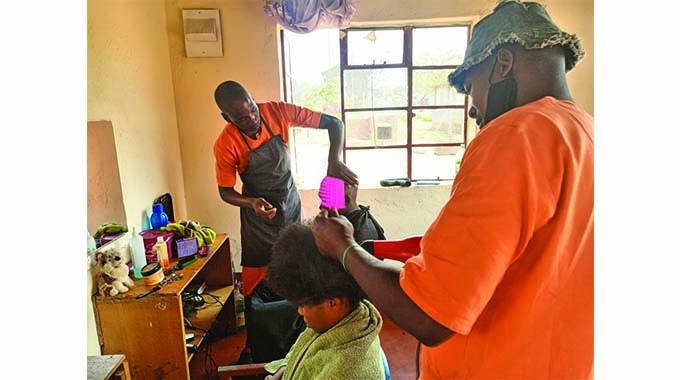
Rutendo Nyeve, Sunday News Reporter
BULAWAYO Prison has embarked on various income-generating projects that are not only aiding the organisation with revenue but are also providing inmates with the necessary skills to broaden their personal support mechanisms when they join the community on release.
This has somehow debunked the perception of a prison being a place of punishment, high security walls, iron bars, dark hallways, substandard food and other inhumane conditions to a space filled with the aura of entrepreneurial initiatives.
Bulawayo Prison is now a hive of activity as inmates aided by officers are always busy with their various income-generating projects and one could be forgiven for thinking that it is not a prison but a family business where everyone knows what they are supposed to do.
On entry into the prison yard, one is greeted by a fleet of cars at the prison’s car wash, a project that has made a signature mark in the city with revenue generated capitalising other projects at the prison.
Officer in Charge Bulawayo Prison Superintendent Tadious Chirigo took the Sunday News on a tour of the projects.
“The car wash was our pioneer project. We have been raising an average of US$700 per month from this project. However, our Commissioner-General Moses Chihobvu encouraged us to venture into other projects to help rehabilitate prisoners as well as raise income. We have therefore embarked on seedlings production, we are in the process of expanding our fish pond so that we expand on our aquaculture.
“In April we managed to open a tuck shop just beside the entrance where service officers and visitors visiting inmates can buy goods for inmates. We have also converted a cottage previously meant for the officer in charge into a barber and hair salon. We are in the process of constructing a garage which will be used for motor mechanics as well as a conducive area for our inmates who are practising wood technology which we recently introduced,” said Supt Chiriga.
While other prisoners were busy watering the garden, one of the inmates only identified as Allvon was busy teaching his colleagues wood technology.
“We have introduced wood technology which covers joinery, wood machining and wood curving,” he said.
At the barber and salon, inmates Erick Ngwenya and Mzobanzi Moyo were busy plaiting and shaving clients respectively. Ngwenya of Chiredzi who was arrested and sentenced to five years for illegal mining and robbery in 2021 said he had learnt how to plait, do a haircut as well as do beauty therapy inside prison.
Moyo of Makokoba who was arrested for assault said the skills he had acquired in prison would help him once released.
“I was arrested for assault. I was doubling as a commuter omnibus driver and running a barbershop in my neighbourhood. While I was a barber before, my skills have since improved here in prison since the opening of this barbershop as I get to perfect my skill,” he said.
Acting ZPCS Officer Commanding Bulawayo Province Assistant Commissioner Priscilla Mthembo said as an organisation and through the wisdom and encouragement of their management, particularly the Commissioner-General as well as sharing notes with other countries, they saw it relevant to establish income-generating projects.

“As a province we have engaged in various projects that include seedling production which is even more intensive at Woodville Satellite Prison at the airport. We are also doing the same projects at Bulawayo Prison and Mlondolozi Prison. Just like the salons and barbershops, our projects are targeting our officers and ordinary people from the community.
“Bulawayo Prison has an advantage of proximity to the CBD and we are looking forward to everyone coming to our salon and barbershop to get services. Our prices are very affordable,” she said.
She said the major reason behind the projects was to rehabilitate the inmates and as an organisation they do not believe that a person goes to prison to be punished.
“We are saying the term of imprisonment is punishment enough and what we should do as an organisation and the community is to empower that person so that when he/she goes out of prison they are able to use the skills that they would have acquired from within the prison to fend for their families instead of resorting to crime.
“We also realise income from those projects and the arrangement that we have is that the organisation gets something from the projects and also the inmates also benefit from the same projects. We buy soap, tissues and other necessities for those prisoners that do not get visits. Some even raise money enough to fend for their families back home,” she said.


 Online Reporter