admin
admin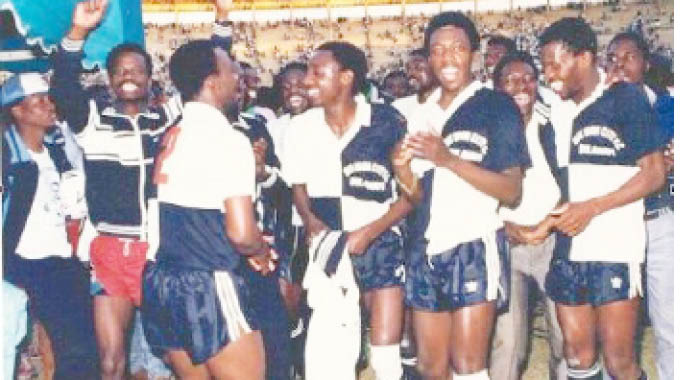
Lovemore Dube
WHAT has happened to Bulawayo sport?
There was a time Bulawayo sport ruled the roost in the country.
A clean sweep in most disciplines like in 1993 was a common feature for Bulawayo.
In more than half a dozen sporting disciplines the City of Bulawayo was up there dominating Zimbabwe sport.
There were defined development structures, deliberately put in place by enthusiasts to ensure there was continuity towards creating the next Big Star.
Take for instance the year 1993. So much happened that year with a number of clubs winning national honours that brought glory to the city.
Highlanders FC who had won their first straight national league title in 1990, were back on the podium with a youthful side blended with the experience of ageing legends Madinda Ndlovu, Willard Khumalo, Dumisani Nyoni and Amin Soma-Phiri.
A youthful brigade that had come through the ranks of junior policy and the then powerful Bulawayo clubs network was getting to grips with first team football. These included Makwinji Soma-Phiri, Musa Masango, Gift Lunga (Senior), Makheyi Nyathi and the late Adam Ndlovu.
The Blue Ribbon Foods National Premier Soccer League title won by Highlanders was one of many victories scored by Bulawayo.
In volleyball, Unit Fairbridge became the first Zimbabwe side to win a Zone Six title, beating the likes of Indene of Zambia on their way to the gold medal.
The Support Unit outfit from Fairbridge swept most of the silverware contested in the country with Highlanders Volleyball Club winning their first ever national title the Zimbabwe Anniversary title.
Most of the Fairbridge players were drawn from Iminyela and Tshabalala. A majority were former Ihlathi pupils or had attended Mpopoma and Lobengula secondary schools that played active league volleyball. These included Patrick Ncube, Themba Moyo and Clive Sibanda from Ihlathi and the Lobengula and Mpopoma products Nsikelelo Malawi Mlauzi and Herbert Mutisi.
Most of these players had honed their skills at Tshaka Youth Centre, Indlovu and Iminyela, once vibrant bastions of talent development.
The Highlanders brigade had been drawn from schools that were beneficiaries of the Matabeleland Volleyball Association partnership with Blue Ribbon Foods.
From Inyathi there was Edson Gift Sibanda, David Livingstone — Thembinkosi Ngulube and Liberty Marimo and Sobukazi High School came in with Qinisa Fuyana, Sikhumbuzo Gwala, Membe Phiri, Augustine Ngulube and Nkululeko Ncube with Fortune Ndlovu coming in from Njube High School.
Another development prodigy Vulindlela Moyo came from Hamilton High School.
Clubs sent coaches to schools. Those players tended to follow their coaches to their respective clubs hence there was a constant supply of fresh talent to the league.
To cap it the men’s senior provincial team won the inter-provincial title.
Bulawayo and Matabeleland North athletes led by Thethelani Moyo were dominant in national competitions.
Bulawayo Athletic Club women’s hockey team led by Marina Polenakis-Burgess were the only team in Bulawayo. But there were good enough to dominate the national scene. A couple of the girls were selected to the national teams like ex-Townsend girl Silent Dube.
BAC and Queens were up there with the likes of Shayne Cleminson, Andy Bint, Collin Williams, Tony Burgess, Des Stephens, Gavin Stephens, Steve Shirto and Brian Hlaca in the men’s hockey game. The province was dominant in national tournaments and the ever popular Easter Jardav.
Highlanders Basketball Club dominated women’s sport in the country with a flawless side led by Unita Dube, Angela Chikomba, Vimbai Muhomba and coached by Harold Tshabalala. They won the Kodak Trophy, a prized national tournament.
In the men’s basketball scene Peking Stars was the team of choice, beating the likes of Cavaliers and Arcadia Bucs to win the 1993 title. Tony Bolo Benson, John Buys, Justin Mpofu, Archieford Murombedzi, Darbyton Williams and Herbert Benson.
In rugby Old Miltonians were Zimbabwe Kings. They dominated the league, tournament and national teams of that year.
Even in equestrian sports, shooting and swimming Bulawayo shone in that year.
Back then there was commitment in sport.
People played for fun and the business community genuinely supported sport because industry was still very much alive.
The poor showing by Bulawayo and the neighbouring Matabeleland North and Matabeleland South provinces in the last national primary and secondary schools athletics championships is really cause for concern.
Heads must come together and solutions sought on the way forward.
Bulawayo needs to come together and seek to find a solution towards the way forward to return Bulawayo to its glory days.
Meritocracy should be the rallying call if Nash and Naph teams and other representative sides are to make an impact once again in national competitions.
With Bulawayo City Football Club carrying the banner for one of the most revered local authorities in Southern Africa in terms of corporate governance, it is about time a deliberate stance was taken by Bulawayo City to revive sport.
Taking a leaf from Harare City Council who are sponsoring a number of disciplines at national level may lift up smaller sporting codes in the city. Young talent could get exposure.


 Online Reporter