Online Reporter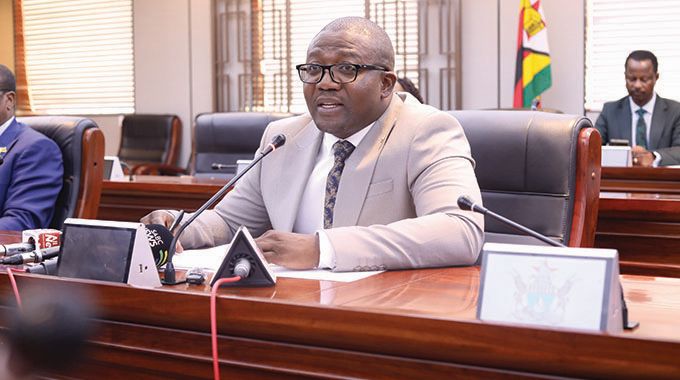
Mashudu Netsianda, [email protected]
THE Government has approved the planned activities for this year’s National Culture Month, which will be hosted in Bulawayo.
The 2026 edition of the National Culture Month Celebrations will be held on May 21 at Barbourfields Stadium under the theme, “Cultural Diversity and Creativity: Advancing Vision 2030.”
Commemorated annually in May, Culture Month is a vibrant celebration of Zimbabwe’s rich heritage, diverse traditions and the creative spirit that defines the nation.
The programme brings together communities from across the country through a series of events that showcase cultural expression in its many forms.
The hosting of the main celebrations rotates among provinces, with Masvingo having hosted the event last year while Manicaland and Matabeleland North hosted in 2024 and 2023 respectively.
In his post-Cabinet briefing yesterday, Acting Information, Publicity and Broadcasting Services Minister Mangaliso Ndlovu said the commemorations will celebrate, preserve and showcase the country’s diverse heritage while fostering social cohesion, unity and economic development through arts and culture.
“Cabinet noted and approved the planned National Culture Month activities for May 2026. The National celebrations will feature live performances of selected traditional and contemporary dance, musical groups and comedians, while the month-long activities to be held across all provinces and districts of the country will encompass dance, music, film, theatre, literary arts, poetry, traditional cuisines, the First Lady’s Nhanga/Gota/Ixhiba dialogue sessions as well as pageantry and fashion,” he said.
Over the years, the event has been staged in various provinces, including Mashonaland East (2022), Midlands (2021), a virtual edition in 2020, Harare (2019 and 2018), Mashonaland Central (2017 and 2012), Matabeleland South (2016), Mashonaland West (2015), Bulawayo (2014), Murewa Culture Centre (2013) and Midlands (2011).
Beyond the main celebrations, Culture Month has evolved into a nationwide movement dedicated to preserving indigenous knowledge systems and ancestral practices, while also promoting artistic innovation and cultural exchange. It continues to play a key role in uniting Zimbabweans across languages, religions and backgrounds, while empowering young creatives to actively shape the country’s cultural narrative.
Meanwhile, Cabinet has also approved the Environmental Management Bill of 2026, which seeks to introduce stiffer penalties for perpetrators of land degradation, as well as provide for laws governing the polluter pays principle.
The Bill will also impose penalties on individuals and companies that construct buildings on wetlands.
Under the proposed law, an inter-ministerial committee comprising the Ministries of Environment, Climate and Wildlife; Mines and Mining Development; and Agriculture, Mechanisation and Water Resources Development will monitor environmental compliance and identify offenders.
In recent months, Government has introduced a range of policies, including a ban on alluvial mining operations, citing environmental concerns and health risks.
Despite these efforts, environmental experts have criticised the existing legal framework as non-deterrent, with fines considered too low to effectively curb violations.
“The Bill seeks to amend the Environmental Management Act [Chapter 20: 27] by incorporating emerging environmental principles and giving effect to environmental rights that are enshrined in the Constitution. The Bill also seeks to empower and strengthen the Environmental Management Agency in order to protect and preserve the environment for the present and future generations,” Minister Ndlovu said.
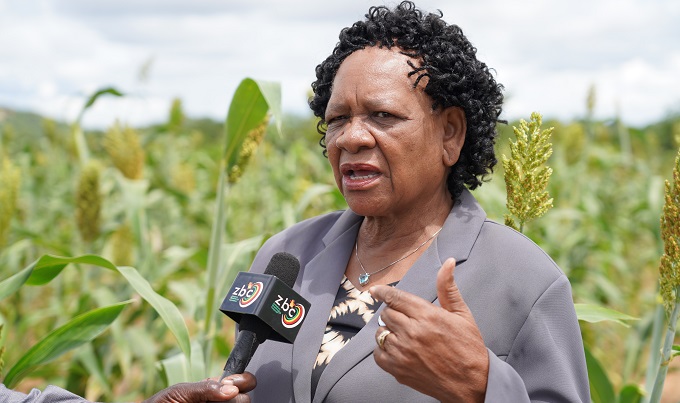
Also speaking at the briefing, Minister of Environment, Climate and Wildlife, Dr Evelyn Ndlovu said the bill introduces penalties that deter land degradation especially in the mining and construction sectors.
“We are currently seized with the challenges in the mining industry. So, this bill is bringing in new penalties, meaningful penalties that will be charged to the offenders, perpetrators of this land degradation in various parts of the country,” she said.
“We are really concerned about that and that’s why we have to amend this bill, because the penalties that existed were very minimal.
“Individuals were not feeling the pinch in terms of the penalties that were charged by the courts, and hence the continuation of this land degradation in our various parts of the country.”
Cabinet also noted and approved the Research Amendment Bill, which was presented by the Minister of Justice, Legal and Parliamentary Affairs, Honourable Ziyambi Ziyambi, as Chairman of the Cabinet Committee on Legislation.
The Bill seeks to amend the Research Act [Chapter 10:22] by establishing, inter-alia, a Research Authority of Zimbabwe, a Research Fund and the institutionalization of a National Research and Development Funding Target of not less than 1 percent of the country’s Gross Domestic Product.