Online Reporter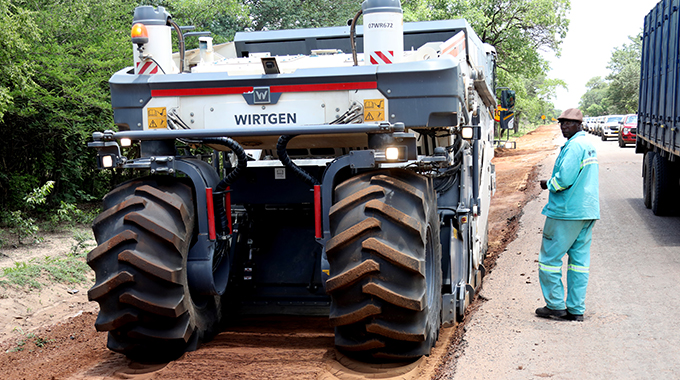
Rutendo Nyeve, Victoria Falls Reporter
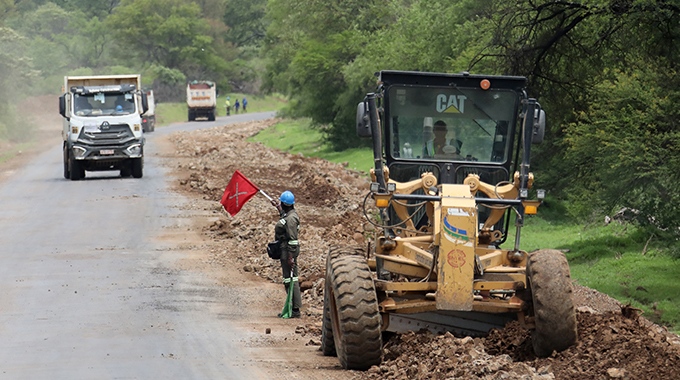
CONTRACTORS executing the massive Bulawayo-Victoria Falls Road rehabilitation have unveiled a comprehensive package of benefits, including job opportunities that will leave a lasting legacy for local communities.
The project, which is a critical tourism and regional trade route, is being reimagined not just as a transport corridor but as a catalyst for sustainable development in Matabeleland North.
Its transformative plans came to light during an extensive media tour of the construction sites last week, where project leaders detailed significant Corporate Social Responsibility (CSR) initiatives, employment statistics, and long-term maintenance strategies that will extend far beyond the laying of the final layer of asphalt.
The human impact of the project is already substantial. Leading contractors have made significant inroads in local employment.
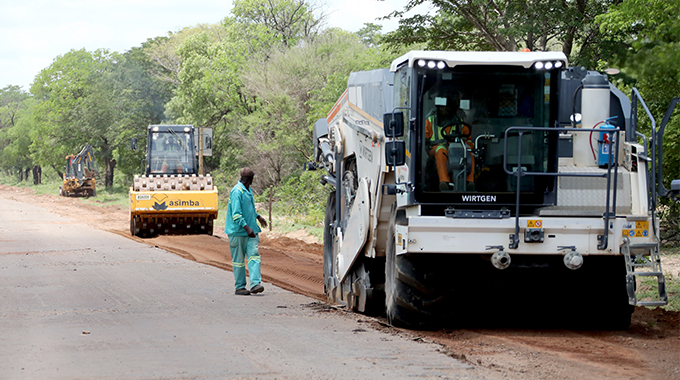
All eight contractors have employed more than 600 people. Crucially, all firms have confirmed that over half of their workforce is sourced from surrounding communities, with women making up a commendable 30 percent of the labour force, injecting vital income and skills into the local economy.
However, it is the forward-thinking approach to community integration and legacy that is setting a new benchmark for national infrastructure projects.
Contractors are proactively opening and upgrading critical access roads to ensure essential services remain reachable.
As explained by Asphalt Construction manager, Engineer Panganai Mataure, this is a core part of their operation.
“We have also created access to the neighbouring centres like Kote. There is another detour that we are making. We are also making another access for the clinic, which is very crucial for the ambulances. So, that is all in order,” he said.
The focus on community mobility is paralleled by a decisive mitigation of the region’s perennial water challenges.
As part of their CSR commitments, contractors have prioritised drilling boreholes, with the majority having completed an average of two so far, focusing on schools and community centres.
Masimba Construction Group chief executive officer, Engineer Fungai Matawu, emphasised the strategic importance of this intervention.
“As part of our CSR, we are drilling boreholes along our sections, with two already completed, prioritising schools. This comes in handy as the region is dry,” he said.
Eng Matawu confirmed that more boreholes are scheduled to be drilled as the project progresses, promising a lasting solution to water scarcity for several communities along the route.
The contractor’s innovative use of existing infrastructure for community benefit was highlighted by Syvern Engineering project manager, Engineer Arnold Mfungwaze.
He detailed how the old Bulawayo-Victoria Falls Road is being repurposed to minimise disruption and ultimately upgrade local transport links.
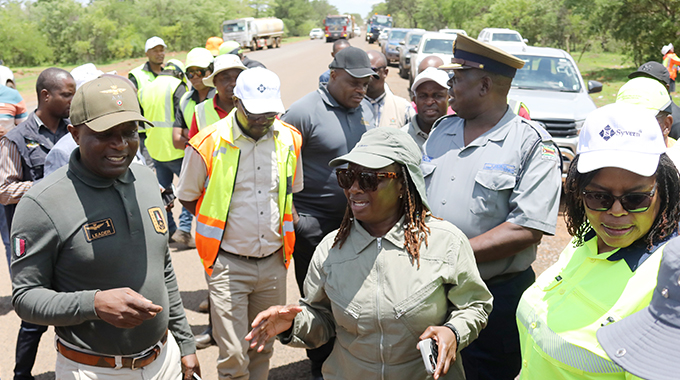
“You know, in terms of corporate social responsibility, we are using the old Victoria Falls Road, that is, the one we are using for detours. That’s where most of the local people are settled, so that’s the one that we are using. “After we finish the road, we are going to leave a better road for them,” said Eng Mfungwaze.
The most significant assurance for the nation’s investment is the plan for the road’s future upkeep.
Eng Matawu revealed that upon project completion, Masimba will hand over a fully-furnished, state-of-the-art road maintenance unit to the Government.
This unit will include staff accommodation and all necessary ancillaries, ensuring the highway’s longevity and sparing the fiscus from future large-scale rehabilitation costs for years to come.
Adding an environmental sustainability angle, the project will also see an inventive recycling initiative. The drums used for transporting bitumen and other raw materials will not go to waste.
Instead, they will be repurposed into durable litter bins along the highway, helping to curb littering and promote environmental consciousness among travellers.
The Bulawayo-Victoria Falls Road rehabilitation, thus, emerges as a multifaceted national project with huge community impact.
It is simultaneously a job creator, a water provider, a builder of critical community access, a guarantor of future maintenance, and an environmental steward.
As the heavy machinery continues its work, the final deliverable will be much more than just a road; it will be a foundation for enhanced quality of life and economic vitality for Matabeleland North and a resilient infrastructure asset for all of Zimbabwe.