

 Online Reporter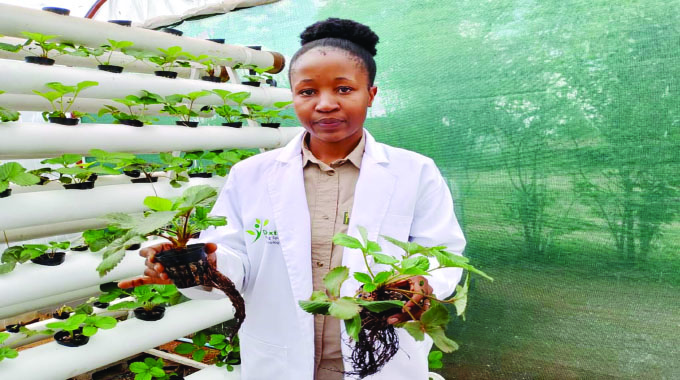
Flora Fadzai Sibanda, Sunday News Reporter
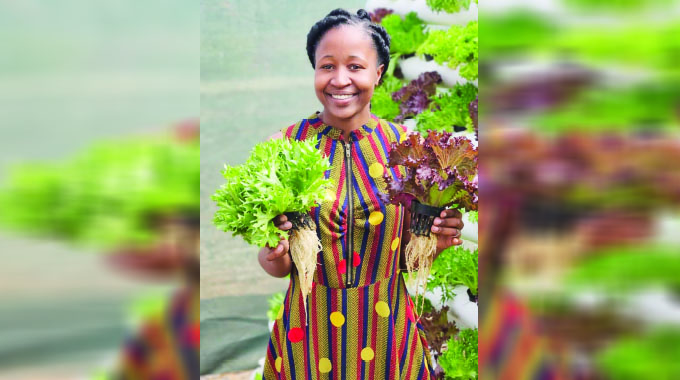
A YOUNG female entrepreneur in Bulawayo is making a living using hydroponic technology to grow lettuce and strawberries at her family home in Waterford suburb.
Hydroponics is a form of horticulture that involves growing plants without soil. Instead, crops are cultivated using water-based mineral nutrient solutions in an aqueous solvent.
The innovative method has inspired Ms Ntombifikile Ncube to set up a greenhouse in her backyard, making use of smart farming techniques.
She recently gave a tour of her greenhouse where both strawberries and lettuce are beginning to flower and are expected to be ready for harvest by early May.
Ms Ncube believes this method could open doors for other young people who are passionate about farming but lack access to large tracts of land, as hydroponics requires far less space.
She has since founded a company to train young people in hydroponic farming and assist them in setting up their own systems.
Although her business is doing well, Ms Ncube admits the market can be challenging, as some consumers remain sceptical of crops grown through hydroponic systems.
“Times have changed and the good thing about this type of farming is that it is eco-friendly and saves a lot of water. People often say it’s full of GMOs, but that’s simply not true.
“All the nutrients we use are organic. All I have to do here is pour water into the plastic polyvinyl chloride (PVC) pipes and add my nutrients before planting the crops.
“The nutrients can be bought at agricultural supply shops, though some people prefer to make their own,” she said.
According to Ms Ncube, this method produces crops that are richer in nutrients compared to those grown in soil.
She added that Bulawayo’s ongoing water-shedding schedule is not a major concern, as hydroponics consumes significantly less water than traditional farming.
Her previous crop cycle was highly successful and she managed to sell her produce to a variety of markets.
She also explored value addition by making strawberry shakes.
A developmental practitioner by profession, Ms Ncube said her interest in farming was sparked during her third year at university.
“It took me a long time to get an attachment, and that was an eye-opener for me. I thought, if I’m struggling to get attachment, what are the chances of landing a job? That’s when I started doing research on different ways to earn an income.”
Ms Ncube said she was able to kick-start her project after receiving training from a non-governmental organisation. After submitting a solid business proposal, she was awarded a grant to help launch her venture.
“Of course, it’s quite expensive to start, you need close to US$3 000 to set up. But the good thing is, once it’s up and running, the profits are worthwhile,” she said.
Beyond the profits, Ms Ncube has had the opportunity to travel internationally, learning from and sharing ideas with fellow hydroponic farmers.
“I’ve been to a number of countries just to share and learn new ideas. This kind of farming is the future, it has the potential to save land and is more cost-effective, especially considering how expensive land has become.” @flora_sibanda


