admin
admin
Canditar Chapanduka, Chronicle Reporter
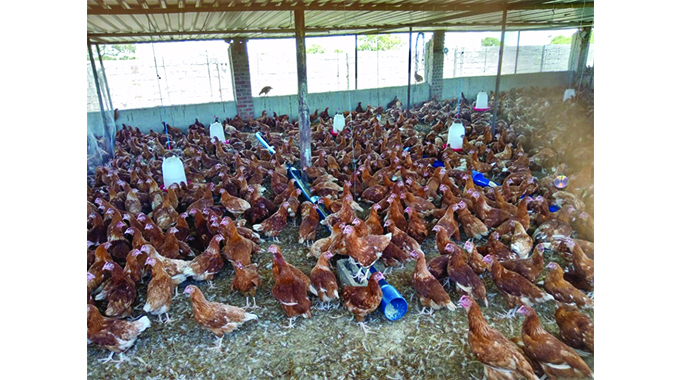
A BULAWAYO young entrepreneur has hatched a successful poultry business and transformed his rural home in Sigiti Village in Matobo District into a chicken hatchery where he is keeping over 5 000 layers and broilers and producing about 300 eggs weekly.
Mr Mthokozisi Bruce Ncube (21) of Nkulumane 12 suburb, who has been into poultry farming for the past three years, supplies restaurants and individuals in Bulawayo, Gwanda and Harare.
Through his thriving business, he has been able to pay for his tuition at Westgate Industrial Training College where he is studying mechanical engineering.
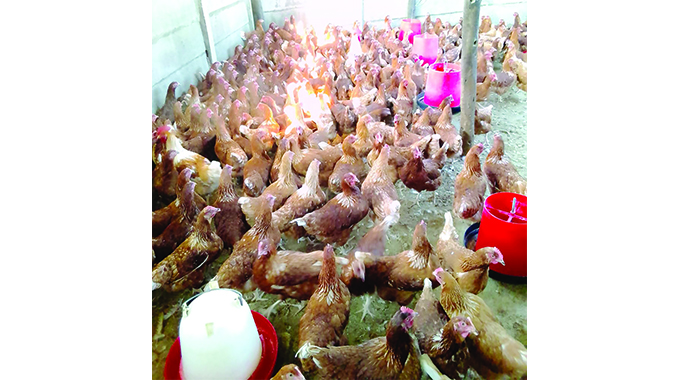
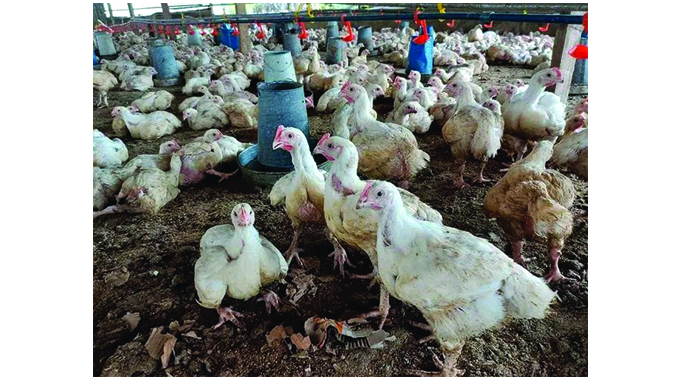
Mr Ncube keeps layers, broilers, Sasso and the Potchefstroom koekoek. He has employed three people to help him look after the chicken.
“I started poultry farming when I was 17 years because I have a passion for farming, which I developed at high school when I was doing agriculture,” he said.
Since starting his poultry business, Mr Ncube has been able to enjoy profits from the eggs sold.
“I have been able to help pay for my fees through poultry farming. My plan is to buy a motorbike which I will use to make deliveries to customers and also be able to carry feed and other things needed for my poultry farming project,” he said.
“Today, some of my many customers include restaurants in Bulawayo, Gwanda, and Harare that buy crates of eggs every week, including households who buy my fresh produce for domestic consumption. Ever since I started this business, I have been making profits such that I am also managing to pay my school fees and taking care of my sibling.”
Mr Ncube built a huge fowl run with a capacity to accommodate over 5 000 birds.
“I started with 25 birds, which I was keeping in our backyard at our home in Nkulumane. As the business expanded that is when I decided to move to Matopo where there is a bigger space and at the moment I have more than 5 000 birds,” he said.
“The layers produce an average of about 300 eggs every week, which I sell to restaurants and individuals.”
Mr Ncube said broilers take six weeks to mature while free-range chickens have a long life span and can be kept for several years while producing eggs.
“One of the challenges that I face as a farmer is the issue of electricity. I use solar and during the rainy season and winter, the solar panels don’t produce enough power for lighting purposes since the birds, especially broilers require warmth,” he said.
Encouraged by the impact they have seen, Mr Ncube said other youths from his community have started rearing chickens too.
Poultry farming plays a role in bringing socioeconomic improvement among the more vulnerable sections of society.
As part of the Second Republic’s drive to alleviate poverty and boost rural incomes in line with the policy of leaving no one and no place behind, President Mnangagwa launched the Presidential Rural Poultry Scheme in August last year.
The scheme will see three million rural households getting 10 free-range chicks each in batches over a five-year period. The scheme is part of various measures aimed at transforming Zimbabwe into an upper-middle-income society by 2030.

The Presidential Rural Poultry Scheme is set to commercialise rural poultry production and increase rural incomes while providing households with a rich source of protein.
The scheme has the potential to make great impact at household levels, which can lead to the empowerment of vulnerable groups, ensure food and nutrition security, eradicate poverty across Zimbabwe, and contribute to the national GDP.
The Presidential poultry scheme, which falls under the Livestock Growth Plan (2021-25), is also set to improve the welfare and livelihoods of mostly those who stay in rural areas through sustainable livestock production.
It is estimated that Zimbabwe has over 50 million indigenous chickens. The Presidential Rural Poultry Scheme intends to provide 30 million rural chickens to three million households throughout the country.
Zimbabwe’s poultry industry is expected to transform into big business and a key cog of the national economy through the development of hatcheries, transport and logistics business, refrigeration services and much more.
According to the Food and Agricultural Organisation (FAO) the importance of poultry on livelihoods and food security lies in the provision of meat, and eggs, while being a strategic household investment.

Poultry is also an important safety net in the event of a drought – it is easily disposable for cash when need arises or during droughts.
According to research, Zimbabwe’s poultry industry has shown massive growth since 2009. A range of sizes of units have sprung up everywhere – from the medium size units of 1 000 birds to massive industrial scale operations. – @NomqheleC



 Online Reporter