Chronicle Editor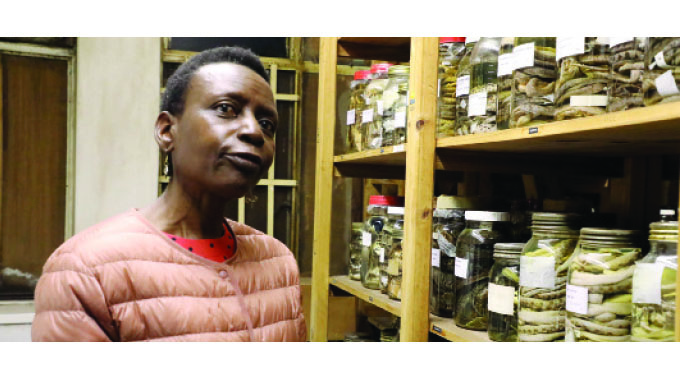
Flora Fadzai Sibanda, Chronicle Reporter
WHEN people think of a museum they think it’s a place where ancient artifacts, artistic, cultural and historical objects are kept and displayed for public viewing. They know that museums have a scientific importance and are more than a storeroom for dead things.
The Natural Museum of Zimbabwe was built in Bulawayo in 1962. In 1982 all the natural science collections were moved there and it was renamed the Natural History Museum of Zimbabwe. With its stunning displays and valuable research collections it is the best museum in southern Africa and ranks fourth in size among the museums of Africa.
Among the natural science collections at the impressive circular building with nine public display galleries, a lecture hall with a seating capacity of 120 people, a cafeteria, and eight research departments with substantial study collections and ongoing research are snakes. Lots of snakes which make it Bulawayo’s own snake park to rival Harare’s famous Snake Park.
The museum is located just behind the famous Bulawayo Centenary Park. Two giraffes that are seemingly hugging welcome you as you walk towards the door, written with bold words ‘Natural Museum of Zimbabwe’.
Once inside the scenery changes, brown walls with a few items on the hung inside glasses show that we have entered a conservation room.
A guide takes us through to the museum and explains they have eight research departments in archeology, entomology, ornithology, mammalogy, herpetology, ichthyology, paleontology and geology.
As he is still telling us what departments they have, the Saturday Chronicle crew is immediately smitten by the department of herpetology.
Herpetology in the museum deals with the study of amphibians and reptiles; it gives a great insight into how these reptiles blend well with the ecosystem.
The guide hands us over to Sheila Broadley who is head of the department. Of great interest is she is the wife to the late Donald Broadley whom many will know as one of the greatest African herpetologists. Before his death, the great herpetologist described as new to science 155 species and subspecies, 8 genera and subgenera of reptiles.
Sheila says they have more than 53 000 specimens that they collected as a museum since it was first opened back in the day. A specimen is genetic information of reptiles that is collected and kept safe in the museum so that it can be used as a study some years later.
The specimen may include shredded skin, a piece of a reptile, its skin DNA or a sample of the reptile. She says they are kept safe in what they call the snake room where they are conserved and preserved for the future generations so that they can come and do research on them.
“Our specimens are kept inside bottles that have an alcohol mixture inside it. The mixture is the one that makes them not go bad or get rotten. They have to be always submerged in the water. Failure to do that will result in them being spoiled as they easily get dry,” says Sheila.
The herpetologist says they keep the room where these specimens are kept cool and dark so that they do not end up getting wasted. The specimens can be preserved for up to 40 years.
Next the herpetologist took us to the frog room, which is more or less like the snake room. Different types of frogs are found here, the tins clearly labelled with the name and origin of the frog.
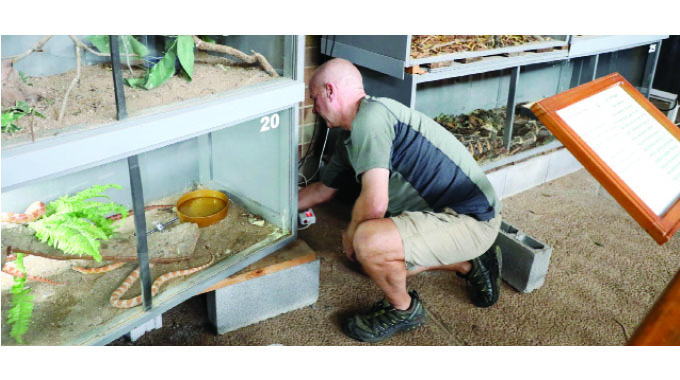
When the crew thought we had seen enough, Sheila gave us a special treat as she led us to the courtyard with beautiful live snakes on display. The snakes are not close to being dead, all of them are alive much to the amusement of the Chronicle crew that thought museums kept non-living ornaments.
Sheila says they keep close to 30 different snakes.
“Keeping snakes is not scary. Not all snakes are venomous and people should understand certain ways of acting when they come across a snake so that they avoid being bitten. We feed our snakes here so someone goes inside the cage and cleans the dirt, changes their water, and gives them food,” says Sheila.
She says they keep rabbits near the museum that they use to feed the snakes from time to time.
The herpetologist says among the snakes they keep at the museum is a python. This is known as inhlathu in most Southern areas of the country. Some call it the African rock python, it can easily be mistaken for a rock if seen sitting on top of a rock because of its colour. It is a non-venomous snake that could however cause harm by crushing its victim as it coils itself against the animal that has fallen victim. The big snake if kept in captivity can live for between 22 and 25 years.
“If unprovoked, the snake does not bother anyone. People should just learn how to be steady and walk slowly away from the snake whenever they come across it,” she says.
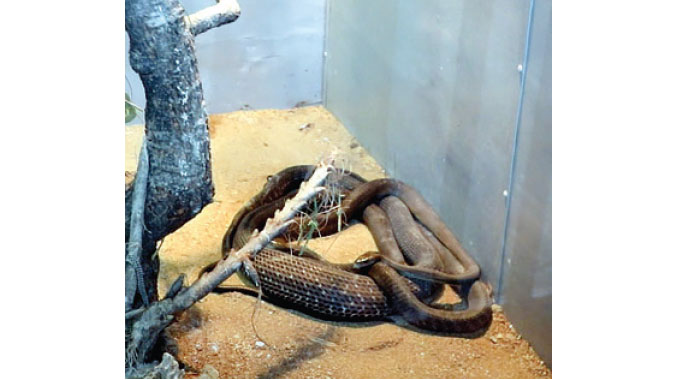
We also came across the famous deadly black mamba which we learnt was actually grey if not brown in colour. The name of the deadly snake comes from the colour of its mouth’s inside which is blue and black. It is considered the world’s deadliest snake because of its lethal venom which travels fast if one is bitten, often leading to death.
Sheila says just like every other snake in the museum the black mamba feeds on rats.
Another interesting reptile that we saw as a beautiful masterpiece was the Gabon Viper. The beautiful reptile has an artistic skin that makes one get lost in its beauty. The snake has a cone-like head and has the longest fangs and the highest venom yield, but its bite can be treated if acted on quickly.
“Snakes don’t bother anyone if they are not bothered. They are generally lazy so randomly attacking someone is a big job for them. They only attack in defence,” says Sheila. — @flora_sibanda



 Online Reporter