Vusumuzi Dube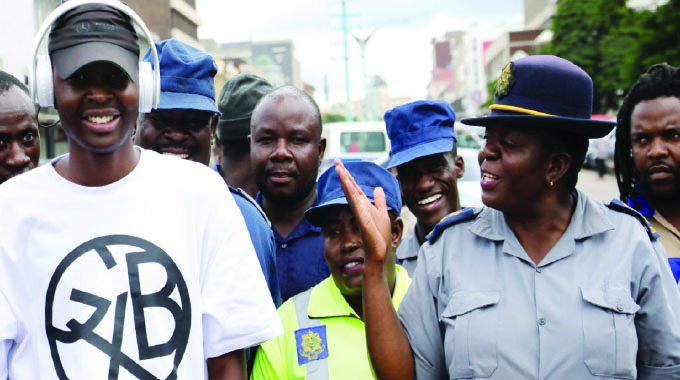
Amos Mpofu
LAST year, Bulawayo’s pavements and crossings became an unexpected battleground between the city’s pulse and the private soundtracks so many residents now carry in their ears. Police say 77 pedestrians were killed and 143 were injured after being struck by vehicles while wearing earphones — a grim tally that turns an everyday habit into a life-or-death gamble, and transforms a simple walk to town into a high-stakes journey through metal, speed and split-second judgement.
A total of 220 pedestrians were affected across the city, a figure that reads less like a statistic and more like a warning sign hanging over every intersection.
It mirrors a pattern seen elsewhere in the world, where safety researchers and road agencies have repeatedly cautioned that headphones can blunt a pedestrian’s awareness — the “bubble effect” that mutes hooters, engines, shouted warnings and the subtle cues people rely on to survive busy streets.
In studies and case reviews abroad, crashes involving headphone-wearing pedestrians have included fatal outcomes and near-misses, often in urban environments where sound is part of the survival toolkit.
In response, the Zimbabwe Republic Police (ZRP) in Bulawayo launched a campaign yesterday at the corner of Herbert Chitepo Street and Leopold Takawira Avenue, zeroing in on pedestrians who cross roads while wearing earphones or using their phones. The scene is a familiar modern tableau: people moving in their own worlds, eyes lowered to screens, shoulders swaying to inaudible beats, and traffic flowing with the blunt certainty that it cannot stop for distraction.
Authorities say at least three road traffic accidents linked to negligent pedestrians occur daily in the city, a relentless rhythm that makes the danger feel less like an occasional tragedy and more like a constant, simmering threat. It is a frequency that helps explain why the issue has become a public conversation — not just about rules, but about how we live now, how we move, and how easily a moment’s inattention can become irreversible.
Addressing hundreds of pedestrians caught during the campaign, Bulawayo Provincial Police Spokesperson Inspector Nomalanga Msebele urged the public to take responsibility for their own safety, as the warnings spilled from the roadside into living rooms and group chats.
On Facebook, the reactions carried the city’s full range of frustration, fear and finger-pointing. One commenter, Vincent Machokoto, offered a near-miss that could have easily ended in tragedy. “I almost hit one on the 31st of December last year because of earphones.”
Others argued the problem is bigger than pedestrians alone, with Balington Ezekiel saying: “Public awareness and safety campaigns will aid. Some people are just rude though. Yet at the same time the driver is still to blame, exercise extreme caution and never hit them, the law is not so friendly there, and maybe rightly so.”
And Busani Elia Malibha Dube widened the lens to driver behaviour: “About earphones it’s true but the drivers in Bulawayo are so rude they can’t even stop at a Zebra crossing.”
In between those poles sat a chorus of simple pleas — “Say no 2 headphones” and “Please ban the habit” — the kind of short sentences people type when they have run out of patience with preventable pain.
“Last year alone, out of 212 accidents in Bulawayo involving pedestrians crossing the road while putting on earphones and using cellphones, 77 died and 143 were injured. We are today educating the public, especially pedestrians, to be cautious and not to be negligent whilst crossing the roads simply because of phones and earphones,” said Inspector Msebele.
Inspector Msebele added that the problem has become increasingly prevalent in the age of mobile phones, making it essential for pedestrians to be aware of the risks associated with distracted walking — a modern hazard where entertainment and communication travel with us, even into the most dangerous spaces.
Around the world, road-safety advocates and researchers have repeatedly warned that when attention is divided — when ears are sealed, eyes are fixed on screens, and the mind is elsewhere — the street becomes less forgiving. In a city like Bulawayo, where crossings can be contested and traffic impatient, the smallest lapse can be the difference between stepping onto the other side and never arriving at all.



 Online Reporter