Online Reporter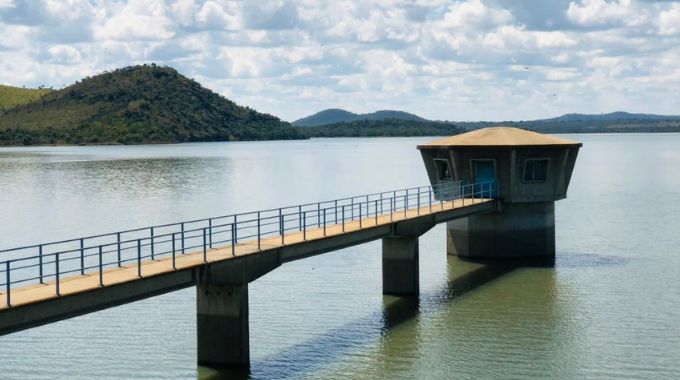
Peter Matika, [email protected]
BULAWAYO’S water crisis is increasingly becoming less about the amount of water stored in its dams and more about the city’s ability to deliver that water to residents.
While dam levels have improved significantly compared to last year, thousands of households are still experiencing prolonged water shedding and dry taps as ageing infrastructure, equipment breakdowns and delays in major water projects continue to undermine supply.
According to the latest Bulawayo City Council report, the city’s six supply dams were holding 275,12 million cubic metres of water as of July 15, representing 66,35 percent of their combined capacity. Of that total, 258,54 million cubic metres was classified as usable water. This marks a substantial improvement from the same period last year, when dam levels stood at just 43,89 percent.
“As at July 15, the six supply dams held a combined 275,12 million cubic metres, representing 66,35 percent of total capacity, with 258,54 million cubic metres classified as usable water. At the same time last year, the dams were 43,89 percent full,” read the council report.
Despite the healthier dam levels, residents have seen little improvement in water availability. The council report reveals that while the city has enough water resources to abstract about 165 megalitres (ML) a day, ongoing maintenance work, infrastructure failures and operational interruptions have reduced actual abstraction to 125,1ML. Water production is even lower, averaging just 115,9ML daily.
The figures expose a growing disconnect between the amount of water available in storage and the volume that ultimately reaches homes, businesses and institutions. In simple terms, Bulawayo’s challenge is no longer just securing water but ensuring that existing infrastructure can efficiently move it from dams to consumers.
The pressure on the city’s water system is set to intensify in the coming months. Lower Ncema Dam, one of Bulawayo’s key supply sources, is rapidly losing capacity and is projected to run out of usable water by October 23. On July 15, the dam was only 23,79 percent full.
The outlook for some other supply dams is equally concerning. Umzingwane Dam is expected to be depleted this month, while Upper Ncema Dam is projected to remain viable until January 2028 and Inyankuni Dam until October 2028. Insiza Dam is expected to last until November 2029, while Mtshabezi Dam, currently sitting at an impressive 99,99 percent capacity, has a projected depletion date of September 2031.
These varying depletion timelines highlight the vulnerability of a supply system that relies heavily on a limited number of reservoirs.
While some dams still have substantial reserves, others are approaching critical levels, increasing pressure on the city’s ageing distribution network.
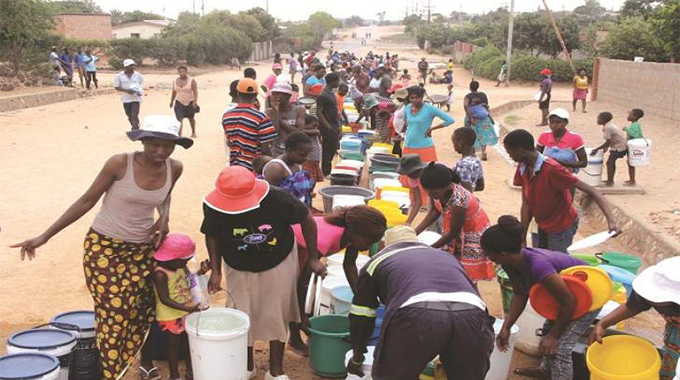
Residents continue to feel the impact through an ongoing water-shedding programme. In recent months, some suburbs have endured up to 72 hours without water each week, while frequent breakdowns affecting bulk pumping stations and pipelines have further disrupted supplies.
The city’s ability to respond to emergencies is also under strain. Council owns seven water bowsers, but only three are currently operational. These vehicles play a critical role during water shortages, supplying communities, clinics and funeral services. They also service 25 community water kiosks and 22 institutional kiosks whenever municipal supplies are interrupted.
With less than half of the bowsers functioning, council’s capacity to respond quickly to emergencies is significantly weakened, raising concerns about service delivery during prolonged outages.
While council battles immediate supply problems, several long-term projects intended to secure Bulawayo’s water future are progressing more slowly than many residents would like.
The Gwayi-Shangani Dam project, widely regarded as the city’s long-term solution to water shortages, has recorded notable progress on dam construction.
The dam wall is now approximately 80 percent complete. However, the 252-kilometre pipeline that will carry water to Bulawayo remains only 16 percent complete, creating a significant obstacle to delivering water once the dam itself is finished.
Council said the project requires approximately US$8 million every month to maintain construction momentum. Progress has also been affected by poor road infrastructure, which has complicated the transportation of construction materials to the site.
The project includes a 634-million-cubic-metre dam, a 252km pipeline, a water treatment plant and six pump stations, making it one of the country’s largest infrastructure developments.
Bulawayo Mayor Councillor David Coltart has previously emphasised the need to accelerate alternative water projects, including the Glassblock initiative, amid concerns that future rainfall patterns may not provide the relief the city requires.
At the same time, council is exploring underground water resources as part of its climate adaptation strategy. Attention has turned to the Umganin Aquifer in Nkulumane and Nketa, where groundwater resources are being assessed as a supplementary source of supply.
According to the council report, around 20 boreholes producing at rates similar to Borehole 3 could collectively generate approximately 4ML of water per day.
Three drilling companies have already been contracted to conduct surveys and drill nine boreholes, although site verification and clearance by the Town Planning Department are still in progress.
Adding to the city’s challenges are illegal water connections that continue to undermine revenue collection and water management efforts.
Council has expressed concern over residents connecting JoJo tanks directly to the municipal supply network while bypassing water meters, describing the practice as criminal.
The issue has become serious enough for councillors to call for the establishment of a dedicated water team to investigate illegal JoJo tank connections across Bulawayo.
For now, the reality facing the city is stark. Bulawayo has more water in its dams than it did a year ago, yet residents continue to struggle for reliable supplies.
Until ageing infrastructure is repaired, emergency response capacity is strengthened and major projects such as Gwayi-Shangani are completed, improved dam levels alone are unlikely to bring an end to the city’s long-running water woes.