Online Reporter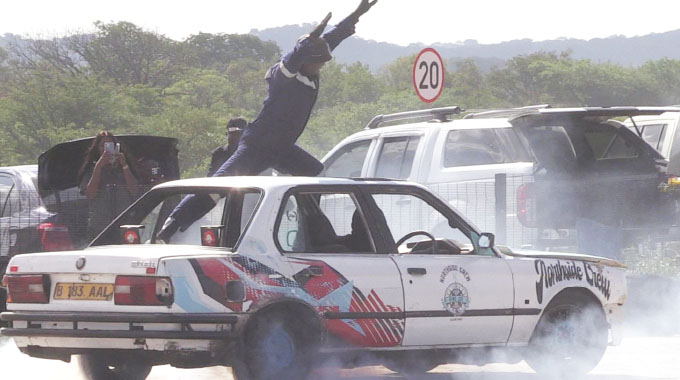
Peter Matika, Senior Zimpapers Writer
FOR many young motorists, the thunderous roar of an engine, spinning in tight circles, tyres screaming against tar and clouds of smoke billowing into the air, represents freedom, skill and raw adrenaline.
But for Mr Zakhele Mlilo, director of the ZKS Spinners Arena, the sport he adores and loves not so long ago delivered a painful lesson, one that he hopes will save others from serious injury or death.
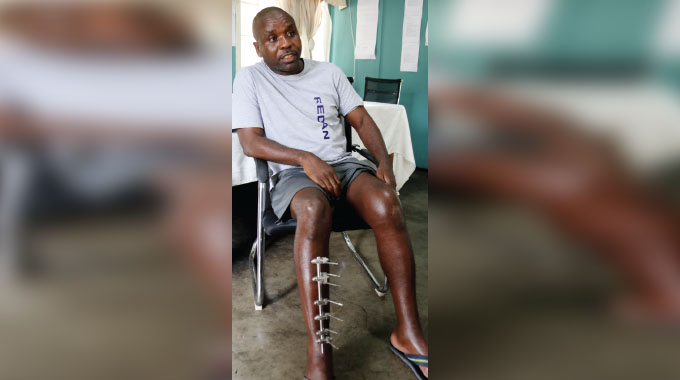
Mr Mlilo is currently nursing injuries to both legs sustained during a spinning session, an incident that forced him off his feet and into reflection.
With metal screws protruding out of his right leg and walking with the aid of a walker, Mr Mlilo recently opened up about the risks associated with the sport.
While he is no stranger to the risks associated with spinning, the accident has reinforced his long-held belief that the sport must be practised only at licensed venues and never on public roads or unregulated open spaces.
“Spinning is not a joke. It looks exciting and entertaining, but behind that excitement is a lot of danger. I was injured in my legs, and although I am recovering, the situation could have been much worse. This is why we always say people must spin in controlled, licensed environments,” Mr Mlilo said.
Spinning, a motorsport discipline that originated in South African townships before spreading across the region, involves drivers deliberately oversteering their vehicles in tight circles while maintaining high engine revs.
Over the years, the sport has evolved into a competitive spectacle, with drivers showcasing precision control, timing and mechanical mastery.
In some instances, drivers perform daring stunts by partially exiting their vehicles as they spin, further thrilling crowds.
“However, what many spectators and novice drivers fail to appreciate is that spinning places extreme strain on both the car and the human body. High centrifugal forces, intense heat from engines and tyres, and unpredictable mechanical failures can turn a moment of excitement into tragedy in seconds,” said Mr Mlilo.
He said his injury occurred at a venue he was advised was licensed and recognised as a spinning facility.
“If this can happen to someone experienced, imagine what can happen at an illegal event with no barriers, no marshals and no medical personnel,” he said.
“That is why I strongly discourage spinning in undesignated areas.”
In recent years, Zimbabwe, like many countries in the region, has witnessed a surge in illegal spinning and drifting events, often staged on public roads, industrial sites and open parking lots.
These gatherings, usually organised through social media platforms, attract large crowds and frequently block traffic, disturb communities and put lives at risk.
Police have repeatedly warned that such activities are illegal and dangerous, citing incidents where vehicles have lost control and ploughed into spectators.
In some cases, people have sustained serious injuries, while property damage and near-fatal accidents have become increasingly common.
Mr Mlilo believes the problem is not the sport itself, but how and where it is practised.
“Spinning is a motorsport, just like drag racing or rallying. Spinning was recently acknowledged as a sport by the Sports and Recreation Commission. The problem comes when people treat it like a street game. Public roads are not designed for spinning. There are pedestrians, other motorists, buildings and no safety zones. Once something goes wrong, there is nowhere for the car to go,” Mr Mlilo said.
As the founder and director of ZKS Spinners Arena along Solusi Road, Mlilo has been at the forefront of efforts to professionalise the sport in Bulawayo.
The arena was established to provide a safe and legal platform for spinners to practice their skills, entertain fans and nurture upcoming talent without endangering the public.
According to Mr Mlilo, licensed venues offer several critical safety advantages, such as clearly marked spectator areas, barriers, trained marshals, fire extinguishers and access to medical assistance.
“At a proper venue, spectators know where to stand, and drivers know their limits. There is order. There is discipline. That is what keeps people alive,” he said.
Mr Mlilo added that many injuries and accidents associated with spinning stem from a lack of basic safety awareness.
“Some cars are not mechanically sound. Tyres burst, brakes fail, suspension breaks. When that happens at high speed, the car becomes a missile. If you are spinning next to a crowd on the street, the consequences are devastating,” Mr Mlilo said.
Mr Mlilo’s injury has also sparked conversations within the spinning community about the need for stronger self-regulation.
He believes spinners themselves must take responsibility for discouraging illegal events and educating young enthusiasts about safety.
“We cannot wait for tragedy before we act. We must speak to our people, especially the youth, and tell them the truth. This sport can give you fame and fulfilment, but it can also take your life if you are careless,” said Mr Mlilo.
Despite his current setback, Mlilo remains optimistic about the future of spinning in Zimbabwe.
He envisions a time when the sport is fully recognised, properly governed and supported by stakeholders, including local authorities and sponsors.
“There is huge potential here. Spinning can create jobs, attract tourism and give young people a positive outlet. But that future depends on us doing things the right way,” Mr Mlilo said.
As he continues his recovery, Mr Mlilo hopes his experience will serve as a wake-up call to both spinners and fans.
“I was lucky. Someone else might not be. Let us enjoy spinning, but let us respect it. Safety must always come first,” he said.
Mr Mlilo said the thrill of spinning should never outweigh the value of human life.