admin
admin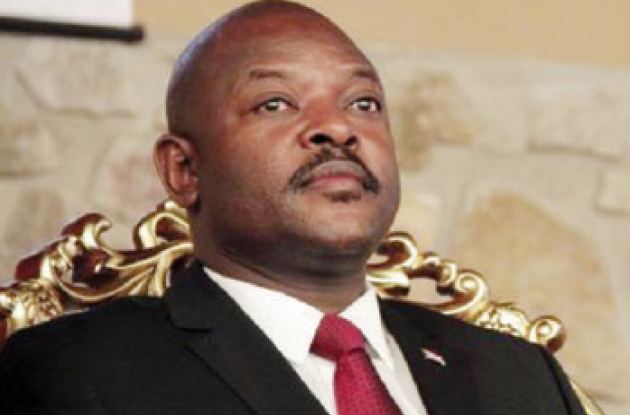
Bujumbura — Burundi’s President Pierre Nkurunziza yesterday made his first official appearance since an attempted coup against him this week, AFP reporters said.
The president smiled and appeared relaxed as he greeted the press at the presidential palace in Bujumbura. He made only a brief statement to journalists with no mention of the country’s crisis.
Nkurunziza spoke only about reported threats from Somalia’s al-Qaeda-linked al-Shabaab militants, who have warned of attacks against Burundi and other states that contribute troops to the African Union force in Somalia. “We’ve taken measures against al-Shabaab. We take this threat seriously,” said the president.
Nkurunziza has been facing weeks of violent and deadly street protests over his controversial bid to stand for a third consecutive term in office and on Wednesday top generals announced they were overthrowing him while he was on a visit to neighbouring Tanzania.
But on Friday the coup leaders, having failed to capture the state broadcaster after fierce fighting with loyalist troops, admitted defeat and were detained or have gone on the run, allowing Nkurunziza’s motorcade to roll back into the city.
Police stormed a hospital in Burundi’s capital, shot and killed patients as they searched for men injured in clashes that erupted when a senior army officer announced an attempted takeover of the government, a doctor said.
Dr Antoine, a surgeon at the Bumerec hospital in Bujumbura, said Friday’s attack also left some patients injured. The attack happened on the same day Nkurunziza, who was in neighbouring Tanzania when the attempted coup was announced, returned home.
“We received three patients and they were here in the emergency room after that moment we see a group of policemen arrive here and they began to shoot everywhere,” said Antoine, who uses only one name.
Antoine said: “Some patient was killed, one man was killed and the others were wounded seriously, and we don’t know what they did with that.”
He said hospitals in Burundi had never been attacked in any circumstances and was shocked to see his institution under fire.
Antoine said: “When there is struggle or when a group is struggling”, hospitals should be treated as “neutral institution”, adding, “hospitals [sic] is not for this party or that one, but hospital receives everyone, every patient.”
Burundi has been reeling from violence, which began on April 26 after the ruling party made Nkurunziza its presidential candidate. At least 15 people have been killed in the unrest.
Activists and journalists are said to be in hiding or attempting to flee the country in fear of reprisals from the state or their supporters following the abortive coup, relief agencies said. The attempted coup triggered fierce fighting in the capital between troops backing coup leaders and those loyal to Nkurunziza.
Three army generals behind the coup attempt were arrested when they were found hiding in a house, while another senior security official was caught at the border while trying to flee to Tanzania, said presidential spokesman Gervais Abayeho. He added that coup mastermind Godefroid Niyombare remained at large and a manhunt was underway.
At least 105,000 people are said to have fled to neighbouring Tanzania, Rwanda and the DR Congo, the UNHCR said. The high numbers of refugees fleeing have also prompted concerns of a new humanitarian crisis just years after Burundi’s civil war ended.
Burundi descended into civil war in 1993 following the army assassination of the country’s first democratically elected President Melchior Ndadaye, a Hutu. That conflict, which opened longstanding ethnic tensions between majority Hutus and minority Tutsis, lasted until 2005. — Al Jazeera.


 Online Reporter