

 Online Reporter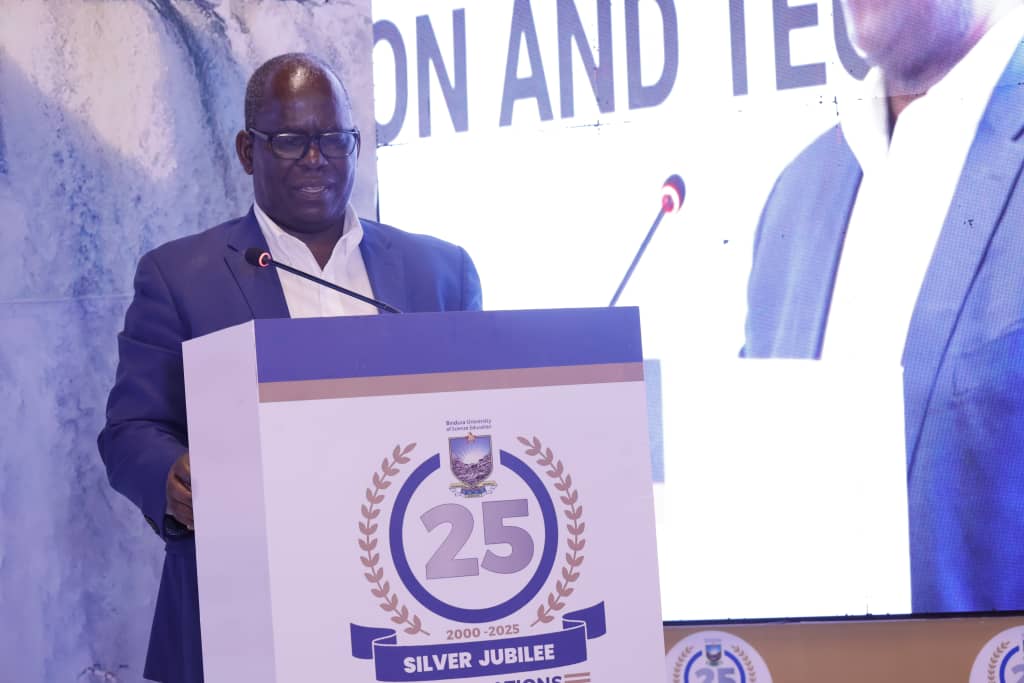
Rutendo Nyeve, Victoria Falls Reporter
THERE has been an amplified roar of progress emanating from the nation’s universities which are transforming from traditional institutions of learning into engines of industrialisation and innovation with Bindura University of Science Education (BUSE) positioning itself at the forefront of this revolution.
BUSE’s journey and achievements formed the cornerstone of the 4th International Science Education and Technology Conference on Thursday in Victoria Falls.
Presenting at the conference, BUSE Vice Chancellor, Professor Eddie Mwenje, highlighted the university’s unprecedented commitment to Zimbabwe’s Heritage-based Education 5.0 philosophy.
This model challenges universities to expand beyond the traditional pillars of teaching, research, and community service by adding innovation and industrialisation.
“The approach recognises that universities must be more than repositories of knowledge – they must be engines of practical solutions and economic transformation
“Our Innovation hub and industrial park has seen us stimulate our students and researchers to produce products and services to the nation,” said Prof Mwenje.
This transformation did not happen overnight.
BUSE’s journey began twenty-nine years ago from a position of necessity.
“Zimbabwe faced a critical shortage of qualified science educators, a challenge that threatened our educational foundations and economic prospects,” said Prof Mwenje.
Established in 1996 as a university college with 125 students, it was granted full university status in 2000.
From its first graduation of 140 students in 2003, BUSE has grown into Zimbabwe’s third state university and a comprehensive institution with six faculties.
This evolution from a teacher-training college to a multifaceted hub of scientific and technological excellence is precisely the transformation the Government envisioned with Education 5.0.
Speaking on behalf of the Minister of Higher and Tertiary Education, Innovation, Science and Technology Development, Dr Fredrick Shava, the Permanent Secretary, Professor Fanuel Tagwira hailed BUSE as a national model.
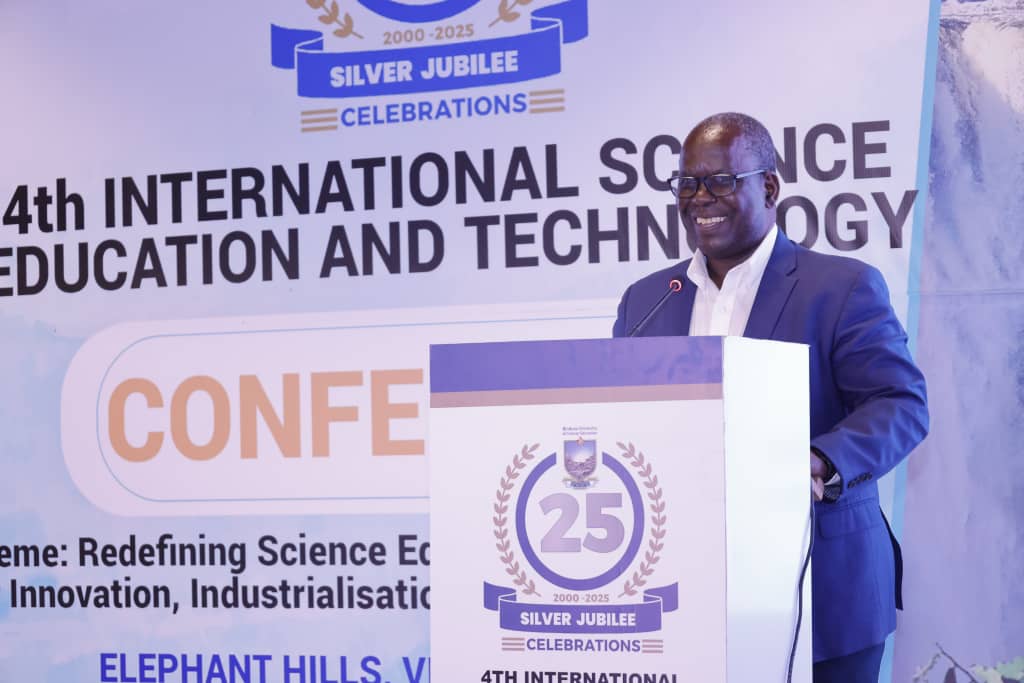
“The Heritage-based Education 5.0 policy represents more than educational reform-it embodies a fundamental reimagining of universities’ role in national development
“BUSE exemplifies this transformation magnificently. The university’s journey from addressing a critical shortage of science teachers to becoming a hub of technological innovation and industrial production demonstrates what is possible when institutions align with national strategic objectives,” said Dr Shava.
This alignment is most visible in BUSE’s tangible outputs.
The university’s Digital Technology Assembly Plant produces Palpo devices, tablets, laptops, and smartphones which are pre-loaded with educational content and featuring ‘Titus’, an artificial intelligence tool developed in-house by the university’s Software Development Hub.
Minister Shava highlighted the significance of this achievement.
“The integration of Titus demonstrates our capacity to compete in the global digital economy while serving our linguistic diversity and educational needs. These devices… are revolutionising e-learning and positioning Zimbabwe as a producer rather than merely a consumer of educational technology,” he said.
The Government’s endorsement of BUSE’s innovations is not merely rhetorical.
The Ministry recently adopted the “Chiringa” application, a Monitoring and Evaluation Dashboard developed at BUSE for real-time project tracking.
The university has also collaborated with the Ministry of Transport to produce a groundbreaking e-Tolling and Access Control System for the nation’s roads.
Beyond digital technology, BUSE’s industrial initiatives span multiple sectors.
The Minister revealed that he recently toured the Goat Semen Processing and Biotechnology Laboratory, which advances agricultural genetics, and the Masawu-based Food Products Plant, which exemplifies value addition to indigenous resources.
The university’s Garment Factory and Gold Analytical Services further demonstrate a direct contribution to industrial diversification and import substitution, aligning perfectly with the National Development Strategy 1 (NDS1).
“Our ministry’s mandate extends beyond supporting such innovations to ensuring their commercialization for national benefit. Our clarion call to universities now is that of full commercialization of innovations ensuring that researchers receive fair rewards while creating new Industries and employment opportunities for our people,” he said.


