admin
admin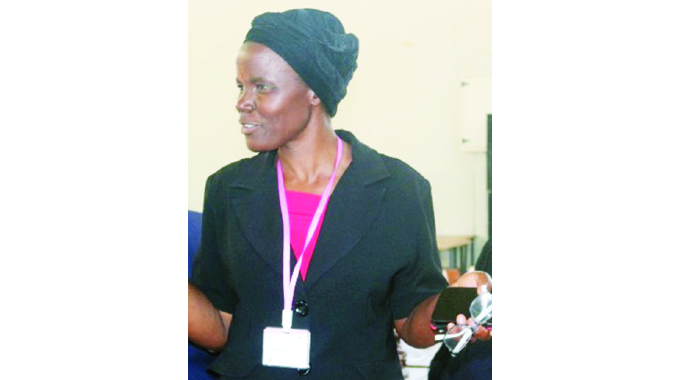
Fungai Lupande
Mash Central Bureau
The recent oil and gas discovery in Muzarabani has prompted Bindura University of Science Education (BUSE) to introduce a petroleum engineering programme – a significant step towards meeting the future workforce needs of the country’s energy industry.
Invictus Energy has successfully discovered natural gas and condensate at its Mukuyu 2 well in the Cabora Bassa project in Mbire.
BUSE is trailing the confirmation of the Mukuyu gas – condensate discovery at the Cabora Bassa project where Invictus is positioning itself to capture early monetisation opportunities and accelerate timelines to first production and revenue generation.
The high-quality natural gas discovered at Mukuyu-2 contains minimal impurities and allows for a simple early production system at the well site to produce for gas to be used in power generation or compressed natural gas for delivery to on site power generation at Eureka.
Motivated by these developments, BUSE is launching a new graduate programme in petroleum engineering designed to produce well – qualified petroleum engineers with knowledge about the development of oil and gas resources in the country.
Trained and educated individuals are essential for enhancing economic growth and building Zimbabwe effectively.
Rising prospects for oil and gas production will lead to a demand for experienced engineers with knowledge of the petroleum industry.
The launch of this programme is intended to provide young graduates with the opportunity to participate in the country’s petroleum industry.
BUSE chairperson of the Engineering and Physics department, Dr Chipo Shoniwa, said the petroleum engineering programme aims to facilitate research and innovation that can significantly contribute to the realisation of Vision 2030.
The programme will provide a strong foundation for growth within the engineering industry and will cover various specialisations of petroleum engineering, including reservoir engineering, drilling engineering, production engineering, and renewable energy.
Students will conduct research on sustainable development by integrating state-of-the-art technologies such as artificial intelligence, IoT (Internet of Things), and machine learning.
Dr Shonhiwa said: “The primary objective of the programme is to produce highly skilled petroleum engineering professionals capable of promoting local and national development by enhancing the utilisation of existing oil and gas resources and opening new development opportunities.
“The programme will focus on innovation, technology, organisational growth through industrialisation, and entrepreneurship.”
Additionally, the programme will incorporate the five pillars of the Education 5.0 strategies, including heritage-based education philosophy, community engagement activities, creation of new knowledge, identification of the national critical skills gap, and addressing the call for innovation.
Students will undergo industrial attachment in their fourth year.
“The aim of the programme is to develop intellectual and professional skills that will enable graduates of the programme to have a successful professional career in the distribution and use of oil and gas, by-products and other hydrocarbons,” Dr Shonhiwa said.
She said the course will also aim to enhance skills in the management of natural resources within a green technology context.
“We aim to instil habits of good workmanship, sound scientific and technical traits and ethics so that the programme graduates will continue to learn and adapt in a world of constantly evolving and innovative technology.
“We aim to build team spirit for the graduates to collaborate with others to solve problems with creative thinking and effective communication,” she said.
BUSE also added other engineering programmes, including milling engineering.
Dr Shonhiwa said it was the mandate of BUSE to provide science education that contributes to the sustainable economic development of Zimbabwe.
“Global and national challenges requiring grain milling skills are too numerous. There is an overall skills gap in the grain milling profession which, if not addressed, can compromise global and national development levels and safety.
“Development is achieved through research, innovation and industrialisation by strategic intensive utilisation of land and value addition.”
Dr Shonhiwa said BUSE was taking important steps in providing the skills necessary to improve post production engineering research, innovation and industrialisation through the BSc in Grain Milling Science and Management.
“The programme is set to assist in the achievement of Vision 2030 and National Development Strategy 1 by adopting the heritage-based education philosophy.”
The Zimbabwe Council for Higher Education is working flat out to approve the degree programmes. The launch of the two programmes will assist efforts of the Government to extract and develop gas and oil resources north of the country, particularly crude oil and natural gas potentials.
The introduction of the programmes will also help bring research based methods for oil and natural gas extraction in the region.


 Online Reporter