admin
admin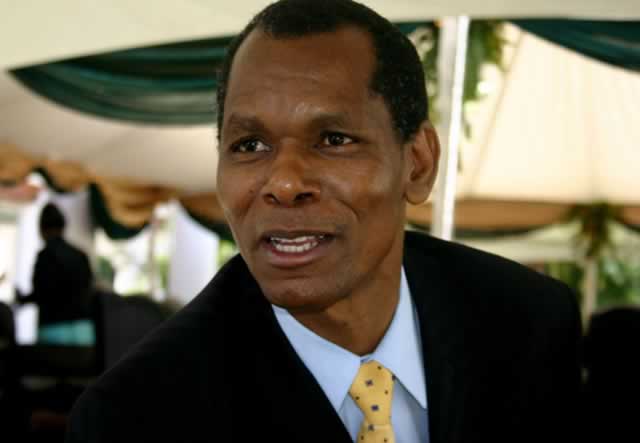
Chronicle Reporter
BUSINESSES operating in economic sectors reserved for indigenous people have been given up to 1 January 2014 to get compliance certificates or face prosecution under the indigenisation regulations.
Speaking at the Confederation of Zimbabwe Industries (CZI) annual congress that ended in Bulawayo yesterday, Youth, Indigenisation and Economic Empowerment Minister Francis Nhema said any business that continued to operate without a compliance certificate shall be guilty of an offence. Sectors reserved for investment by locals are retail and wholesale trade, employment agencies, estate agencies, valet services, bakeries, tobacco grading and packaging, tobacco processing, advertising agencies, milk processing, provision of local arts and craft, marketing and distribution, primary production of food and cash crops in the agriculture sector as well as transport, taxes and car hire services.
“Any person operating a business in the reserved sectors without an indigenisation compliance certificate with effect from 1 January 2014, shall be guilty of an offence and liable to a fine not exceeding level four or to imprisonment for a period not exceeding three months or both such fine and such imprisonment,” he said.
“The minister may direct any licensing authority to revoke, suspend or cancel the operating licence of a business operating in contravention of the regulations.”
In ensuring compliance with the law, Statutory Instrument 66 of 2013 has been gazetted and empowers Government to enforce compliance with the Indigenisation and Economic Empowerment regulations.
Minister Nhema said he was concerned with some business people who were using local people as fronts to circumvent indigenisation regulations.
Minister Nhema said it was imperative that the country vigorously pursues the Indigenisation and Economic Empowerment agenda for the benefit of the generality of Zimbabweans while ensuring that the nation’s comparative advantage was retained.
“There is therefore no debate on the imperative of indigenisation.
“It is the process of implementation that attracts interrogation,” he said.
Under the Indigenisation and Economic Empowerment programme, indigenous Zimbabweans must control at least 51 percent of the economy as presently constituted, while also promoting economic growth through the creation of new businesses and ventures that foster development.
Minister Nhema said the indigenisation legislation acknowledged the uniqueness of every sector and thus the availability of indigenisation frameworks for each and every sector. He said the manufacturing sector was governed by provisions of the Indigenisation and Economic Empowerment Act (Chapter 14:33).
“Every business in the manufacturing sector with a net asset value of at least $100 000 shall comply with the indigenisation and economic empowerment legislation. There shall be a lesser share or basic minimum platform of 26 percent indigenous shareholding in each company as a beginning point.
“Business has to comply with the 51 percent indigenous shareholding requirement over a period of four years from the date of publication of the General Notice or from the day of business commencement,” said Minister Nhema.
“The qualifying businesses should meet the following minimum indigenous shareholding thresholds from the day of publication of the General Notice or the day of business commencement: first year 26 percent indigenous shareholding, second year 36 percent indigenous shareholding, third year 46 percent and fourth year 51 percent indigenous shareholding.”
He said the four year period reflects deliberate recognition that the manufacturing and financial services sectors were capital intensive and therefore it was necessary to massage the policy to guarantee the sustainability of the empowerment programme in the sectors. “The indigenisation framework for the manufacturing sector is therefore very flexible and it was arrived at after extensive consultations with the relevant stakeholders in the manufacturing sector including the CZI,” he said.
He said the indigenisation law also empowered his ministry with the flexibility in dealing with indigenisation transactions.
He said his ministry was fully aware of the need to rescue distressed companies in the manufacturing sector that were in dire need of investors or capital.



 Online Reporter