

 admin
admin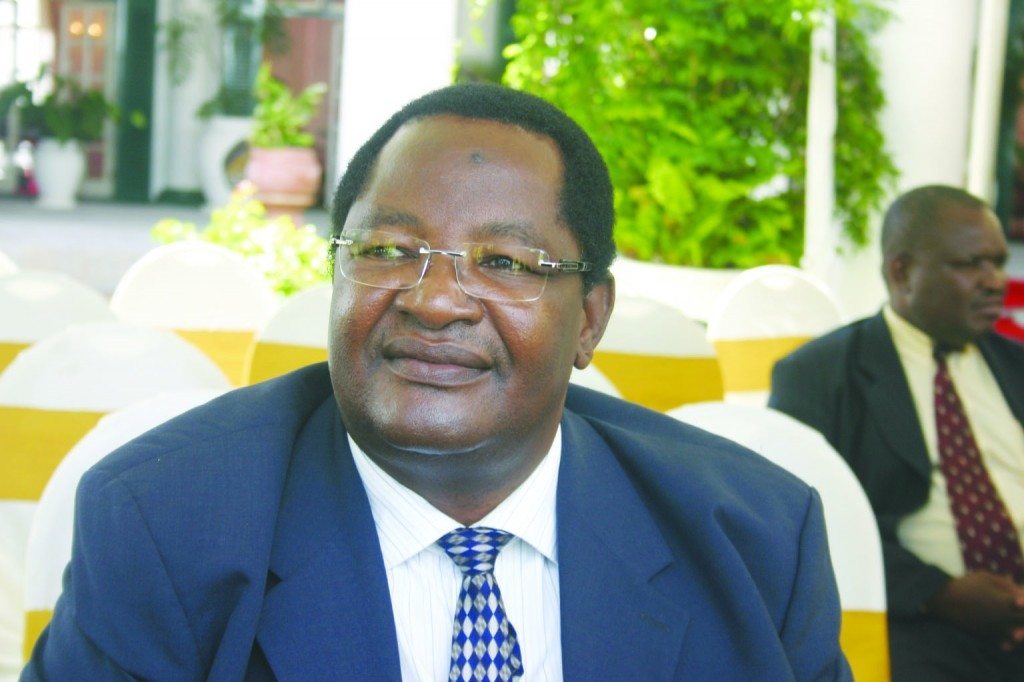
Senior Reporter
THE Minister of Transport and Infrastructural Development, Dr Obert Mpofu, yesterday said the Government has resolved to go ahead with its plans to introduce tollgates in urban centres.
This is, however, despite reservations by some motorists who are opposing the move.
Some people said urban tolling should only be implemented when the right infrastructure has been put in place. They argued that if implemented, e-tolling would compound rather than ease congestion.
Addressing stakeholders during a meeting organised by the Bus Operators Association (BOA) in Bulawayo, Dr Mpofu said the proposed project would help de-congest urban centres and raise money to improve the country’s road network.
“The Government is certainly going ahead with the plan to construct urban tollgates. We have done consultations and we are still engaging other stakeholders so that we implement the project,” he said.
“The idea is to improve our road network system in our cities and towns having realised that most traffic is found in urban centres resulting in unnecessary congestion. Motorists should therefore contribute towards the infrastructural development”.
Dr Mpofu said the concept would be implemented through the relevant Government processes.
He said his ministry has been encouraged by the fact that in some countries, the project has been successful.
“We want to implement urban tolling in view of the success of the concept in other countries where it is done in areas where there is extensive use of roads. The Government has therefore resolved to pursue the idea and it will be implemented through the relevant Government processes.
“We are going to identify certain strategic areas in urban centres because urban tolling has to be in a place where there are many cars,” said Dr Mpofu.
The system, which is already being applied to cities such as London, Stockholm and Oslo, has reportedly led to the reduction of traffic, an optimised accessibility and a reduction of carbon emissions.
Dr Mpofu also heard concerns from Bulawayo bus operators.
The problems which were raised by bus operators revolved around lack of transparency in the issuing of operating licences and cross-border bus permits by authorities from the Vehicle Inspection Department (VID), competition from unregistered transport operators and unwarranted roadblocks mounted by the police. Speaking during the meeting, the chairperson of BOA, Mr Patrick Dube said business for conventional buses plying long distance routes was on the decline.
He attributed this to the emergence of 11-seater vehicles illegally plying routes.
“Our business has been affected mostly because we are now forced to compete with unregistered cars and kombis including the 11-seater vehicles such as Toyota Granvias, which are abusing their permits by plying routes which are longer than their stipulated distances. We are asking the Government to intervene by removing these cars from our routes,” said Mr Dube.
According to the Road Traffic Act, buses carrying less than 30 passengers are only allowed to operate within a 140km radius of where they are based. The secretary of BOA, Mr Searchmore Maplanka, urged the Government to decentralise the issuing of operators’ licences, which are only obtainable in Harare.
“The operators’ licence is only obtained in Harare or in the case of Bulawayo during the Zimbabwe International Trade Fair. It is a simple document and we feel it may be easier for everyone if the process is decentralised to other major urban centres. We are also appealing to the Government to gazette new fares for long distances following an increase in operational costs.
“The fares that we are charging were gazetted in 2009 at the introduction of the multi-currency system and they need to be reviewed considering that fuel has gone up several times,” he said.
Bus operators also appealed to the Minister to help them secure funds to replace their ageing buses, most of which have broken down.
“Most of our buses are now old and we are appealing to the Government to assist us get funding in the form of loans so that we can repair our vehicles and buy new ones. Working capital is scarce and the cost of operation is now beyond our reach,” said Mr Maplanka.
Dr Mpofu promised to address the challenges faced by the bus operators.
“We will look into the issue of decentralising the process of obtaining operators’ licences. In order to address that issue, as Government we may consider coming up with a well connected computer system linked to other towns and cities so that people living outside Harare who would be in need of licences would not be forced to travel to get the document. We want to speed up service delivery to our people,” he said.
Dr Mpofu also challenged bus operators to form a vibrant body that would extensively lobby on their behalf.
“There is a serious discord in the manner bus operators in this region conduct their business. It is important for you to come up with a vibrant association through which your grievances would be heard by strengthening your structures. As Government our role is to facilitate your business operations not to frustrate it and we will do everything possible to address some of your challenges,” he said.
The Minister said he would soon convene another meeting which would be attended by all stakeholders.


 Online Reporter
 derick.khumalo