Online Reporter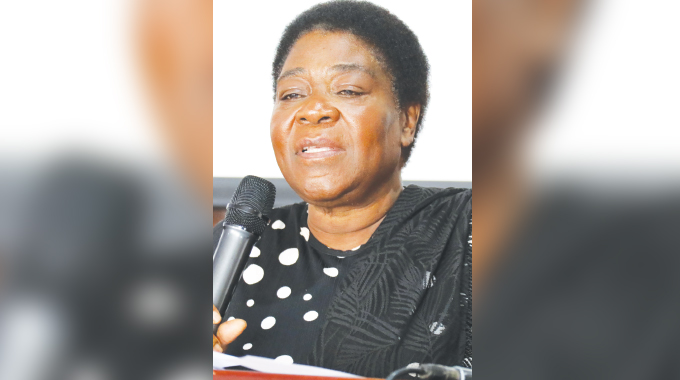
Raymond Jaravaza, [email protected]
BUSINESS leaders and residents’ associations have taken Bulawayo City Council (BCC) to task over the 2025 budget impasse, accusing it of acting in bad faith by presenting an inflated budget that does not address stakeholder concerns.
Three months into the year, Bulawayo does not have an approved budget and this is impacting negatively on service delivery.
In a strongly worded statement, residents associations and business leaders said the impasse started in 2023 when stakeholders raised objections to the 2024 budget, which were allegedly ignored by council.
“The council used an outdated exchange rate of ZWL101 to US$1 when implementing Statutory Instrument 118A of 2022 in July 2022 to rebate its tariffs. The tariffs were not submitted to the Minister of Local Government and Public Works for approval,” reads the statement.
“The tariffs were also not gazetted. It is of significance for stakeholders to note that tariffs applied by council since July 2022 to end of 2024 were neither approved nor gazetted.”
The stakeholders, who include business executives led by the Confederation of Zimbabwe Industries (CZI) and Zimbabwe National Chamber of Commerce (ZNCC) and residents led by the Bulawayo United Residents Association (Bura), and Bulawayo Progressive Residents Association (BPRA) said council must urgently address public concerns and resolve the matter.
“The rebasing of tariffs resulted in exorbitant US$ tariffs when compared to prior years of dollarisation and use of the United States Dollar as the reference currency,” reads the statement. “Despite efforts by CZI, ZNCC, various residents associations and other stakeholders to engage council and correct this miscalculation, no progress has been made due to lack of co-operation by council.”
They alleged that several attempts to resolve the impasse from last year were in vain. “A special committee was formed to work with the council management but unfortunately council did not co-operate, withholding critical information such as salary costs,” reads the statement.
The stakeholders further alleged on January 11, 2025 that council passed a revised budget with “cosmetic adjustments” was rejected by Government due to its failure to address concerns raised by stakeholders.
“Stakeholders note the spirited effort by council apportioning blame to Government for its lack of approval of the 2025 budget. The correct position is that it’s the council that is delaying the approval of the 2025 budget.
“Council would rather sweep management inefficiencies under the carpet than take steps to correct identified anomalies in the formulation of its tariffs and cost structures,” said the stakeholders.
On Monday, Chronicle reported how the City of Bulawayo Special Budget Committee had failed to meet the one-week ultimatum set by the Minister of State for Provincial Affairs and Devolution, Judith Ncube, to resolve the 2025 budget impasse.
Minister Ncube issued the ultimatum during a high-level meeting on March 7, 2025, which was also attended by members of the Joint Operations Command (JOC). Following a directive late last year from the Chief Secretary in the Office of the President and Cabinet (OPC), Dr Martin Rushwaya, that the Ministry of Local Government and Public Works should not approve the council’s US$309 million 2025 budget due to glaring anomalies in its formulation, the ministry set up a special budget committee.

This committee, which includes council representatives, members of the business community (as represented by the Confederation of Zimbabwe Industries — Matabeleland Chapter and the Zimbabwe National Chamber of Commerce), all three registered residents’ associations, tertiary institutions and tourism stakeholders, was tasked with revising the 2025 budget based on the 2017 audited figures.
However, sharp differences emerged between the council and the stakeholders after a request for the council to disclose its salary bill was met with stiff resistance from its representatives on the special budget committee. The impasse led to the two parties eventually going their separate ways, with the council calling for a special meeting, which resolved to cut business shop licences and sports and social club tariffs by 30 percent.
The special council meeting also resolved to resubmit the now-revised budget for approval, but this was subsequently rejected.
The city council, however, cited clauses in the Cyber and Data Protection Act as the reason for not disclosing salary perks for senior management to the special budget committee.
The business community has argued that the resolution to reduce the fees, reached at the special council meeting on the 2025 budget and tariff reductions, was made without councillors being fully informed about the objections raised by stakeholders.
One example is the proposed 104 percent increase in labour costs for council staff, from US$53 million in 2017 to US$108 million in the 2025 budget.
Bulawayo is the only local authority that has not had its budget approved after ratepayers raised concerns about its 2025 budget. Ratepayers have questioned the city’s figures, which they claim result from incorrect calculations stemming from the council using the wrong formula to index the 2022 and 2023 tariffs to the US dollar.