Chronicle Editor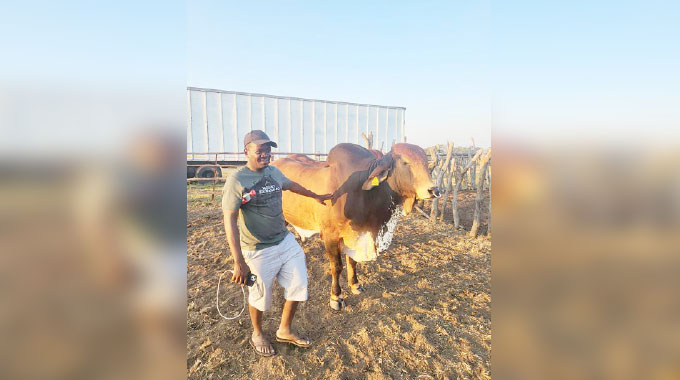
Judith Phiri, Business Reporter
A BULAWAYO businessman and farmer, Mr Decent Sibanda has set up a livestock facility in Shangani to service the surrounding communities and aid in the fight against tick-borne diseases and theileriosis identified as the leading causes of animal deaths.
Mr Sibanda owns Dee and Noe Butcheries/Tshisanyama in different parts of the city, Dee and Noe Deli and Grill, among other businesses.

The livestock facility, set up at his Ndandasi Plot 14 in Shangani is a solar-powered plunge dip tank that could not have come at a better time as the rainy season is associated with an increase in pests and diseases that can affect livestock.
During this time (November to March), farmers are urged to intensify cattle dipping to fight theileriosis, also known as January disease and other tick-borne diseases.
In an interview, Mr Sibanda said the development was motivated by the few dip tank facilities in their area and inspired by the butchery business that he runs that requires that he support livestock farmers for quality meat.

“As a person in the livestock sector business, it is important to ensure we protect our livestock to reduce livestock deaths through diseases. Cattle dipping remains one of the most effective control measures against all ticks and tick-borne disease,” he said.
“Realising that there were few dip tanks in our area, l saw the need to set up one which will also benefit the surrounding communities.”
With over 300 cattle and other livestock, he said by operation of the law, anyone who does not dip their cattle, or whose cattle are tick-infested, should be prosecuted to ensure that they do not inconvenience other farmers.
Mr Sibanda said the current arrangement he had come up with for the surrounding communities was that they come to dip their livestock for free this month and afterward they can then start to share the costs of acquiring the chemicals required.
“We want to ensure that we tackle the increased activity of ticks resulting in tick-borne diseases. In the past, the country has lost thousands of cattle due to January disease and other tick-borne diseases,” he added.
A member of the community, Mr Silibaziso Ndlovu, said they were appreciative of the initiative by the businessman who is also a farmer.
“The development of the dipping facility by Mr Sibanda is a great initiative which will positively contribute to the reduction of cattle deaths in our area. The dip tanks that were available were few, and having this one closer will ensure farmers dip their livestock regularly,” he said.
He said the development complements Government efforts to safeguard the national herd.

The project contractor, Mr Victor Moyo of Denker Investment Private Limited said plunge dip tank facilities were the preferred method of dipping large numbers of livestock, especially beef cattle.
“If constructed and used correctly plunge dips ensure complete wetting of the animals, particularly the important areas such as inside the ears and under the tail where ticks are found. Sheep and goats can be effectively dipped in a plunge dip, but a handler must be ready to assist them when necessary,” he said.
He said it was essential to keep accurate dipping and replenishment records as understrength dipping leads to inadequate tick control and tick resistance to acaricides.
The Government has been reminding farmers that dipping cattle is mandatory by law and has been making efforts to ensure cattle are dipped at least once a week to control ticks and tick-borne diseases.
It has also secured adequate livestock dipping chemicals for 2024/2025 season through the Directorate of Veterinary Services (DVS).



 Online Reporter