admin
adminthe forthcoming Buy Zimbabwe Conference.
Responses to the Buy Zimbabwe campaign are a clear testimony that whereas we could afford the ‘luxury’ of launching one Buy Zimbabwe initiative after another, this time, we certainly have to ‘Go Beyond Words’. Expectations for the March 30 Buy Zimbabwe Conference and exhibition are certainly high.
The eagerness and imperative to get on with it is self-evident. Suggestions are abound, including on the appropriateness of the campaign line. Those in the Diaspora and locals alike are coming on board with a diversity of views.
Some say we should adopt, ‘Made in Zimbabwe’, ‘Amazing Zimbabwe’, ‘Advantage Zimbabwe’, ‘Proudly Zimbabwean’, the spirit is one of engagement. Few have questioned the need for Buy Zimbabwe. We have also taken responses to mean that while naming has a place, it should not distract from the importance and urgency of an effective Buy Zimbabwe campaign. Its direction and meaning should be understood by all.
A major concern though has also been for the sustainability of the campaign after the March 30 conference and need for a road show that goes beyond Harare. There has also been emphasis on the need for effective synergy between policy, production and various determinants of consumer tastes and preferences. The present situation points out to a number of contradictions.
The Buy Zimbabwe team has also been asked to shed light on some of the initiatives lined up after the conference.
Information I gather indicates that a key focus area would be the need to enhance the decision-making ability of local producers. I know of some pioneering work that has already begun on regular national retail audits. These audits track the performance of local goods and services against imports, with a special focus on costing, pricing, packaging etc.
Local companies are thus able to decide on what they need to do to stay in business. Policy makers are also able to discern from data cases of dumping, smuggling or other uncompetitive factors and thus quickly move in with the most appropriate instruments.
The need for econometric surveys cannot be underestimated. We often speak in general terms of the link between consuming local products and services and such indicators as employment, but when asked to provide real data we are found wanting. The Buy Zimbabwe team has set an agenda to work with a number of local organisations to ensure that such information is available and is linked to the campaign.
Plans are also in place for a Buy Zimbabwe week whose goal is to ensure that there is concentrated focus on Zimbabwean products and services. The hope is that this could be structured to coincide with the Superbrand Brand of the Year awards, which this year are set to introduce a section for local brands, goods and services.
There is of course the issue of quality and related certification. This may seem easy for relatively developed economies to grapple with. In Zimbabwe it is a complex, yet fundamental concern to be dealt with if we are to be competitive, across all the key indices of price, quality, accessibility and affordability. As such the need for Buy Zimbabwe to work with the Standards Association of Zimbabwe in developing and promoting a certification process that enhances competitiveness of local goods and services cannot be underestimated.
Away from the responses have you noticed the repeated comparison of Buy Zimbabwe to the Proudly South African campaign? While the Zimbabwean competitive spirit says we must be different and create something unique to our own circumstances, there is an increasing ground swell of companies that label themselves ‘Proudly Zimbabwean’.
Tempting as it maybe to debate this issue, we need to take a pass and simply observe that our next door neighbour influences a lot of our thought processes on how the Buy Zimbabwe campaign should be structured. Quite naturally it is wise that we learn from what has worked there and avoid the pitfalls.
In that context the presence of Yvonne Johnston, the South African Business Icon of 2010 at the Buy Zimbabwe Conference is heartening. Having served on some local boards and credited with a number of marketing initiatives in South Africa, her presence should enable us to share useful experiences with a country that influences so much of our consumption pattern. This includes issues of design and the emerging retail distribution channel processes that are impacting the choices of what goods are on the shelves. It would be interesting to learn from South Africa how retailers have supported the local initiatives and yet elsewhere they take a different turn.
Ultimately, though, forging a united front is critical to enhancing Buy Zimbabwe. A factional local business structure is naturally inimical to the stated goals of the entire initiative. We must somehow move beyond entrenched politics of personalities and seek to go towards shared goals and responsibilities. By now it must be obvious that only through emphasising our interdependence can we triumph against countries that use unity in diversity as a key strength in boosting local production, consumption and getting stronger footholds in external markets.
The high profile of speakers for the conference has its work cut out. Once again we must go beyond words because the time to buy Zimbabwe is now.
Till then, stay blessed.
l For contributions, comments contact Buy Zimbabwe at 22 Broadlands Road, Mount Pleasant, Harare, Cell: 0772 714 233 / 0772 869 195, Email: [email protected], Facebook: buy Zimbabwe campaign


Online Reporter
- Chronicle , SundayNews
- September 23, 2026
- 3 views
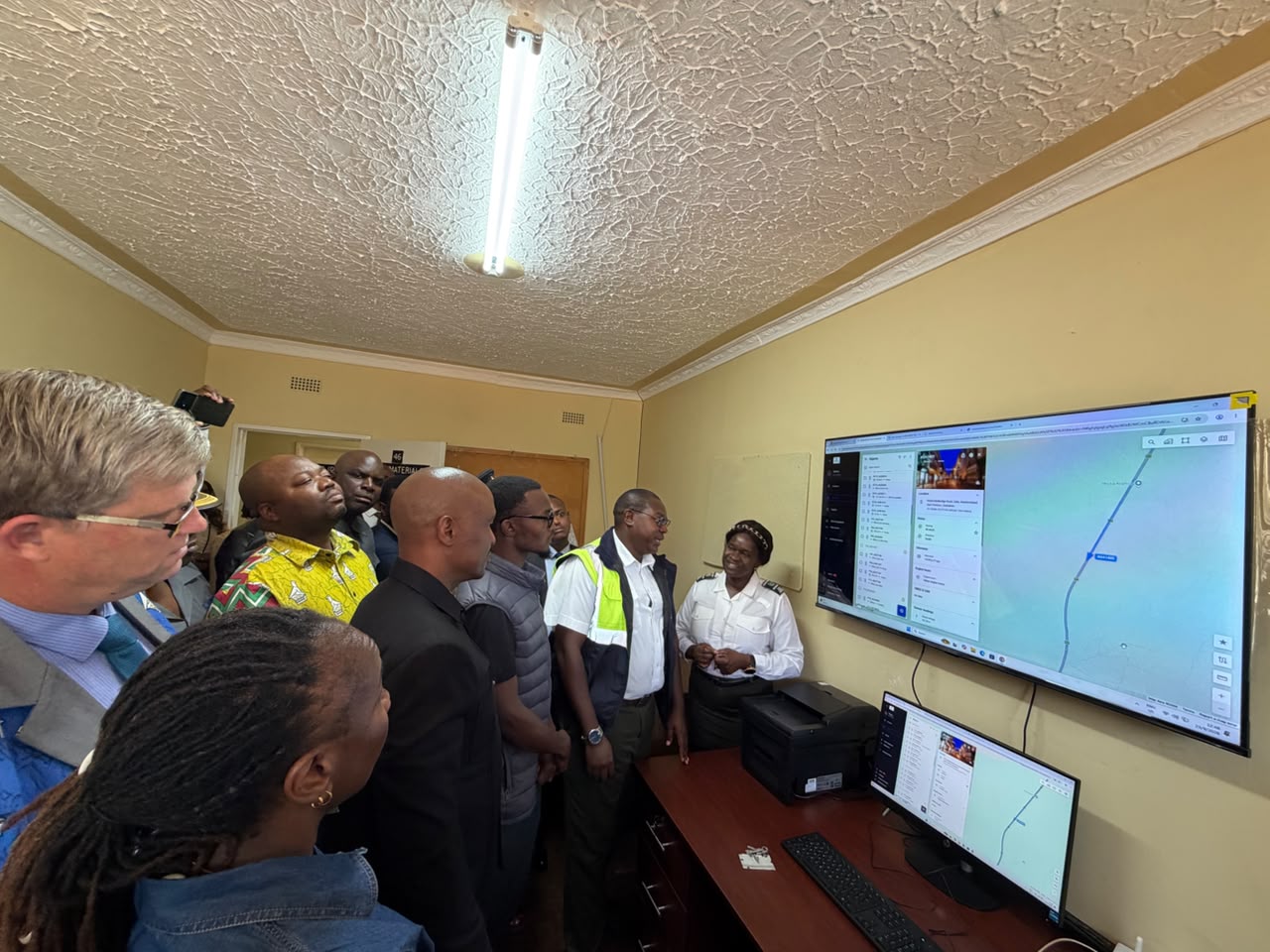
WATCH: Government moves to save lives, strengthen safety of public service vehicles
Mthabisi Tshuma [email protected] GOVERNMENT has launched the National Speed Monitoring System (NSMS) as part of efforts to save lives, improve road safety and strengthen accountability among public service vehicle operators.…