Online Reporter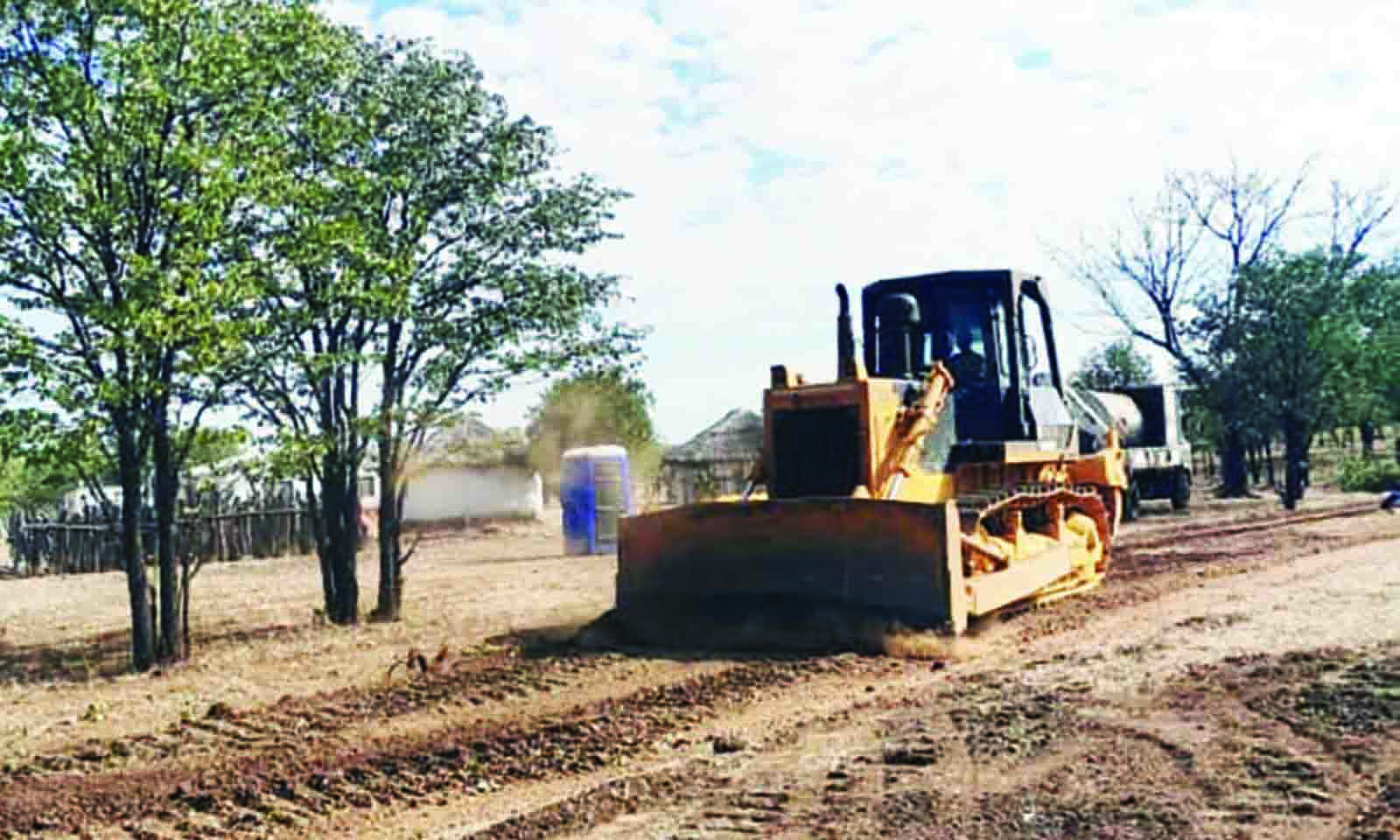
Gibson Mhaka
Zimpapers Politics Hub
THE Second Republic under the astute stewardship of President Mnangagwa has never fallen short in delivering on its promises as evidenced by its impressive track record of accomplishments.
The recent commissioning of the US$88 million state-of-the-art Trabablas Interchange stands as a testament to this unwavering commitment to infrastructural development.
This monumental project, forming a crucial part of the North-South Corridor, is not merely a local achievement but also a vital regional trade artery, seamlessly connecting Zimbabwe with SADC member states and the broader African continent.
Over the years, the Second Republic has spearheaded transformative projects, completing and advancing initiatives that had long stalled before the advent of the New Dispensation.
Among the many transformative projects commissioned by the Second Republic are Hwange Units 7 and 8, which have significantly reduced power outages across the country.
Further demonstrating this national transformation, the continuing development of Mt Hampden, which is home to the New Parliament, into Zimbabwe’s new administrative capital, is progressing steadily. This has been aided by the recent completion of eight state-of-the-art villas at the Diplomatic Village.
These villas reflect the Government’s commitment to world-class urban infrastructure and complement the nearby Parliament Building.
Indeed, President Mnangagwa has been on a relentless developmental drive since the advent of his administration in November 2017, consistently promising to continue on that trajectory as he takes Zimbabwe from glory to glory.
Over the past six years, the Second Republic has rolled out various impactful projects that have resonated with the people, with most already completed and the remainder at various stages of implementation.
Among these, and further underscoring its unwavering commitment to infrastructural development, preparations for the rehabilitation of the Bulawayo-Victoria Falls Road are now at an advanced stage.
Five local contractors — Fossil Contracting, Masimba Construction, Syvern Investment, Bitumen Resources, and Tensor Systems — have moved in to lead the rehabilitation of the Bulawayo-Victoria Falls highway, with significant progress already made in clearing detour paths to keep traffic flowing during the upgrade.
Fossil Contracting (Lot 1) has 4km detour cleared from 48,6km peg, Masimba Construction (Lot 2) has cleared 5km between 85km-90km pegs, Syvern Investment (Lot 3) has cleared 5km (99,6km-104km) with more underway, Bitumen Resources (Lot 4) has cleared 4,2km from 201,6km toward 191km and Tensor Systems (Lot 5) has cleared 5km between 201,6km-211,6km pegs
This 435km stretch, a critical artery for tourism and regional trade, is set for completion within 10 months, promising significant relief to motorists and businesses alike.
Speaking at the Projects Management Institute (PMI) Zimbabwe 2025 annual conference in Victoria Falls recently Transport and Infrastructural Development Minister Felix Mhona represented by the chief director, Roads Engineer David Jana, said the rehabilitation of the Bulawayo-Victoria Falls highway was among priority projects that had been earmarked by the ministry’s ambitious roadmap for National Development Strategy Two (NDS2).
Minister Mhona said NDS2, which would run from 2026 to 2030, was an important blueprint for achieving an upper-middle-income society by 2030, saying project management played a big role in delivering these initiatives efficiently.
“The value of project management cannot be ignored in this quest as a key enabler in the delivery of programmes and projects enunciated in NDS2.
“It is therefore essential to manage the projects in any strategic environment professionally and deliver them within expected scope, schedule and within budget,” he said.
The Bulawayo-Victoria Falls Road rehabilitation is part of a larger strategy to modernise Zimbabwe’s road network, which includes other key projects such as Harare-Beitbridge highway rehabilitation and upgrade (nearing completion), Harare-Kanyemba highway upgrade, Harare-Chirundu highway rehabilitation and upgrade, Lion’s Den to Kafue railway link construction and Ponto-Techobanine railway project (upgrading the line linking Zimbabwe to Mozambique and Botswana)
Matabeleland North Provincial Affairs Minister Richard Moyo expressed profound gratitude to the Government for prioritising the highway.
“We are thankful to President Mnangagwa for this crucial development. This road is the lifeline of our province’s economy,” said Minister Moyo, underscoring its pivotal role.
Indeed, the Bulawayo-Victoria Falls Highway is more than just a domestic route; it’s a key regional corridor, linking Zimbabwe to Zambia, Botswana and Namibia.
It specifically serves tourists heading to Victoria Falls, one of Africa’s premier destinations, truckers transporting goods between southern Zimbabwe and north-western mining and farming regions, and local communities who rely on the road for daily travel and commerce.
For years, however, the highway has been plagued by potholes, narrow lanes and eroded shoulders, causing significant delays and safety concerns.
Its comprehensive rehabilitation is now expected to revive trade, drastically reduce travel time, and markedly improve road safety across this vital stretch.
This crucial project falls under the Government’s broader Emergency Road Rehabilitation Programme (ERRP2), which has already repaired over 50 000km of roads and 2 000 structures across the country since 2021.
To ensure long-term maintenance and sustainability, the Government has also strategically acquired new road equipment, including tractors.
The rehabilitation effort strongly aligns with Zimbabwe’s overarching goal of becoming an upper-middle-income economy by 2030, recognising infrastructure as a key driver of this ambition.
Despite limited access to foreign funding, the Government has commendably pushed ahead with local contractors and resources, demonstrating its steadfast commitment to self-sufficiency.
As work progresses, all stakeholders can confidently look forward to a smoother, safer, and more efficient journey to Victoria Falls and beyond.
The extensive rehabilitation of the Bulawayo-Victoria Falls Highway stands as a tangible testament to the Second Republic’s unwavering commitment to infrastructural development.
By prioritising such a vital route, the Government demonstrates its dedication to creating an enabling environment for economic growth, facilitating smoother trade and boosting the tourism sector, all of which are key pillars articulated within the NDS1 and NDS2 frameworks for achieving sustainable development.
Furthermore, the Government’s approach to this rehabilitation, utilising local contractors and resources despite limited access to foreign funding, underscores another core tenet of NDS1: self-sufficiency and empowerment of domestic industry.
This move not only ensures the project’s timely progress but also recirculates funds within the Zimbabwean economy, creating employment and enhancing local capacity.
The expected benefits, from reduced travel times and improved safety to revived trade, directly contribute to the NDS1’s objectives of fostering an upper-middle-income economy by 2030, reinforcing the Second Republic’s resolve to translate policy into impactful, nationwide transformation.
This commitment to tangible outcomes was recently echoed by political commentator Mr Dereck Goto, who observed that President Mnangagwa had successfully shifted the national discourse from mere promises to concrete results.
“When President Mnangagwa took office in 2017, he inherited a nation in urgent need of renewal — economically, institutionally, and psychologically.
“What has unfolded since is not merely a catalogue of infrastructure projects, but the emergence of a developmental state grounded in delivery, pragmatism, and a recalibrated social contract.
“So, has President Mnangagwa walked his talk? The facts increasingly say yes. This is not about political theatre — it is about realigning national priorities with delivery and foresight,” he said.
Mr Goto said that the foundation had been firmly laid by the President.
“More recently, the Trabablas Interchange has redefined urban mobility in southern Harare, showcasing world-class engineering led by local companies and easing perennial congestion. But these are just a few threads in a broader national tapestry.
“The challenge now lies in entrenching institutional accountability, safeguarding momentum, and ensuring that infrastructure translates into opportunity — particularly for the youth, women, and rural populations,” he said.