Gibson Mhaka, Zimpapers Politics Hub
THE Constitutional Amendment Bill No. 3 journey is now entering its final constitutional stretch.
Following the National Assembly’s overwhelming endorsement of the Senate’s amendments by a decisive 226-41 vote, the Bill now awaits Presidential assent before taking its place among the laws that will shape Zimbabwe’s constitutional future.
But beyond parliamentary arithmetic lies a far more significant political reality.
The passage of the Bill represents an affirmation of representative democracy in action, a demonstration that
Parliament remained faithful to the views expressed by Zimbabweans during nationwide public hearings, where the majority of participants endorsed the proposed constitutional amendments.
In every representative democracy, Members of Parliament derive their authority not from personal opinion, political expediency or party preference alone, but from the people who elect them.
An MP is an MP because of the constituency he or she represents.
That mandate carries both privilege and obligation. Among its foremost obligations is to faithfully articulate the aspirations of the electorate, particularly on matters as fundamental as constitutional reform.
Their vote therefore became more than the conclusion of another legislative process.
It became Parliament’s endorsement of the people’s voice.
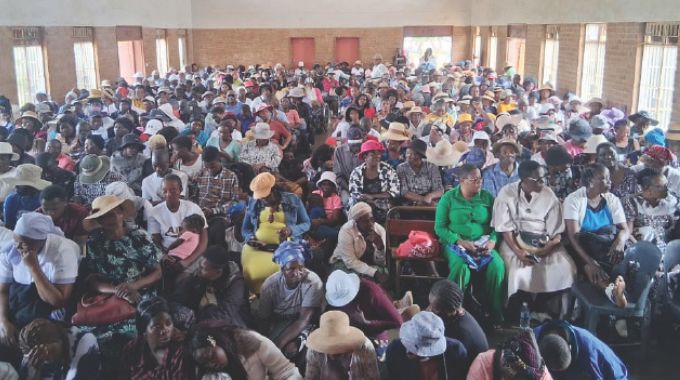
Throughout the countrywide consultations undertaken by Parliament, ordinary Zimbabweans were afforded an opportunity to scrutinise, debate and express their views on Constitutional Amendment Bill No. 3.
Public hearings are not ceremonial exercises.
They are among the most important pillars of participatory democracy, providing citizens with a direct avenue to influence legislation before Parliament.
When Parliament finally voted, the overwhelming majority of legislators demonstrated that they had listened.
They resisted the temptation to substitute the expressed wishes of their constituents with personal preferences or transient political considerations.
Instead, they chose to honour the very people who entrusted them with legislative authority.
Representative democracy demands nothing less. Had legislators ignored the dominant sentiments expressed during public consultations, the entire consultative exercise would have risked becoming little more than a procedural formality.
Instead, Parliament reinforced public confidence in constitutional processes by ensuring that consultation translated into legislation.
The significance of their vote therefore extends beyond Constitutional Amendment Bill No. 3 itself. It speaks to the maturity of Zimbabwe’s democratic institutions.
Democracy is often narrowly interpreted as the mere existence of elections.
Yet elections are only one component of democratic governance.
True democracy also requires responsive institutions that consult, deliberate and ultimately legislate in accordance with the sovereign will of the people.
That is precisely what Parliament sought to achieve. The Bill itself has travelled every constitutional stage prescribed by law.
It underwent First Reading. It proceeded through a robust Second Reading debate.
Members scrutinised it clause by clause. Parliament travelled the country consulting citizens.
The Senate proposed amendments.
The National Assembly, recalled from recess by President Mnangagwa specifically to consider those amendments, completed the final parliamentary stage by adopting them.
Few constitutional Bills undergo such an extensive legislative journey.
Justice, Legal and Parliamentary Affairs Minister Ziyambi Ziyambi rightly described the process as one that reflected
Parliament’s diligence and commitment to its constitutional responsibilities. More importantly, he situated the Bill within a broader national context.
“The law that has been made will enable the progressive building and development of this country,” he said.
“What was decided here, Mr Speaker, was decided not for today but for those who will come after us, the beautiful
Zimbabweans not yet born who will one day live under it.
“History will vindicate them, for what is done for posterity is not judged by the present but by the verdict of the years to come.”
Those remarks capture the enduring character of constitutional law. Constitutions are not crafted to satisfy temporary political interests. They are designed to establish durable frameworks capable of serving successive generations.
Whether viewed through political, legal or historical lenses, constitutional reform must always be assessed in terms of its long-term contribution to national development and institutional stability.
With Parliament having discharged its constitutional mandate, the Bill now proceeds to President Mnangagwa for assent.
Justice Minister Ziyambi confirmed the next stage.
“What will happen now is that Parliament will transmit the Bill to His Excellency for his assent and signature.
“Thereafter, it will be gazetted and will become part of our Constitution.”
The final step now rests with the President, after which Constitutional Amendment Bill No. 3 will formally become part of Zimbabwe’s constitutional architecture.
Equally instructive was the manner in which Parliament arrived at its decision.
Members debated. Dissenting voices were heard. Votes were openly counted.
The majority prevailed, while the minority exercised its constitutional right to disagree.
That is the essence of parliamentary democracy. Democracy does not require unanimity.
It requires constitutional order, open debate, respect for divergent views and acceptance that lawful decisions are determined by the majority.
The decisive vote also reinforces another enduring principle of representative governance — accountability.
Citizens participate in public hearings because they expect Parliament to hear them.
When legislators subsequently legislate in accordance with those views, confidence in democratic institutions is strengthened. The proceedings demonstrated precisely that.
The National Assembly did not merely pass a Bill.
It fulfilled the representative mandate bestowed upon it by the electorate.
As Constitutional Amendment Bill No. 3 now awaits Presidential assent, one conclusion stands out clearly.
The legislative process has illustrated that democracy is not measured solely by the ballot box.
It is equally measured by the willingness of elected representatives to listen, consult and faithfully translate the will of the people into law.
In steering Constitutional Amendment Bill No. 3 to the threshold of Presidential assent, Parliament has reaffirmed one of democracy’s oldest and most enduring principles, that sovereignty belongs to the people, and that elected representatives are at their strongest when they remain true to the mandate entrusted to them by those they serve.