Judith Phiri, Zimpapers Business Hub
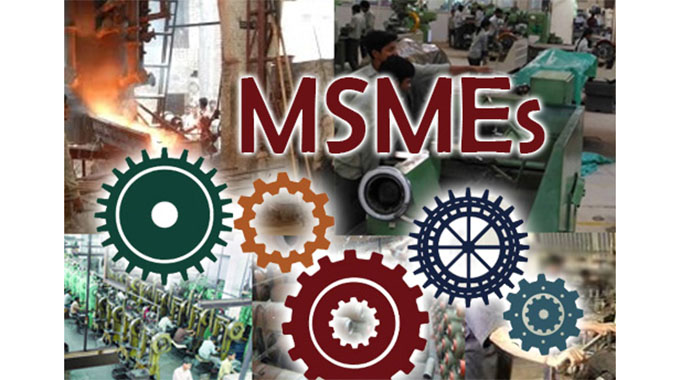
THE Government, local authority and various stakeholders have joined forces to encourage Bulawayo’s micro, small and medium enterprises (MSMEs) to formalise, so that they can contribute positively to the city’s gross domestic product (GDP), while continuing to address workspace challenges.
MSMEs are the backbone of Zimbabwe’s economy, with approximately 3,4 million entities contributing over 60 percent of the country’s GDP and employing roughly 4,8 million people full-time.
In Bulawayo, MSMEs generate an estimated 67 percent of the city’s revenue, providing primary livelihoods for thousands of residents, reducing unemployment, driving local innovation and fostering community resilience amid broader industrial changes.
Speaking recently at the Bulawayo MSMEs Winter Expo 2026 and the Provincial Launch of International MSMEs
Day, Dr Tiisetso Dube, from the City of Bulawayo’s Town Planning Department, said they continue to seek more workspace for MSMEs in order to encourage them to formalise.
“As the City of Bulawayo, we work together with the Ministry of Women’s Affairs, Community, Small and Medium Enterprises Development for the welfare of our MSMEs in Bulawayo.
“We continue to develop working space for MSMEs in the city, but we only give it to those who are registered. That is why we encourage MSMEs to ensure that they are formalised, so that it becomes easier for us to allocate workspace for them when it becomes available,” he said.
He said there were lettable shops around the central business district (CBD), while they were also set to open another fruit and vegetable site in Nkulumane so that some MSMEs can work closer to their homes.
Dr Dube said there was also the Highlanders traders’ market site, which recently received US$200 000 from the Swiss Government towards the revamp and construction of a safe trading shed.
“We have the Bhaktas Market, situated at the intersection of Lobengula Street and First Avenue, which is also earmarked for infrastructural development, among other MSMEs workspace sites in the city,” he said.
“We have also identified a site for a fruit and vegetable market in Cowdray Park. As the City of Bulawayo, our wish is to decentralise these workspaces for MSMEs so that they are closer to their customers, to avoid them having to travel all the way to the CBD to get what they want.”
He called for collaboration to assist informal traders to register and secure all the required licences, in order to avoid crackdowns and spatial extortion.
Bulawayo Provincial Development Officer in the Ministry of Women’s Affairs, Community, Small and Medium Enterprises Development, Mrs Glory Damba, said a safe workplace was critical for MSMEs to protect their smaller and highly interdependent workforces from devastating disruptions.
“It boosts employee morale and productivity, helping small businesses remain competitive. As a Ministry, we remain committed to creating an enabling environment for MSMEs to thrive, compete and scale up,” she said.
“Empowering MSMEs is important for building resilient communities and driving their growth. We ensure that we provide them with skills training and facilitate access to finance and workspace, among other things.”
She encouraged MSMEs to register officially, as formalisation allows them to scale legally, access national resources and operate without the threat of closures.
Bulawayo Chamber of SMEs vice-chairperson, Ms Sithabile Bhebhe, called for most rentals charged by established property developers to be within reach of MSMEs.
“Most premises in the CBD are too expensive, and a lot of shops have been closed as people move out due to high rentals. MSMEs are then forced to operate outside, where they are exposed to the vagaries of harsh weather,” she said.
She said they continue to advocate for MSMEs, pushing for localised policy reforms, improved access to working capital and streamlined business formalisation.
Ms Bhebhe said that by driving structural support, communities can unlock sustainable job creation and economic resilience, while the expansion of municipal factory shells, workspaces and designated trading zones would provide secure and compliant operating environments for MSMEs.
Standards Association of Zimbabwe (SAZ) Marketing and Business Development Officer, Ms Rejoice Dhlomo, said formalised MSMEs contribute positively to sustainable growth in line with Vision 2030.
“As SAZ, we encourage all MSMEs to have their products certified. This allows them to produce quality products. For MSMEs, we always give them a discount, whether they are bringing their products for testing, requesting inspections or purchasing a standard,” she said.
“The SAZ Product Mark Certification scheme makes it possible for goods produced under an approved system of supervision and control to be licensed as complying with the appropriate standard and to bear the association’s product certification mark.”
She said each product had a different standard, while some standards were as cheap as US$15, stating that MSMEs have no reason to avoid complying with them.
“Empowerment programmes for MSMEs are vital for survival and growth. These initiatives do not just change individual businesses, but they also uplift entire communities,” she said.
The Bulawayo MSMEs Winter Expo 2026 was organised by the Ministry of Women Affairs, Community, Small and Medium Enterprises Development in partnership with the City of Bulawayo and other stakeholders.
It ran under the theme: “Empowering Bulawayo MSMEs for Innovation, Jobs, Resilience and Sustainable Growth in line with Vision 2030 and Global Trends.”
Growing calls for formalisation of Bulawayo MSMEs