Online Reporter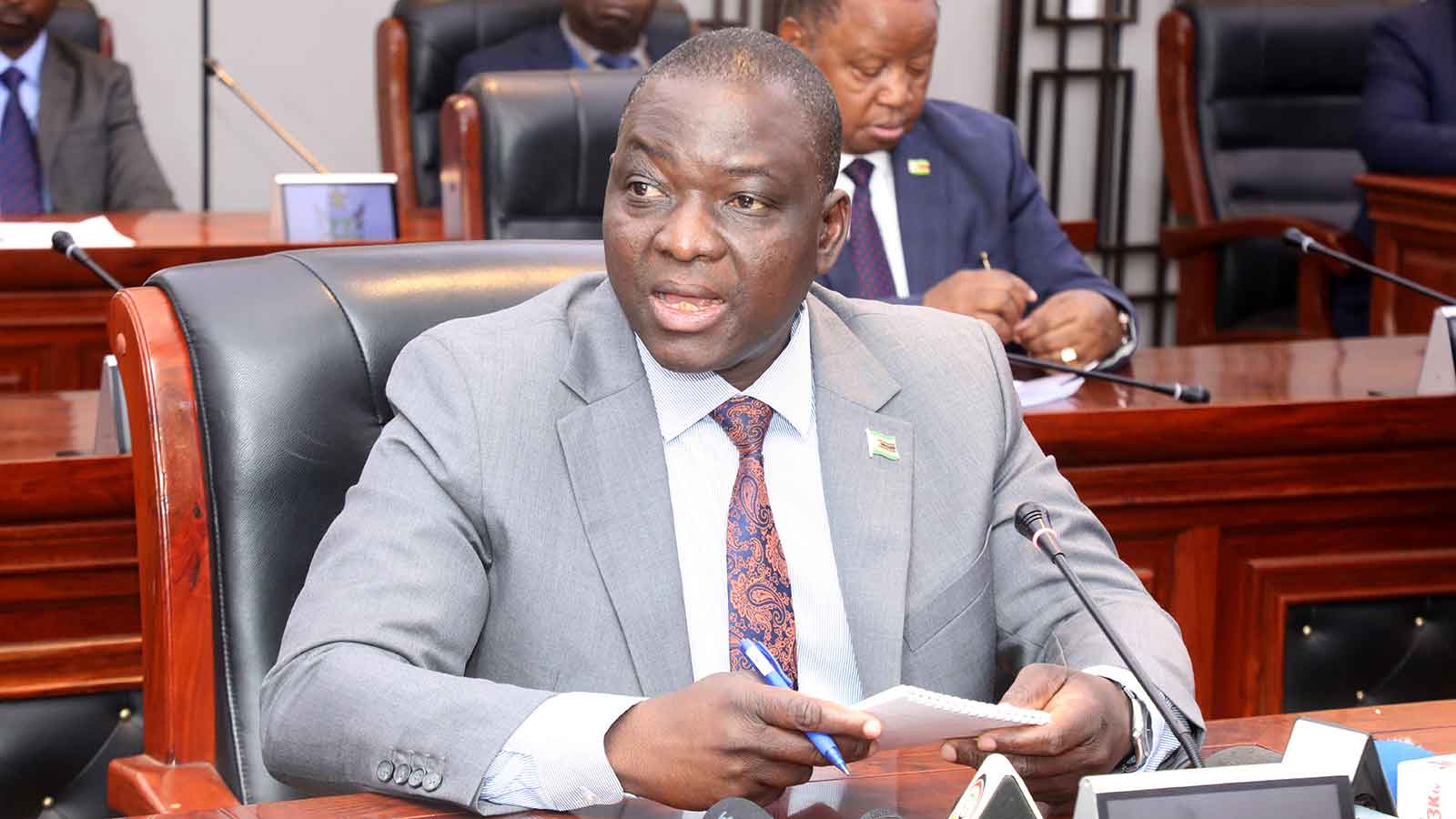
Zvamaida Murwira [email protected]
CABINET has approved a six-pillar drought mitigation plan — including an enhanced strategic grain reserve, accelerated grain imports and an integrated financing mechanism — in response to a forecast super El Niño weather pattern expected to bring below-normal rainfall to Zimbabwe and the region.
One of the measures is to allow the private sector to continue with grain imports while Government reviews the household food imports threshold upwards.
This was said by Information, Publicity and Broadcasting Services Minister Dr Zhemu Soda during his post-Cabinet briefing yesterday.
Dr Soda said that following the recently issued 2026/2027 summer season rainfall outlook predicting below-normal rainfall across the country, Cabinet approved a drought plan presented by Agriculture, Mechanisation and Water Resources Development Minister Dr Anxious Jongwe Masuka.
“Faced by two major threats — a super El Niño which will cause below-normal rainfall and is associated with high temperatures, and geopolitical tensions which have elevated the prices of fuel and fertiliser and disrupted supply — the 2026/2027 season presents a critical stress test of Zimbabwe’s agricultural resilience and forward planning,” said Dr Soda.
He said the intervention plan was built on past drought experiences from which the country drew lessons.
“In this context, and building on the lessons from the 2024/2025 season, when Zimbabwe experienced its worst drought since 1980, the 2026/2027 Summer Plan comprises six interconnected interventions and resilience pillars, namely: enhanced strategic grain reserve, accelerated climate-smart production, integrated financing architecture, livestock drought mitigation, enhanced imports and coordination, early-warning systems and capacity-building support,” said Dr Soda.
“With the six strategic interventions, the national total cereal production expected for the 2026/2027 season is 1,6 million tonnes, with an expected Strategic Grain Reserve target of 600 000 tonnes. This translates to an expected cereal production deficit of 266 881 tonnes to 541 881 tonnes for the 2026/2027 season.
The private sector will be allowed to import to meet commercial needs for both food and feed, while households will continue to import basics for household needs, which will be reviewed upwards.”
Minister Soda said the Government remained committed to a prosperous upper-middle-income economy by 2030.
“Building agricultural resilience under the climate-proofing agenda at both household and national levels is therefore the Second Republic’s bold expression of Zimbabwe’s Vision 2030 developmental aspiration of a food-secure, prosperous and empowered upper-middle-income society. In this regard, His Excellency the President has issued a statement targeted at chiefs, headmen and village heads,” said Dr Soda.
Responding to questions from journalists, Minister Masuka said of the six pillars, the most important were building the strategic grain reserve and accelerating or enhancing climate-smart practices.
“These are at two levels: at the smallholder level and at national level. At the smallholder household level, we are focusing on the sustainable intensive conservation agriculture model from Pfumvudza/Intwasa. So we wanted three million beneficiaries to do three plots each. Then in terms of the other climate-smart practices, the Pfumvudza tenets — all the tenets ought to be followed,” he said.
The tenets, he said, include ensuring that the hole that is dug is the right size and that there is mulching or manure in order to correct the structure of the soil.
“With lime, I shared with the Cabinet colleagues that 60–70 percent of the soils in communal areas are largely degraded because of decades of farming and without rebuilding the soil structure, but also the pH is below 4,5 units, which means that those soils perhaps respond more to lime than they do to fertiliser. So all three million beneficiaries of the Presidential Input Scheme are going to receive liquid lime because we know that the powder solid lime is cumbersome and too bulky to transport, especially if you want every household to utilise it,” said Minister Masuka.